
Featured Plant: Bridal Bouquet Plumeria


A Tropical Flowering Favorite with a Different Look from the Typical Plumeria
For our next Featured Plant, we’re highlighting the Bridal Bouquet Plumeria, Plumeria pudica.
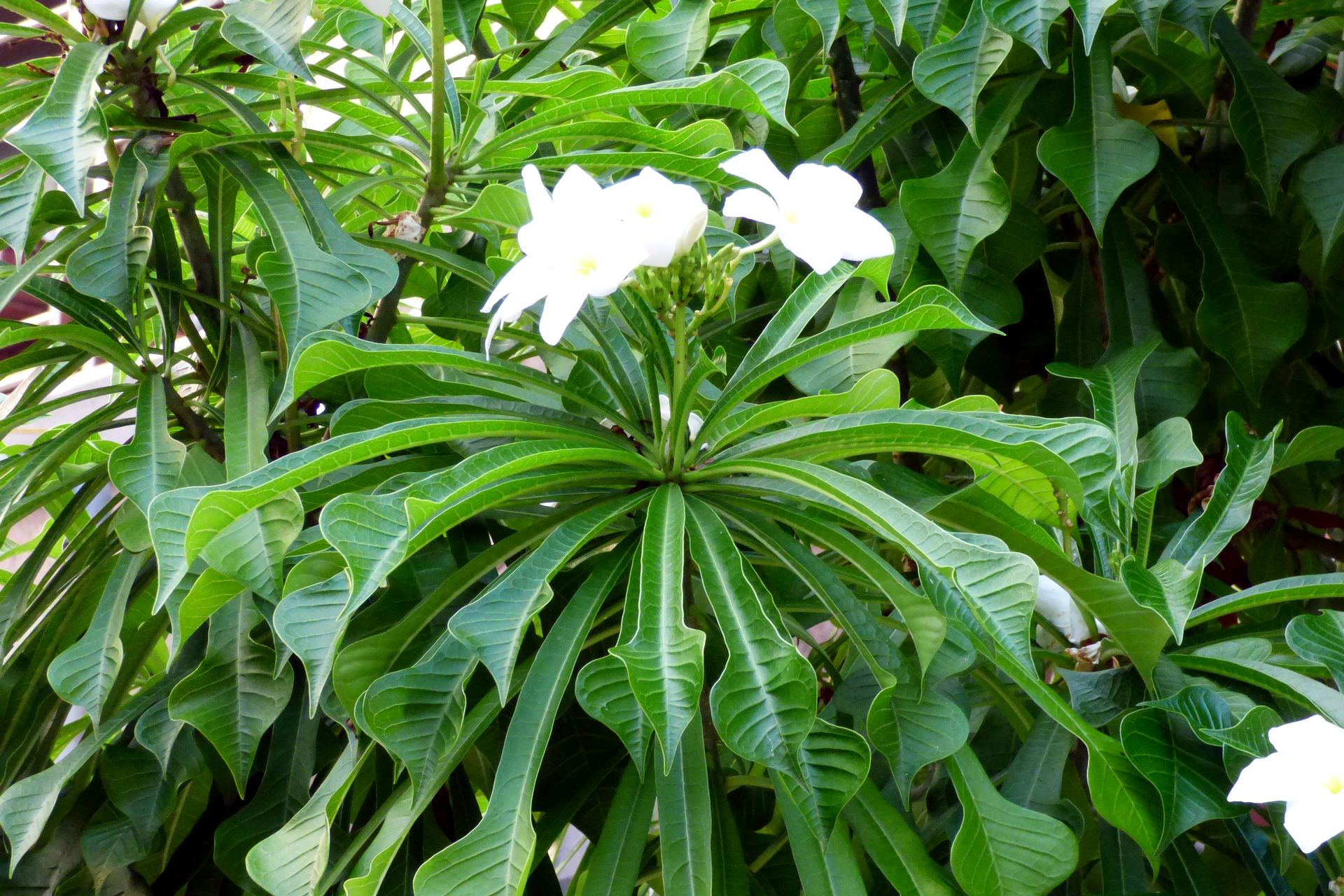
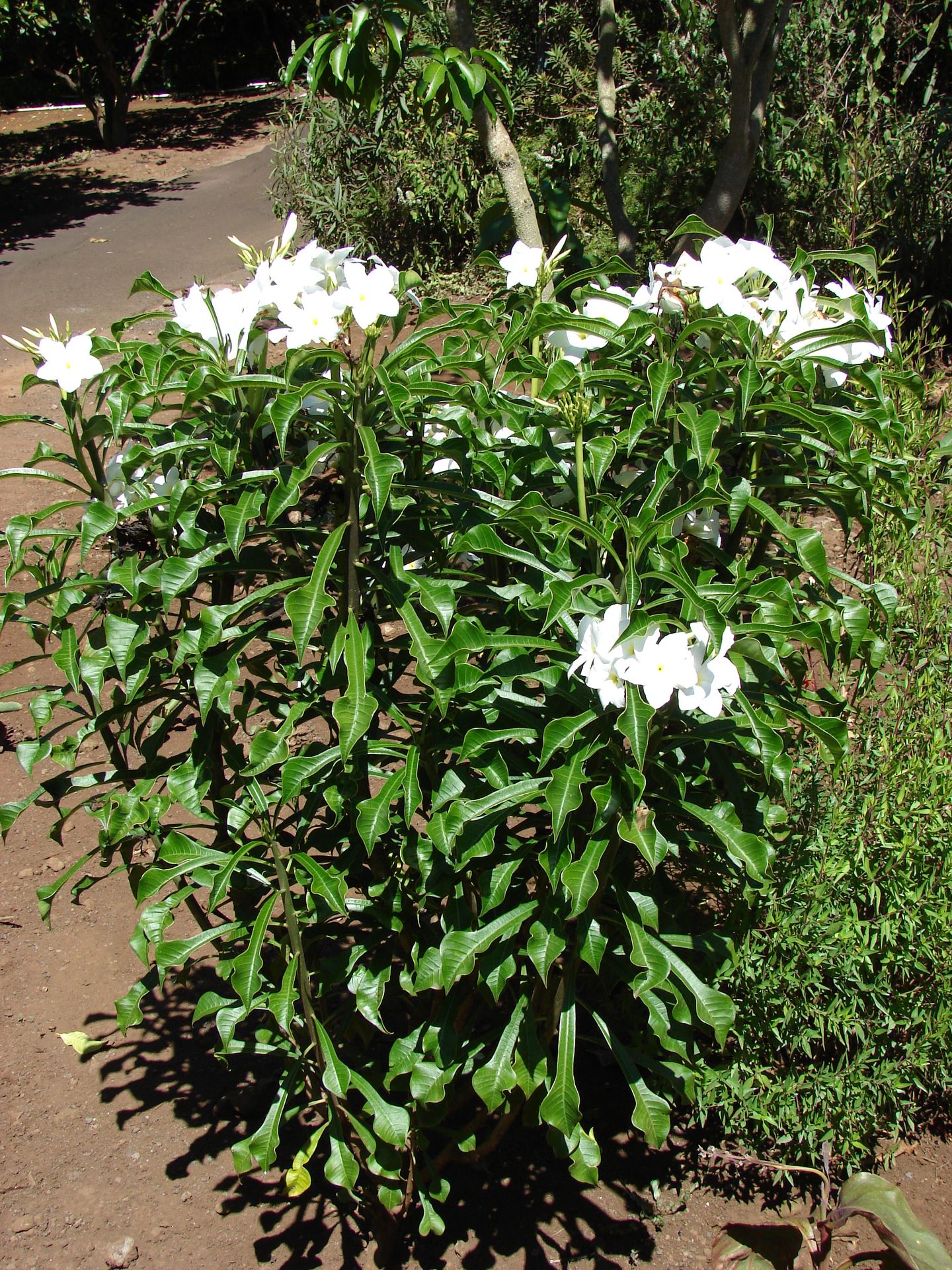
While many people picture the familiar spreading Plumeria with colorful, fragrant flowers, Bridal Bouquet has a noticeably different look. It grows with a more upright, vase-shaped form and produces clusters of crisp white flowers with yellow centers that can make the top of the plant look almost like a large floral bouquet. UF/IFAS describes it as a less-common cousin of the typical Plumeria rubra, with a distinct growth habit and long flowering season.
What Makes Bridal Bouquet Different?
Bridal Bouquet Plumeria is easy to recognize once you know what to look for.
Its leaves are narrower and more spoon- or fiddle-shaped than the leaves of many common Plumerias. The plant also tends to grow more upright, often developing into a large shrub or compact small tree rather than a broad, spreading specimen.
Its white flowers have yellow centers and are typically not fragrant, which surprises many people because fragrance is so strongly associated with Plumerias.
That difference is part of what makes Bridal Bouquet interesting—it gives you the tropical Plumeria look without looking exactly like every other Plumeria in the neighborhood.
A Long Flowering Season — and Why It’s Worth Considering Now
One of Bridal Bouquet Plumeria’s best features is how long it can stay in bloom.
UF/IFAS notes a primary flowering season from roughly May through November, with some flowering possible outside that period under favorable conditions.
That makes late summer a good time to consider Bridal Bouquet Plumeria for a Sarasota landscape. With several months of warm growing weather still ahead, a mature nursery-grown specimen has time to settle in while there is still a good opportunity to enjoy its seasonal flowers.
Mature plants may already be flowering when purchased, but bloom timing will vary with the individual plant, sunlight, weather, maturity, and overall growing conditions.
Why It Works Well in Sarasota
Bridal Bouquet Plumeria is not native to Florida, but it is well suited to many Sarasota-area landscapes.
It performs best in full sun to partial shade and well-drained soil. Once established, UF/IFAS describes it as highly drought tolerant and salt tolerant.
Those characteristics translate well to many Southwest Florida properties, particularly in sunny, well-drained landscapes where a tropical flowering accent is desired.
Like other Plumerias, however, it remains a tropical plant and can be affected by cold weather. General UF/IFAS guidance places Plumerias primarily in USDA Zones 10B–11 and notes that cold damage can occur outside warmer or protected locations.
Evergreen — Sometimes
Bridal Bouquet is often described as evergreen, and in favorable warm conditions it may hold foliage year-round.
However, drought or cold can still cause it to lose leaves.
That is an important distinction for Sarasota homeowners: it may remain much fuller through winter than some other Plumerias, but it should not be treated as guaranteed evergreen foliage in every location or every winter.
A More Compact Plumeria
Another advantage is its manageable size.
UF/IFAS describes Bridal Bouquet Plumeria as rarely exceeding about 10–15 feet tall and 8–10 feet wide, making it more manageable than many larger tropical flowering trees.
That makes it useful for:
- Tropical specimen planting
- Front-yard focal points
- Pool and patio landscapes with adequate clearance
- Mixed tropical beds
- Smaller spaces where a large flowering tree would be too much
- White-themed or more formal tropical landscapes
Its upright shape can also make it easier to fit into a landscape than a wide-spreading Plumeria.
Maintenance and Care
Bridal Bouquet is generally a fairly easy plant when it is placed correctly.
Good drainage is important, and newly installed plants should receive regular watering while becoming established. Once established, the plant becomes much more drought tolerant.
UF/IFAS notes that well-grown Bridal Bouquet Plumerias often need little pruning. Light tip pruning can be used to encourage additional bushiness when needed.
Like other Plumerias, the plant contains a milky sap that can irritate skin, so care should be taken when pruning or handling cut branches.
What About Plumeria Rust?
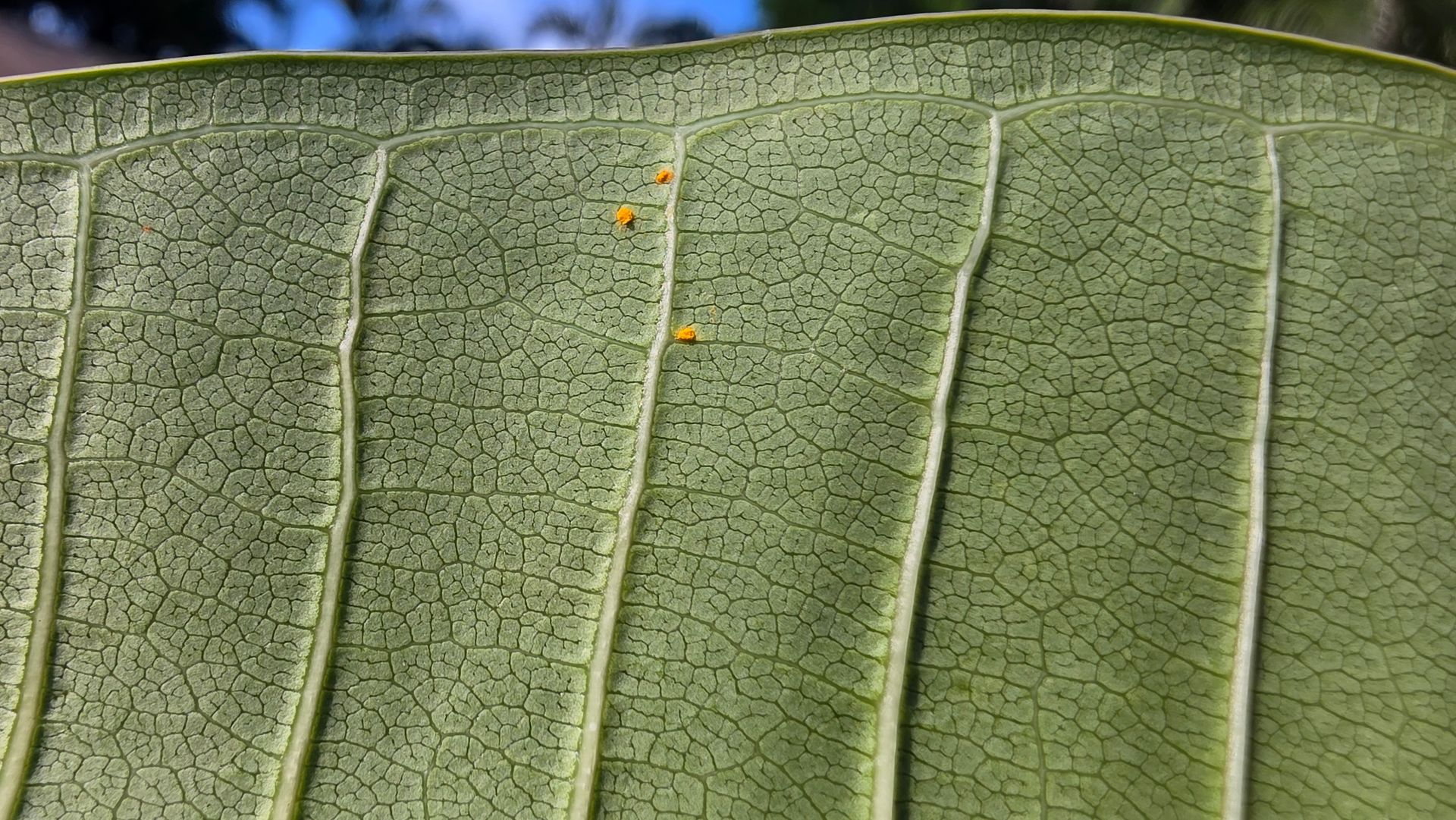
Plumeria rust can affect Bridal Bouquet, although UF/IFAS notes that this species appears to have somewhat better resistance than many other Plumerias.
Removing and disposing of infected fallen leaves can help reduce the amount of fungal material carried into the next growing season.
Is Bridal Bouquet Plumeria Right for Your Landscape?
Bridal Bouquet Plumeria may be a good choice if you want:
- A compact tropical flowering specimen
- Long-season white flowers
- A more upright Plumeria form
- A plant suited to sunny, well-drained Sarasota landscapes
- Good drought tolerance once established
- Good salt tolerance
- A different look from the more common colorful Plumerias
Its biggest limitations are cold sensitivity, the need for good drainage, and the fact that its flowers generally do not have the fragrance many people expect from a Plumeria.
Explore Bridal Bouquet Plumeria in Our Plant Gallery
View Bridal Bouquet Plumeria in our Plant Gallery:
https://strongsrq.com/medium-shrubs/bridal-bouquet
You can also explore other Florida native and Florida-friendly palms, trees, shrubs, ground covers, and accent plants in our growing Plant Gallery:
Sources and Further Reading
Plant characteristics and growing guidance for this article were reviewed using University of Florida IFAS Extension resources, including information from UF/IFAS Extension Charlotte County on Plumeria pudica.