
Featured Plant: Southern Wax Myrtle


A Versatile Florida Native for Privacy, Wildlife and Natural Landscapes
Welcome to the first installment of our new Featured Plant series!
As we continue building the StrongSRQ Plant Gallery, we want to begin highlighting some of the Florida native and Florida-friendly plants that can be useful in Sarasota-area landscapes.
In each feature, we’ll take a closer look at one plant—how it grows, where it works best, the benefits it may provide and any important considerations before adding it to your landscape.
Some plants will be familiar favorites, while others may introduce homeowners to options they have not previously considered.
We’re beginning the series with the Southern Wax Myrtle, scientifically known as Morella cerifera.
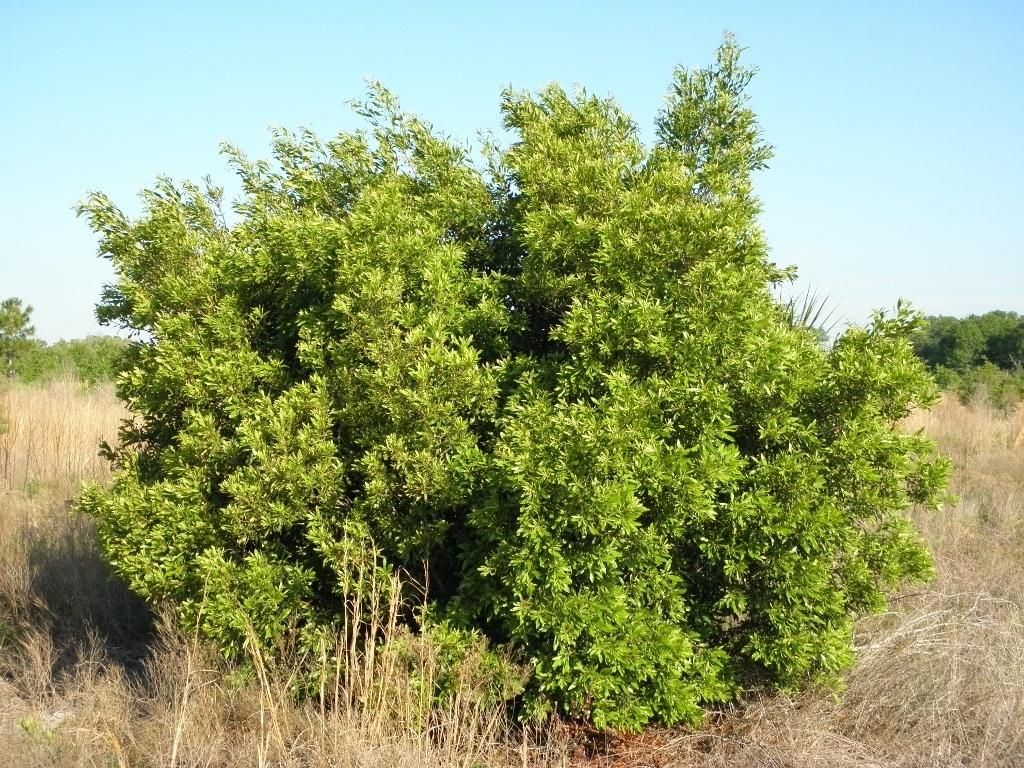
Southern Wax Myrtle is a fast-growing Florida native that can be maintained as a large shrub, planted as an informal privacy screen or trained into an attractive multi-trunk tree. Its adaptability, natural appearance and value to wildlife make it a plant worth considering, provided it is given the right location and enough space to grow.
A Natural Choice for Privacy
Southern Wax Myrtle is often used to create separation between neighboring properties, soften a fence line or screen an unattractive view.
Its relatively fast growth allows it to establish useful screening more quickly than many slower-growing shrubs. Several plants can be grouped together to create an informal hedge, or an individual plant can be allowed to develop into a large specimen shrub.
Wax Myrtle can be pruned to maintain a denser appearance, but it naturally has a softer and less formal shape than tightly clipped hedge plants. This makes it especially useful when the goal is to create privacy without making the landscape feel overly rigid or manicured.
Because Southern Wax Myrtle can grow into a substantial plant, proper placement is important. Installing it in an area that is too narrow may lead to frequent pruning and unnecessary maintenance later.
A Large Shrub or Small Tree
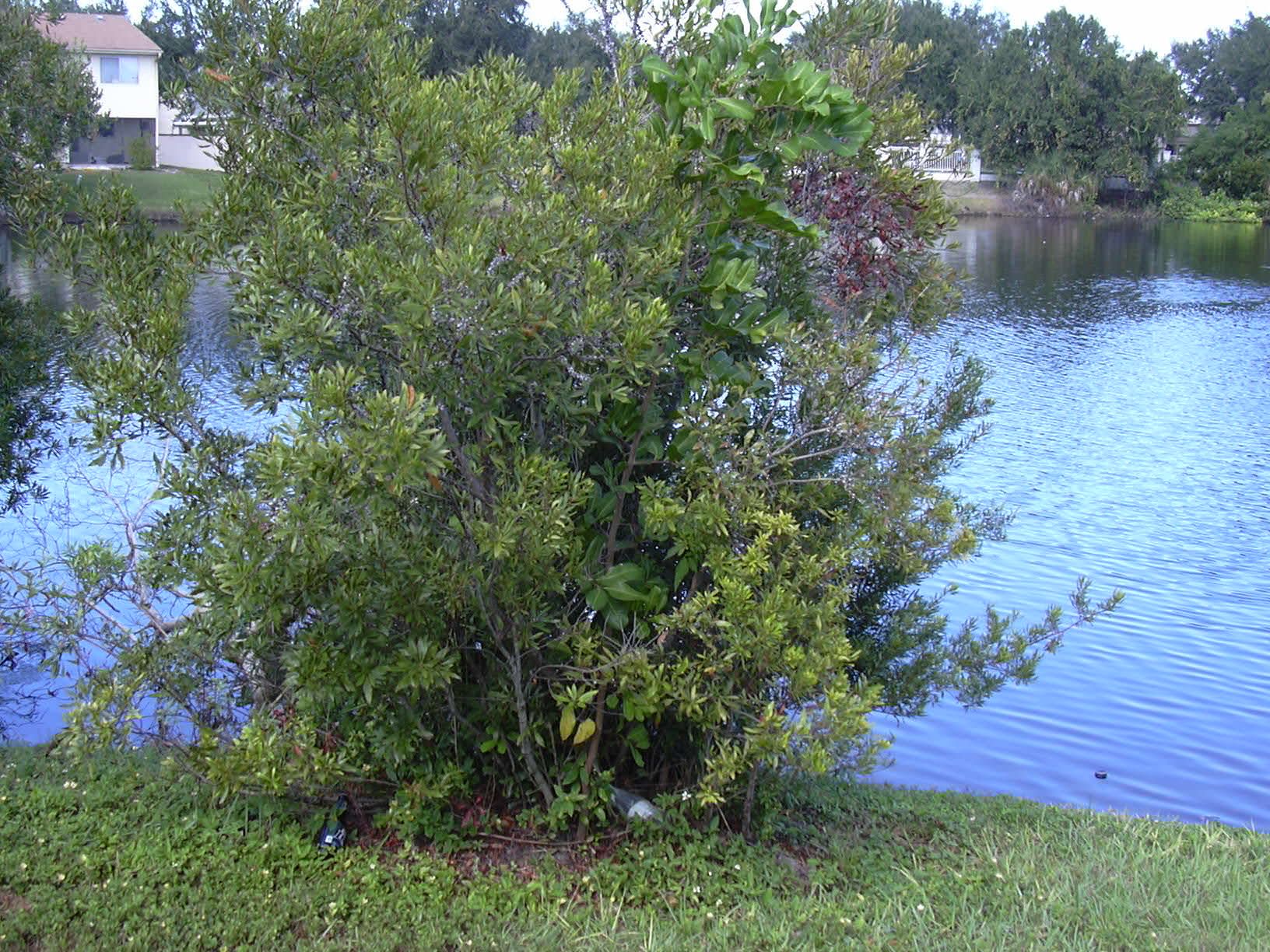
One of the most useful qualities of Southern Wax Myrtle is its versatility.
It can be grown in several different forms:
A large natural shrub
An informal hedge or privacy screen
A background plant along a property line
A multi-trunk small tree
Part of a Florida native or wildlife-friendly planting
When grown as a small tree, selected trunks can be retained while lower branches are gradually removed. This exposes the plant’s attractive light-colored bark and creates an airy, natural-looking canopy.
When used for privacy, selective pruning can help encourage fuller growth while preserving the plant’s natural shape.
Southern Wax Myrtle generally looks best when it is allowed to retain some of its natural character rather than being repeatedly cut into a severe rectangular hedge.
Well Adapted to Florida Landscapes
Southern Wax Myrtle is native to Florida and grows naturally throughout much of the state. It can be found in a variety of environments, including coastal areas, woodland edges and locations near wetlands.
It can grow in full sun or partial shade and adapts to a range of soil and moisture conditions. Although it generally performs well with regular moisture during establishment, mature plants can tolerate periods of drought.
Southern Wax Myrtle also has useful salt and wind tolerance, making it a potential option for some coastal and exposed Sarasota-area landscapes.
Its ability to handle Florida’s heat, seasonal rainfall and less-than-perfect soils helps explain why it is found in so many natural areas throughout the state.
However, being native does not mean that a plant will thrive in every location without care. Proper sunlight, spacing, establishment watering and site selection are still important.
Southern Wax Myrtle provides more than privacy and year-round greenery.
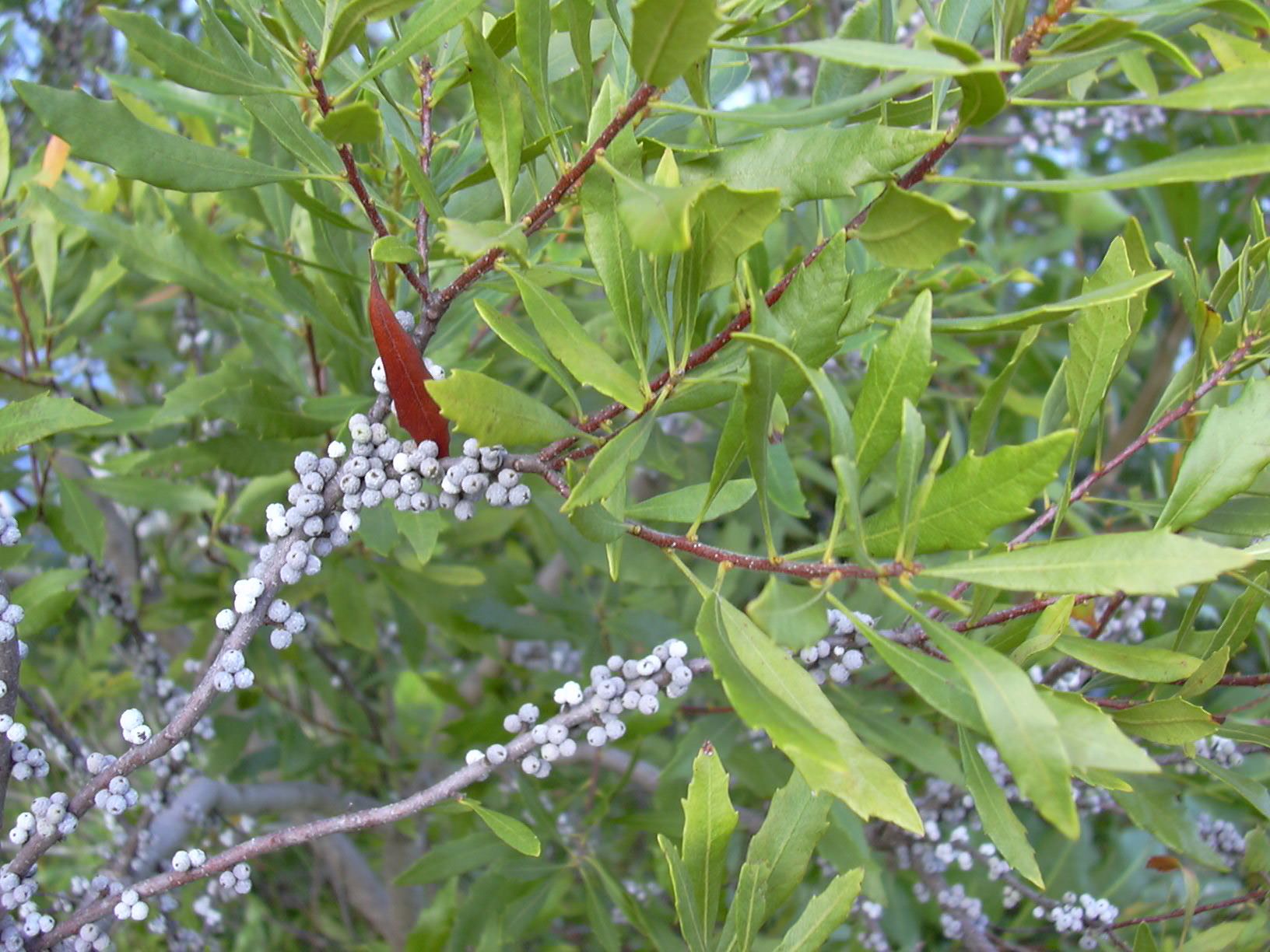
Its branching structure and evergreen foliage can offer shelter, cover and nesting space for birds. Female plants may also produce clusters of small gray-blue berries covered in a pale, waxy coating.
These berries provide food for several types of birds and other wildlife.
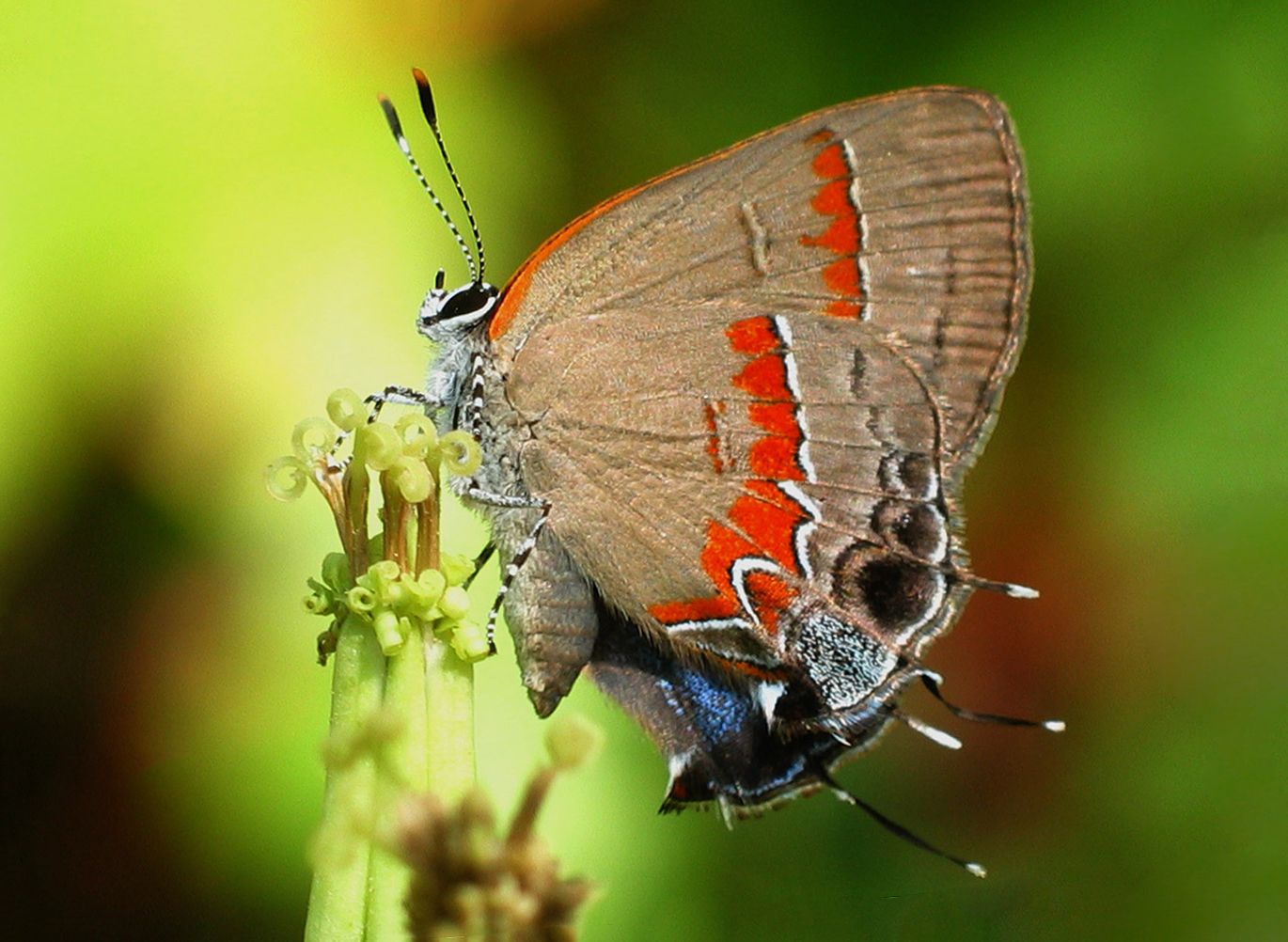
Southern Wax Myrtle also serves as a larval host plant for the Red-banded Hairstreak butterfly, adding further value to Florida-friendly and wildlife-supporting landscapes.
Wax Myrtle plants are generally either male or female. Female plants produce berries when a compatible male plant is growing close enough for pollination. For that reason, a single Wax Myrtle is not guaranteed to produce fruit.
Property owners who are especially interested in berry production and wildlife value may benefit from planting several Wax Myrtles rather than relying on one individual plant.
How Southern Wax Myrtle Got Its Name
The name “Wax Myrtle” comes from the pale, waxy coating found on its berries.
Historically, this wax was collected, melted and used in the production of bayberry candles. This connection is also why Southern Wax Myrtle is sometimes called Southern Bayberry or Candleberry.
Today, the berries are generally appreciated more for their wildlife value than for candle making, but the plant’s common name preserves that interesting part of its history.
Growth and Maintenance
Southern Wax Myrtle grows relatively quickly and is generally considered a low- to moderate-maintenance plant when it is given enough room.
Plants used as hedges or privacy screens may require occasional pruning to control their size and encourage denser growth. If allowed to grow without selective pruning, older plants may become more open near the bottom.
Southern Wax Myrtle responds well to pruning, but repeatedly cutting only the outer surface can eventually create a thin layer of foliage with bare growth inside. Selective pruning and occasional thinning usually produce a healthier and more natural result.
Plants trained as small trees will need periodic removal of low branches and unwanted shoots while their trunk structure develops.
Its fast growth can be an advantage when quick screening is needed, but that same growth rate should be considered before planting it near walkways, buildings, driveways or other confined spaces.
Best Uses in the Landscape
Southern Wax Myrtle may be a good choice for:
Natural privacy screening
Informal hedges
Property-line plantings
Florida native landscapes
Bird- and butterfly-friendly gardens
Coastal or salt-exposed properties
Large background shrubs
Multi-trunk specimen trees
Screening utility equipment, fences or neighboring views
It is usually not the best choice for very small planting beds or locations where the plant must be kept narrow and tightly controlled.
A properly placed Wax Myrtle can provide a large amount of greenery and privacy while maintaining a softer, more natural appearance than many conventional hedge plants.
Important Considerations Before Planting
Before adding Southern Wax Myrtle to a landscape, consider its mature size and rapid growth.
It should be planted far enough away from structures, walkways and property improvements to allow for future growth. Plants installed too close together may compete for light and become thin or crowded as they mature.
Southern Wax Myrtle can also produce root suckers or additional shoots around its base. These can be retained when a fuller shrub is desired or removed when training the plant into a cleaner multi-trunk tree.
Its natural shape is somewhat informal, so it may not suit every landscape style. Property owners who want a perfectly uniform, tightly clipped hedge may prefer a slower-growing plant with a naturally denser form.
For homeowners who appreciate a more relaxed Florida landscape, however, Southern Wax Myrtle can be an attractive and practical choice.
Is Southern Wax Myrtle Right for Your Property?
Southern Wax Myrtle may be worth considering when you want a fast-growing Florida native that can provide privacy, wildlife value and year-round greenery.
It is especially useful in larger areas where it has enough room to develop without constant pruning. With proper placement, it can function as a large shrub, informal screen or attractive small tree.
As with any landscape plant, the best results come from matching the plant to the location rather than trying to force it into a space that is too small or unsuitable.
Explore Southern Wax Myrtle in Our Plant Gallery
Visit our Southern Wax Myrtle plant profile for photographs, mature height, recommended plant spacing, light requirements, hardiness, maintenance information and suggested landscape uses.
View the Southern Wax Myrtle Plant Profile:
https://strongsrq.com/largeshrubs/southern-wax-myrtle
You can also browse other Florida native and Florida-friendly palms, trees, shrubs and landscape plants in our growing StrongSRQ Plant Gallery.
Explore the StrongSRQ Plant Gallery:
https://strongsrq.com/gallery
Sources and Further Reading
Plant characteristics and growing guidance for this article were reviewed using educational information from the University of Florida IFAS Extension and other trusted Florida horticultural resources.
Mention of these sources is for educational reference and does not imply an endorsement of Strong Landscape & Pressure Wash.
Strong Landscape & Pressure Wash
Serving Sarasota and surrounding communities
https://strongsrq.com