
Why Mature Plant Size Matters in Landscape Design


When a new landscape is installed, one of the easiest mistakes to make is designing around the size of the plants today instead of the size they are going to become.
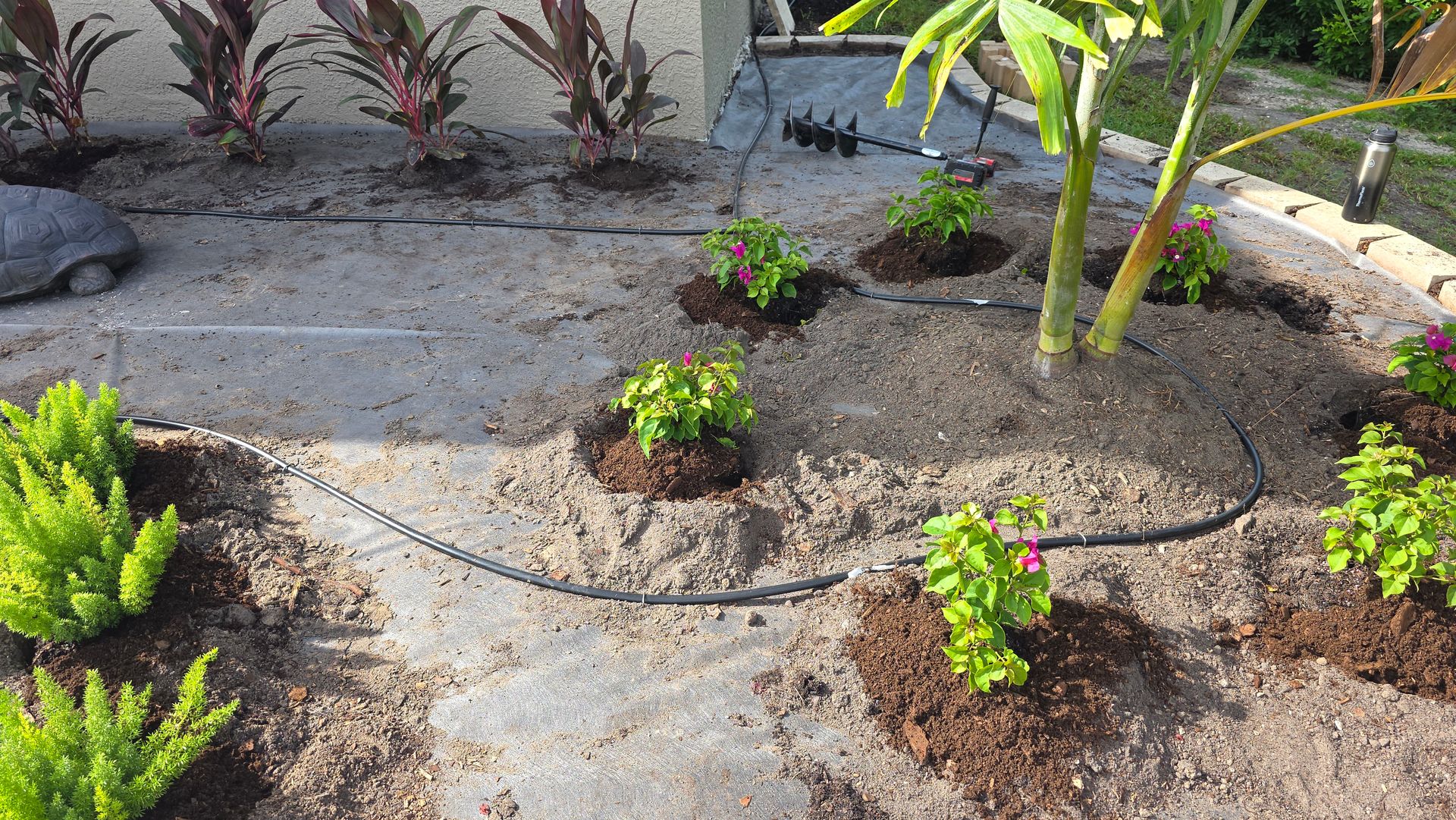
A 3- to 7-gallon plant or a 15- to 25-gallon shrub or tree can still look relatively small at installation. That often makes it tempting to place plants closer together, closer to the house, or tighter against walkways, fences, pool cages, and other structures.
At first, that can make a new landscape look fuller.
A few years later, it can create an entirely different set of problems.
Plan for the Space the Plant Will Eventually Need
Container size tells you how large the plant is when you buy it. It does not tell you how much room that plant will eventually occupy in the landscape.
A shrub that looks compact in a 7-gallon pot may eventually spread several feet in every direction. A young palm may fit comfortably into a narrow bed at installation but later develop a trunk, canopy, or fronds that crowd a roofline, pool cage, walkway, or neighboring plants.
That is why both mature height and mature width should be considered before deciding where a plant belongs.
It also means a newly installed landscape does not always need to look completely full on day one.
Leaving appropriate room between plants gives them space to develop into their natural form instead of quickly growing into one another. A little open space at installation can actually be a sign that the landscape has been planned for future growth.
Over time, much of that open space naturally disappears as the plants mature. Meanwhile, the individual plants are more likely to retain their intended shape, remain distinct parts of the design, and require less corrective pruning.
Trying to eliminate every visible gap when the landscape is first installed may create an immediately fuller appearance, but it can also leave the property overcrowded only a few years later.
Mature Width Is Easy to Underestimate
Homeowners naturally pay attention to how tall a plant will become, but mature width can be just as important.
A plant that reaches 8 feet tall and 8 feet wide needs a very different location than a plant that reaches 8 feet tall but stays only 3 feet wide.
That difference matters around:
- Walkways
- Driveways
- Pool cages and screen enclosures
- Windows and doors
- Fences
- Property lines
- Air-conditioning equipment
- Roof overhangs
- Other shrubs, palms, and trees
Planting too close to any of these can turn routine maintenance into constant corrective pruning.
What Happens When Plants Are Too Close Together?
As crowded plants mature, they begin competing for space, light, and airflow.
That can lead to:
- Constant trimming just to keep plants contained
- Shrubs growing across sidewalks and walkways
- Foliage pressing against walls or pool screens
- Windows becoming blocked
- Plants growing into one another
- Reduced airflow through dense plantings
- Uneven growth as plants compete for sunlight
- More labor required to keep the landscape looking orderly
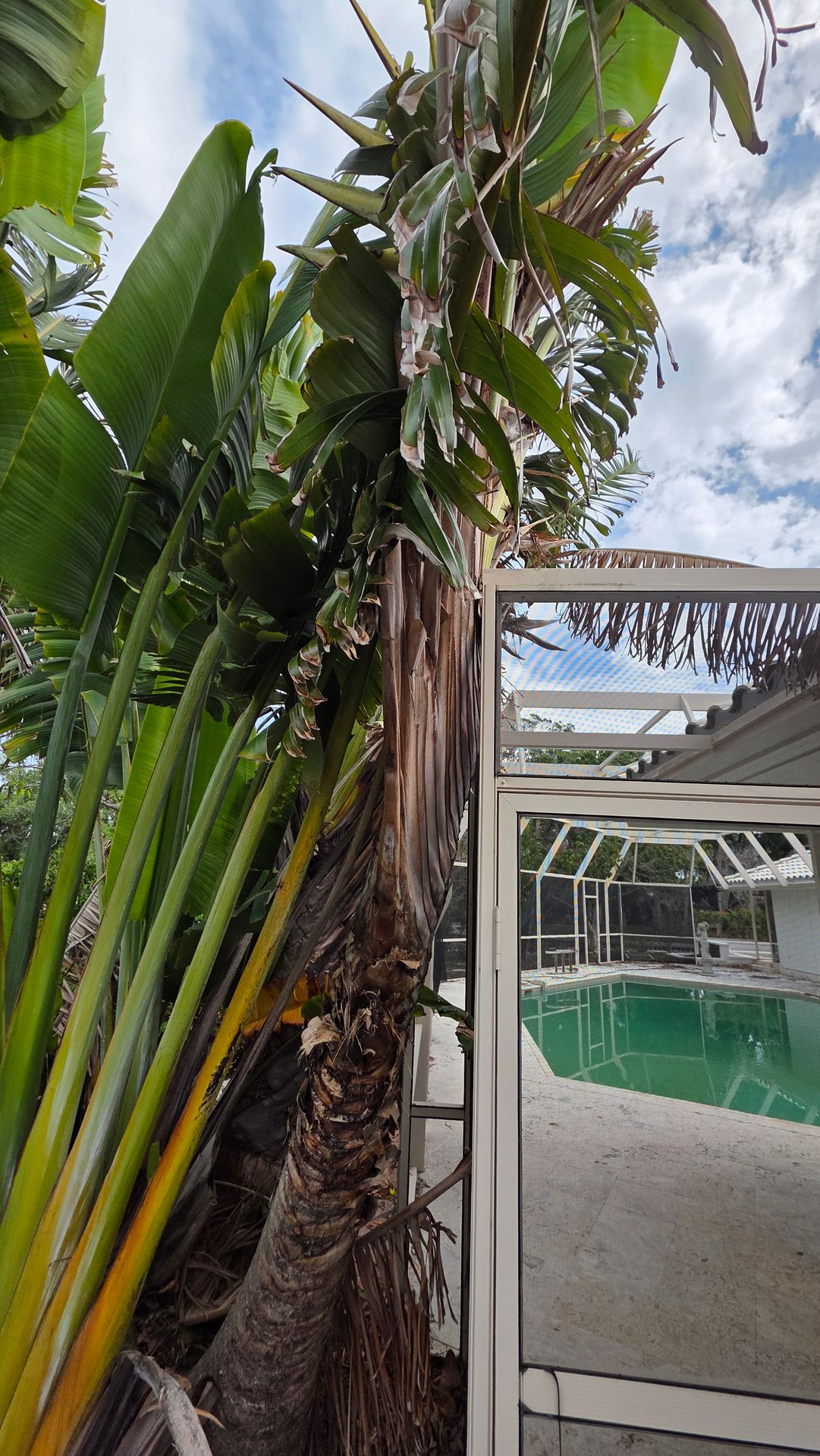
Sometimes the problem becomes more obvious with larger palms and trees.
A plant that looked perfectly reasonable when installed may eventually become completely out of scale with the area around it.
Removal Can Become Expensive
Once a plant has seriously outgrown its location, correcting the problem may involve much more than trimming it back.
Large shrubs, palms, and trees can develop substantial trunks and root systems, and removing them from an established landscape may require specialized equipment, additional labor, hauling, and repairs to the surrounding bed.
That can turn what started as a simple spacing mistake into a much more expensive project.
Good placement at installation does not eliminate every future maintenance need, but it can prevent many avoidable problems.
Screening Plants Need Room Too
Privacy hedges are another area where spacing is often misunderstood.
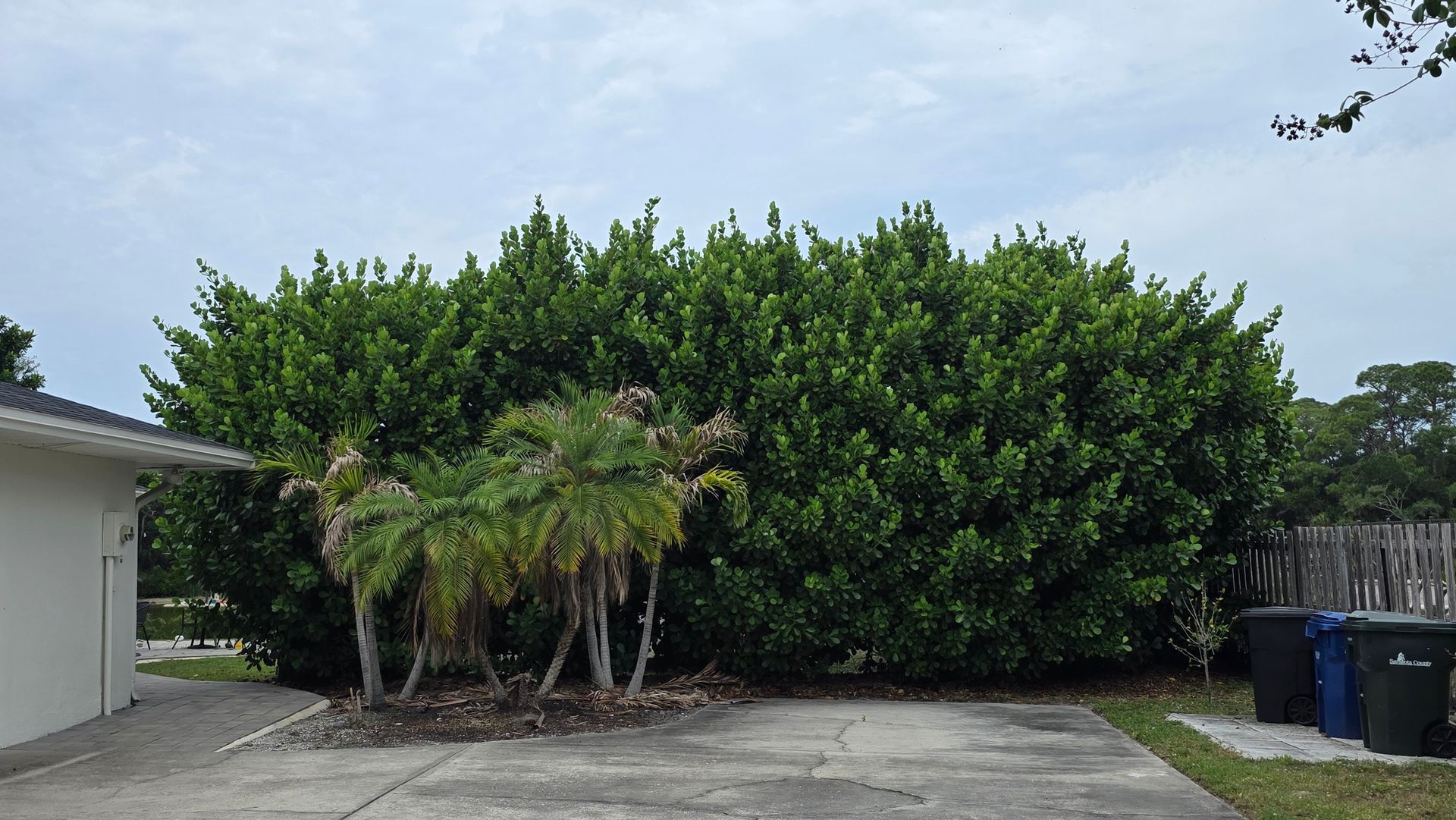
Plants such as Clusia can make excellent screens, but they can also become very large when allowed to grow.
That may be exactly what is wanted along a property line or around a large backyard, but the same plant can become difficult to manage when squeezed into a narrow space.
The goal is not simply to ask whether a plant can create privacy.
The better question is whether its mature size and growth habit fit the amount of space available.
Plant Spacing Is Not One-Size-Fits-All
Even plants of the same species are not always used at the exact same spacing.
Spacing can depend on what the landscape is trying to accomplish.
For example, a shrub being used as a dense privacy hedge may be spaced differently than the same shrub used to soften an area or as an individual specimen.
Other factors can include:
- Mature growth habit
- Desired level of screening
- Sun exposure
- Irrigation
- Nearby structures
- Maintenance expectations
- Whether the plant will be regularly pruned or allowed to grow more naturally
This is why simply copying the spacing from another yard is not always the best approach.
Think About Maintenance Before You Plant
A good landscape design should not only consider what looks attractive today.
It should also consider what the homeowner will need to maintain several years from now.
A plant placed too close to a walkway may require frequent trimming forever. A shrub planted directly beneath a window may eventually need to be repeatedly cut below its natural height. A large palm too close to a pool cage may require increasingly difficult maintenance as it grows, and heavy fronds can eventually damage the enclosure.
Selecting a plant that naturally fits the available space can often reduce those problems before they begin.
Budget Can Influence Plant Size — Not Proper Spacing
Project budget also plays a role in deciding what size plants to install.
Using smaller starter plants can save a significant amount of money upfront, especially on larger landscape projects. The tradeoff is time: smaller plants generally need longer to establish, mature, and create the fuller look the homeowner may ultimately want.
If the budget allows and a more finished appearance is desired sooner, we would typically recommend larger, more mature nursery plants rather than simply adding more plants to fill the empty space.
We also usually try to strike a balance by incorporating at least a few larger specimens or focal plants into the design, even when much of the project uses smaller starter material. That gives the landscape some immediate structure and visual impact while allowing the rest of the planting to mature over time.
The key is that proper spacing should still be based on the plant’s mature size. Choosing larger specimens can create a fuller landscape sooner without overcrowding the design and creating unnecessary maintenance problems later.
Mature Size Is One Reason We Built Our Plant Gallery
When we began developing the StrongSRQ Plant Gallery, we wanted it to be more useful than simply a collection of attractive plant photographs.
That is why our individual plant pages include information such as mature height, plant spacing, growth habit, maintenance info, light requirements, and landscape uses.
Those details can help homeowners understand not only whether they like a plant, but whether that plant actually makes sense for the location they have in mind.
Explore our Florida native and Florida-friendly Plant Gallery:
Plan for the Landscape You Want Later
There is nothing wrong with a newly installed landscape having a little room to grow.
In many cases, that is exactly what good planning should look like.
The goal is to choose plants that fit the space, give them enough room to mature, and create a landscape that can develop naturally without becoming an unnecessary maintenance problem later.
A plant should not just fit the landscape when it comes off the nursery truck.
It should still fit several years down the road.
Strong Landscape & Pressure Wash
Sarasota, Florida
941-323-8668
StrongSRQ.com