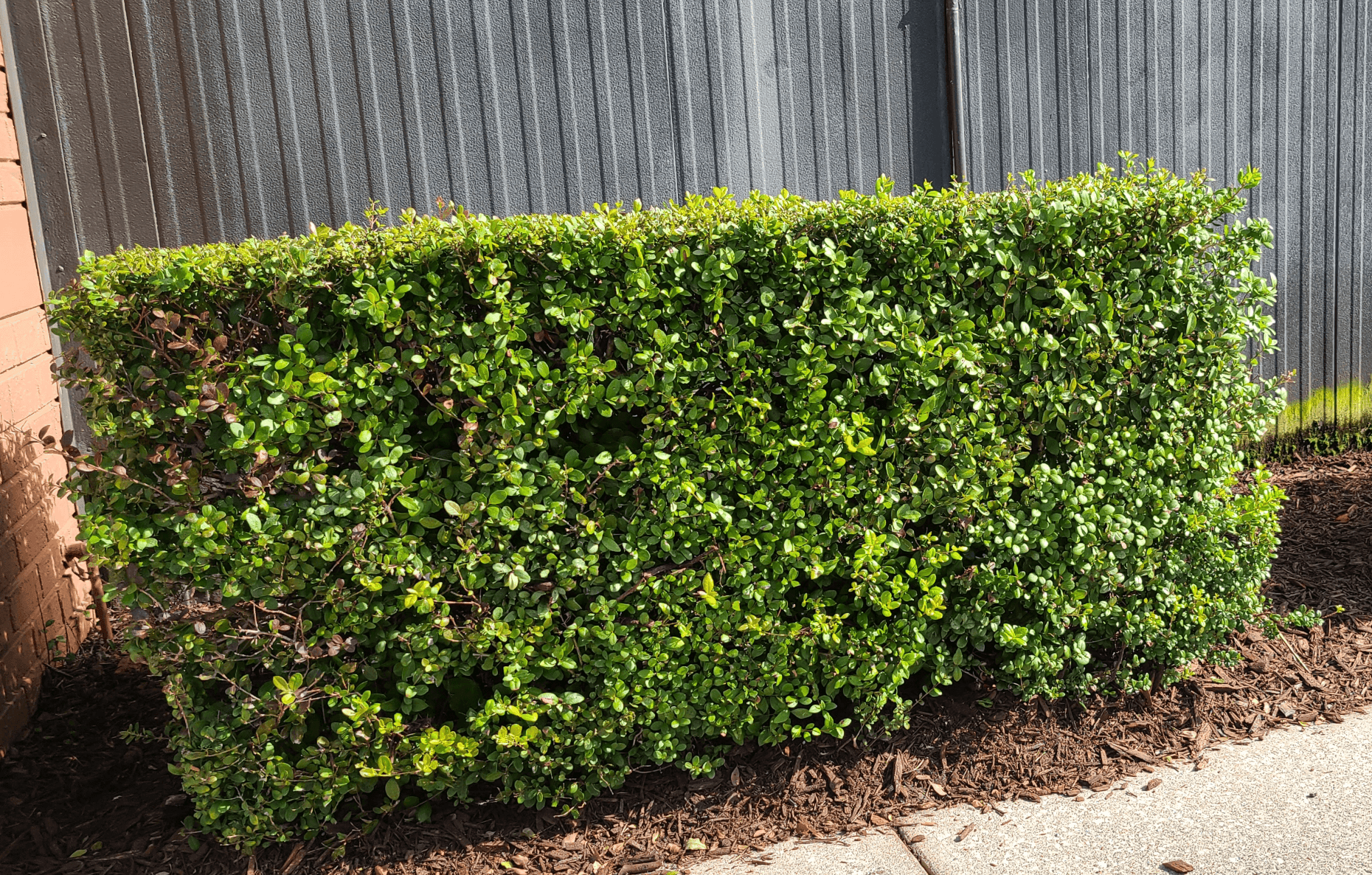
Simpson’s Stopper / Twinberry
Scientific Name: Myrcianthes fragrans
Light Requirement: Full sun to partial shade. It grows fullest in sun but also performs well in filtered light or partial shade.
Height: Typically 10–20 ft. tall in Florida landscapes, though it can be maintained smaller as a hedge or allowed to grow into a small ornamental tree.
Plant Spacing: Space about 4–6 ft. apart for a dense hedge or privacy screen. For a looser natural screen, space about 6–8 ft. apart. When used as a small tree or specimen, allow about 10–15 ft. of space for the canopy to mature.
Growth Habit: Slow to moderate-growing evergreen shrub or small tree with dense foliage, small glossy leaves, attractive bark, fragrant white flowers, and red to orange berries. It can be maintained as a hedge, natural screen, or small multi-trunk ornamental tree.
Hardiness: USDA Zones 9b–11; moderately cold hardy and suitable for most warm Florida landscapes; moderately drought tolerant once established; moderate to high salt tolerance, making it useful in coastal and native Florida plantings; adaptable to mildly acidic through alkaline soils as long as drainage is good.
Maintenance Info: Low to moderate maintenance. Simpson’s Stopper responds well to pruning and can be kept as a neat hedge or shaped into a small tree. Water regularly during establishment, then reduce watering once rooted. It generally stays cleaner and more manageable than many fast-growing hedge plants. Light pruning helps maintain density, but heavy pruning is usually not needed unless controlling size.
Best Uses in the Landscape: Excellent for Florida native hedges, privacy screening, wildlife gardens, foundation planting, small-tree accents, understory planting, coastal landscapes, and formal or natural designs. It is especially useful where a clean, evergreen native plant is desired with flowers, berries, and wildlife value.
Plant Info: Simpson’s Stopper is native to Florida, the Caribbean, Mexico, and parts of Central America. The “Stopper” name comes from traditional use of related stopper plants in folk medicine, while “Simpson’s” honors Charles Torrey Simpson, a Florida naturalist and botanist known for his work with native plants. The name “Twinberry” refers to the small berries that often appear in pairs after the plant flowers. It produces small fragrant white flowers followed by bright red-orange berries that attract birds. The fruit flesh is technically edible, though the seeds are not recommended and the flavor is often considered more interesting than desirable. In Florida landscapes, Simpson’s Stopper is one of the best native shrubs or small trees for combining a polished look with wildlife benefits.