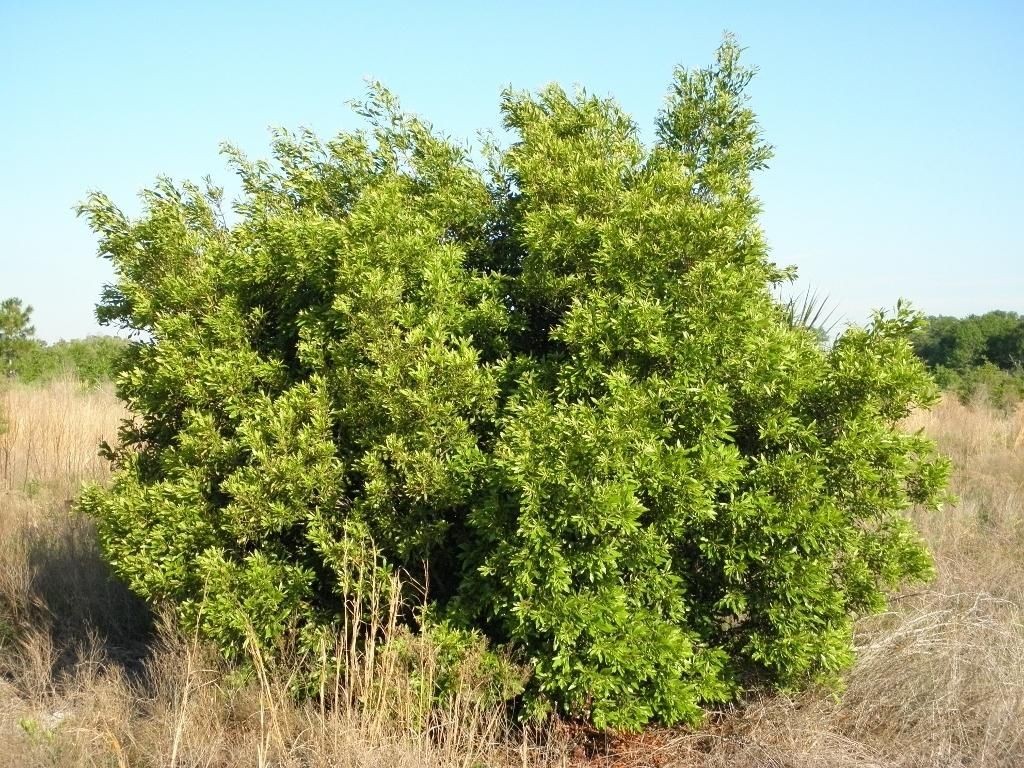
Southern Wax Myrtle / Wax Myrtle
Scientific Name: Morella cerifera
Light Requirement: Full sun to partial shade. It grows fullest in full sun but can tolerate some shade.
Height: Typically 10–20 ft. tall in Florida landscapes, though it can be maintained smaller as a hedge or allowed to grow into a small tree.
Plant Spacing: For a dense privacy hedge or screen, space plants about 5–7 ft. apart. For a looser natural screen, space about 8–10 ft. apart. When used as a small tree or specimen, allow 10–15 ft. of space from nearby plants or structures.
Growth Habit: Fast-growing evergreen shrub or small tree with dense, upright growth and narrow aromatic leaves. It can be maintained as a hedge, left natural as a large screening shrub, or trained into a small multi-trunk tree.
Hardiness: USDA Zones 7–11; very cold hardy throughout Florida; highly drought tolerant once established; high salt tolerance, making it a strong choice for coastal and Florida-native landscapes.
Maintenance Info: Low to moderate maintenance. Southern Wax Myrtle grows quickly and may need regular trimming if used as a formal hedge. It responds well to pruning and can be shaped or thinned as needed. Plant in well-drained to moist soil and water regularly during establishment. Older plants may develop open lower growth if not maintained, so occasional pruning helps keep them full.
Best Uses in the Landscape: Excellent for privacy screening, native Florida landscapes, property-line buffers, wildlife gardens, coastal landscapes, wet areas, natural hedges, windbreaks, and informal evergreen backdrops. It works especially well where a fast-growing native screen is desired.
Plant Info: Southern Wax Myrtle is native to Florida and much of the southeastern United States. It gets the name “Wax Myrtle” from the small grayish-blue berries produced by female plants, which have a natural waxy coating. Historically, that wax was sometimes used to make candles and other wax products. In the landscape, Southern Wax Myrtle is valued for its fast growth, evergreen foliage, salt tolerance, and wildlife benefits. Birds feed on the waxy berries, and the fragrant leaves release a pleasant scent when crushed.