Bottle Palm
Scientific Name: Hyophorbe lagenicaulis
Light Requirement: Full sun to partial shade. It performs best in bright, warm locations but can benefit from some protection when young.
Height: Typically 8–15 ft. tall in Florida landscapes, occasionally reaching around 15 ft. in ideal tropical conditions.
Plant Spacing: Space about 6–10 ft. apart for individual accents or small groupings. Allow enough room around walkways, entries, patios, and pool areas so the swollen trunk and compact crown can be viewed clearly without crowding.
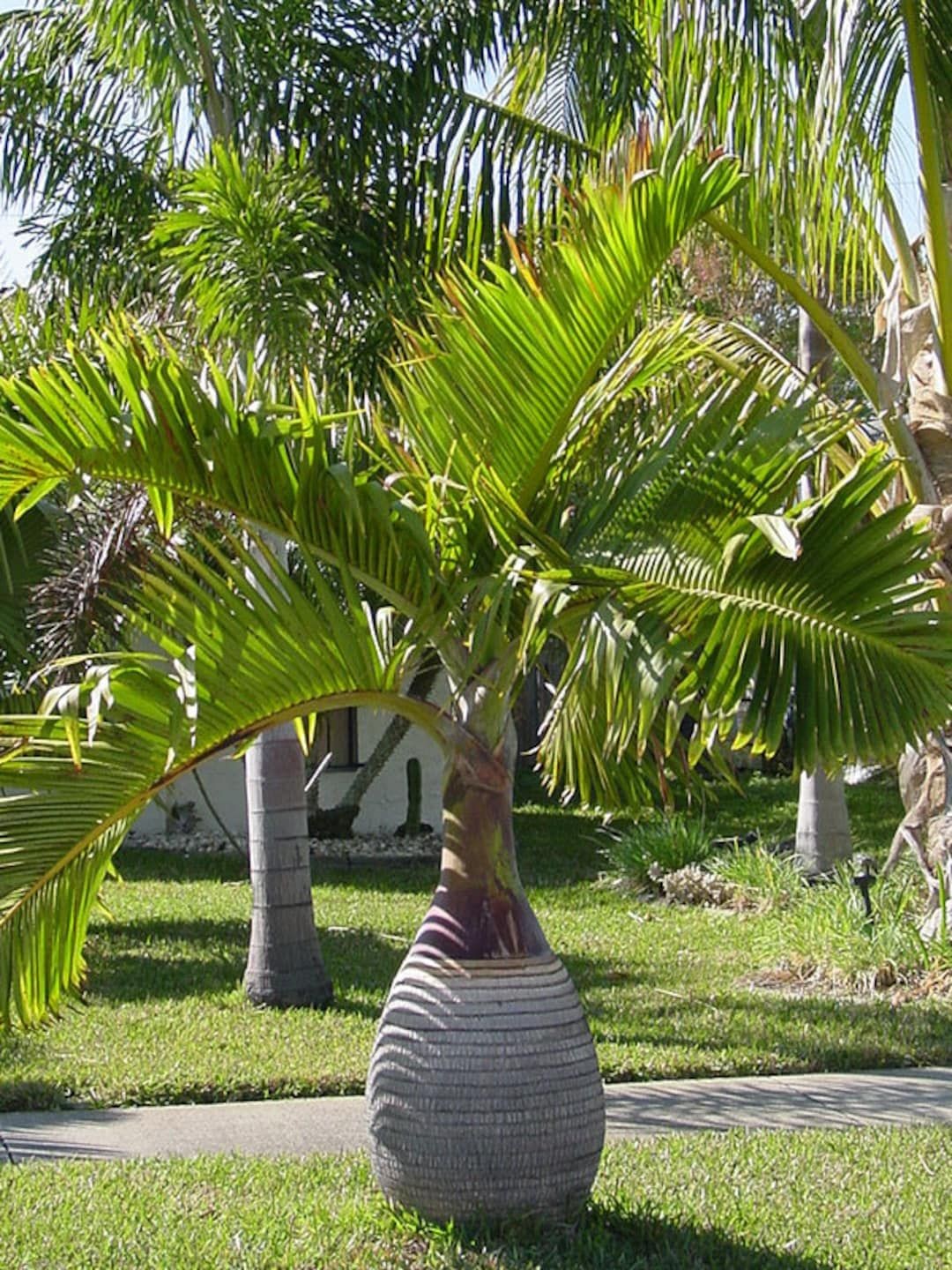
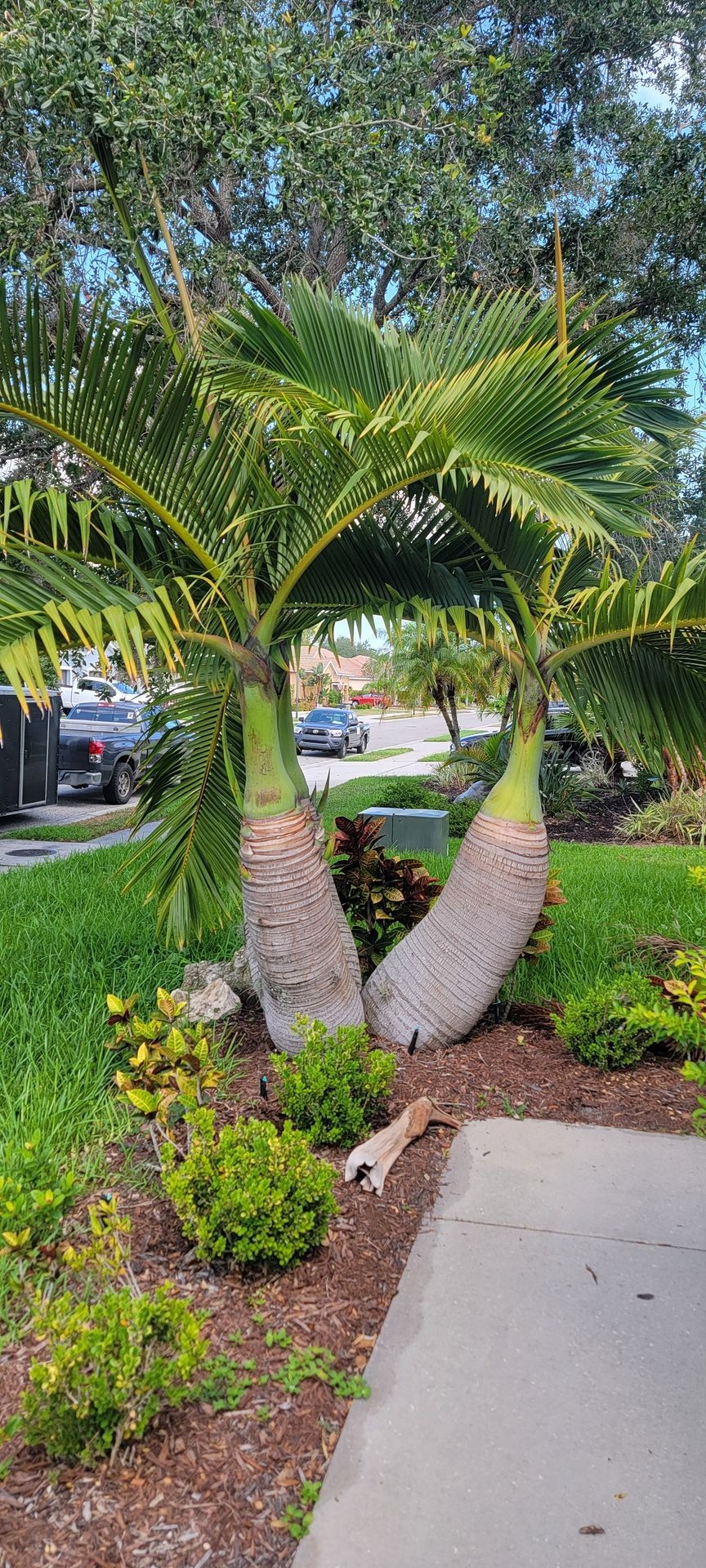
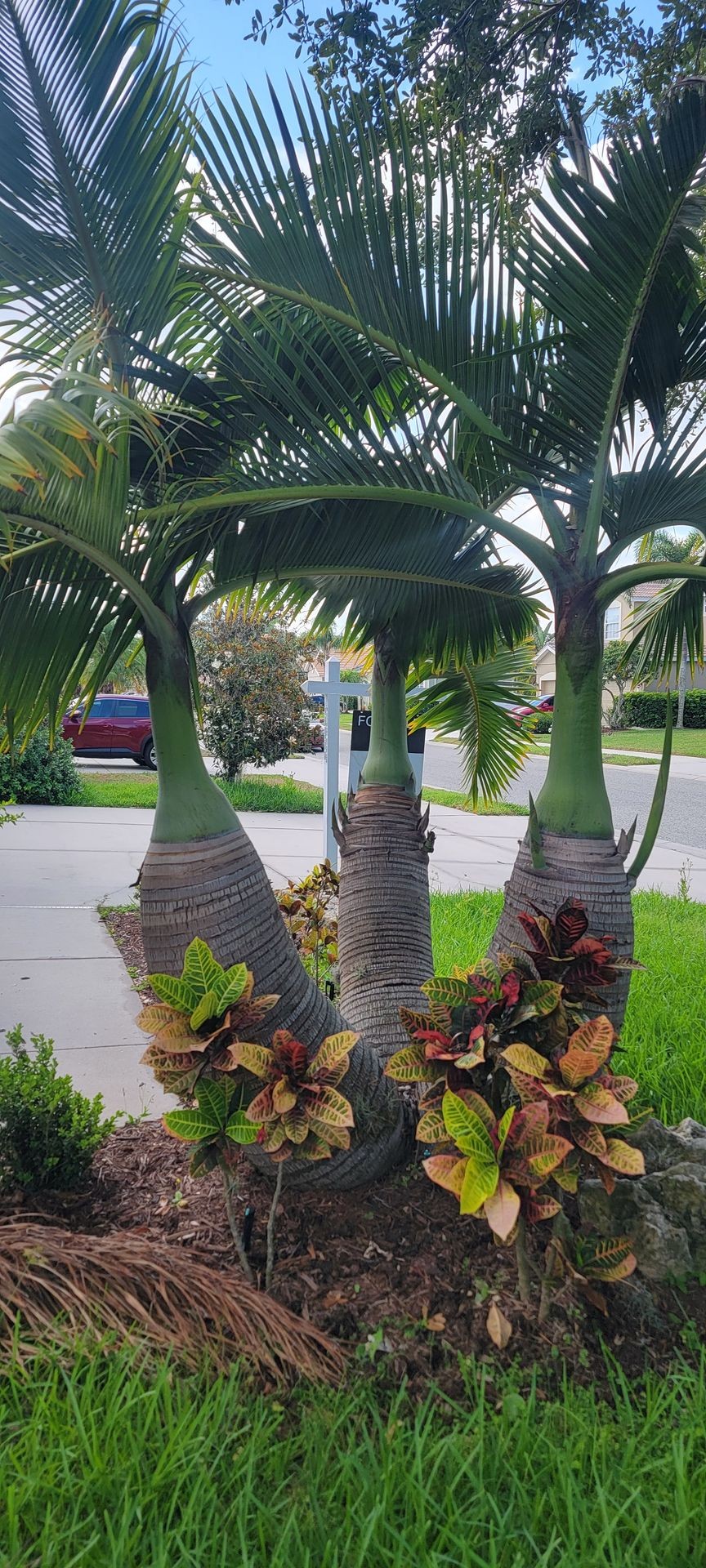
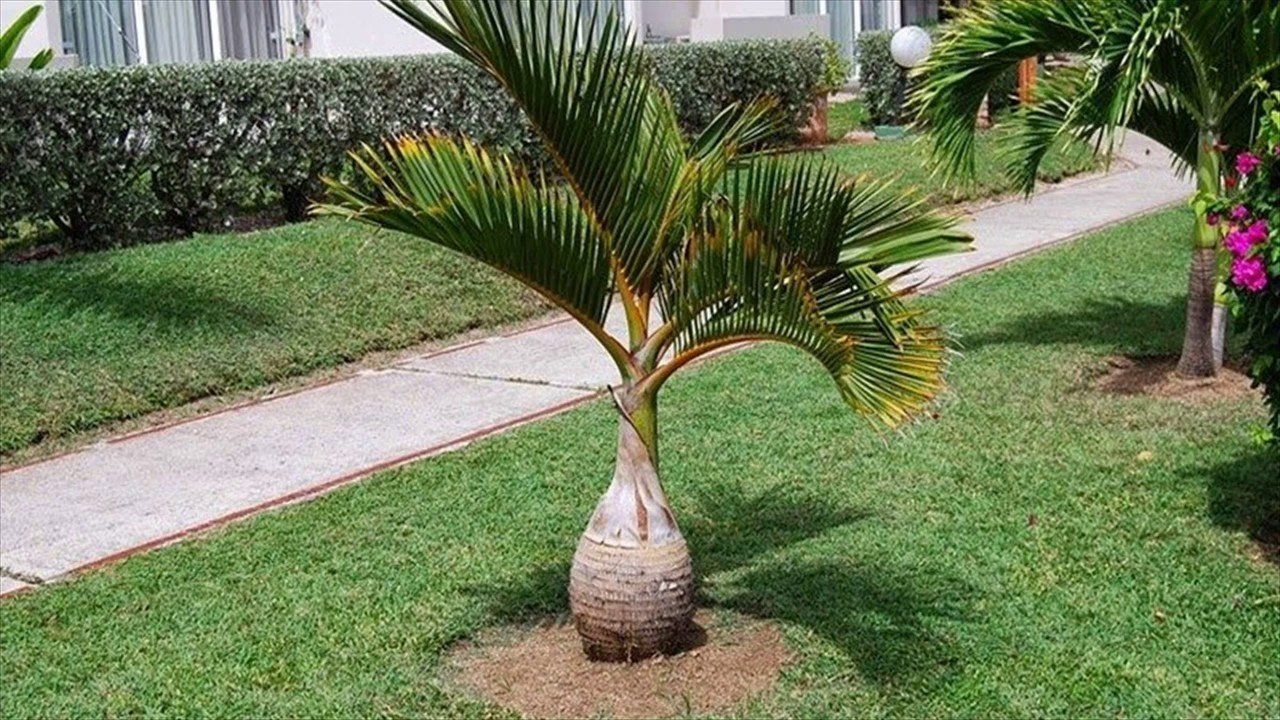
Growth Habit: Slow-growing, single-trunk feather palm with a distinctive swollen trunk that narrows toward the top, a smooth green crownshaft, and a small crown of arching fronds. It has a very sculptural, tropical appearance.
Hardiness: USDA Zones 10b–11; cold sensitive and may be damaged by frost or freezing temperatures; moderately drought tolerant once established but looks best with regular moisture; low to moderate salt tolerance and best protected from heavy direct coastal salt spray.
Maintenance Info: Low maintenance when planted in the right location. Bottle Palm needs well-drained soil, warm conditions, and palm fertilizer during the growing season. It is slow-growing and compact, so pruning needs are minimal. Protect from cold snaps, especially when young, and avoid overwatering or planting in poorly drained areas.
Best Uses in the Landscape: Excellent as a small specimen palm, entryway accent, pool-area palm, courtyard feature, tropical-modern focal point, container palm, or patio accent. It works especially well where a customer wants a unique palm that stays smaller and has a clean, sculptural look.
Plant Info: Bottle Palm is native to the Mascarene Islands in the Indian Ocean, especially Round Island near Mauritius. The name “Bottle Palm” comes from the swollen lower trunk, which can look like an old-fashioned bottle. Its unusual shape makes it one of the most recognizable small ornamental palms. In Florida landscapes, it is best used as a focal point in warm, protected areas where its trunk shape can be appreciated up close.