Adonidia Palm / Christmas Palm / Manila Palm
Scientific Name: Adonidia merrillii
Light Requirement: Full sun to partial shade. It grows best in bright light but can tolerate some light shade, especially when young.
Height: Typically 15–25 ft. tall in Florida landscapes, with a narrow canopy spread of about 6–10 ft.
Plant Spacing: Space about 8–12 ft. apart for single specimens, small groupings, or entryway plantings. Allow enough room away from walkways, pool edges, driveways, and structures for the crown, fruit clusters, and falling fronds.
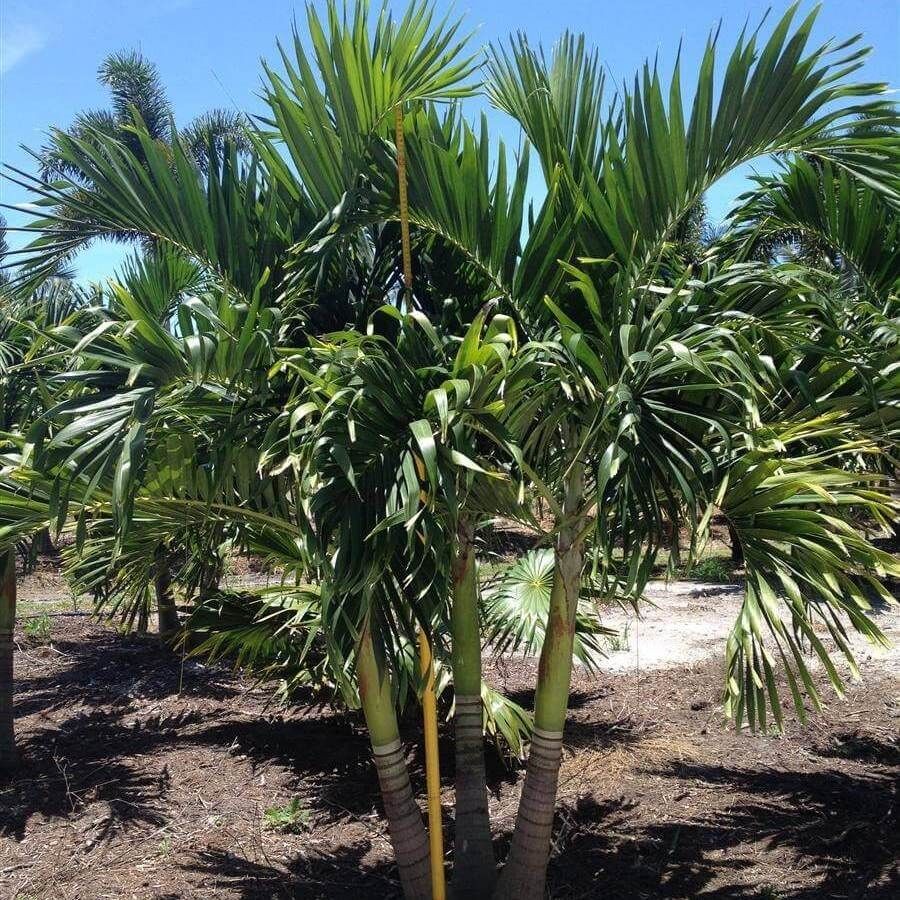
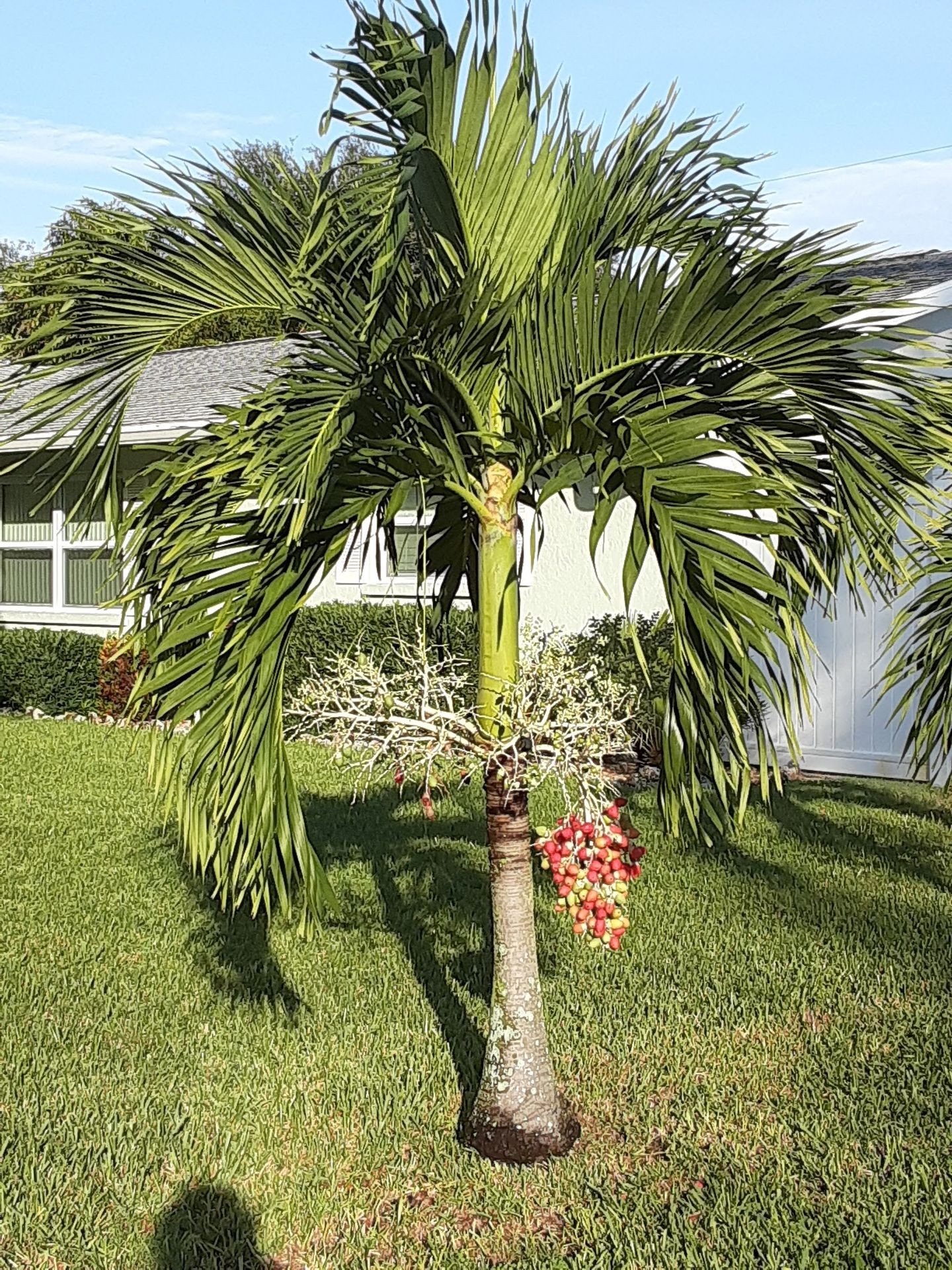
Growth Habit: Moderately fast-growing, single-trunk or multi-trunk feather palm with a smooth gray trunk, green crownshaft, and neatly arching fronds. It develops a clean, compact tropical appearance and remains smaller than many other commonly planted landscape palms. Growth is typically faster while young, especially until the palm reaches about 6 feet tall, then gradually slows as it matures. Christmas palms may eventually reach approximately 20 to 25 feet tall, with a canopy spread of about 5 to 8 feet and a trunk around 6 inches in diameter.
Hardiness: USDA Zones 10b–11; cold sensitive and may be damaged by frost or freezing temperatures; moderately drought tolerant once established but looks best with regular irrigation; low to moderate salt tolerance and best protected from heavy direct salt spray.
Maintenance Info: Low to moderate maintenance. Adonidia Palms are often considered one of the better palms for smaller spaces, but they still need good drainage, palm fertilizer, and regular watering during establishment. Remove dead fronds and old fruit stalks as needed. In Florida, they can be susceptible to lethal yellowing disease, so they should be used thoughtfully and monitored for decline.
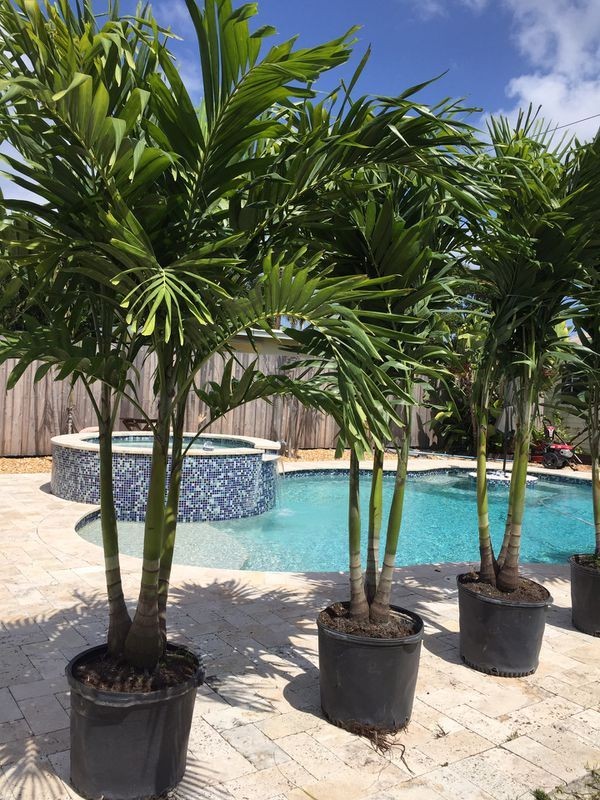
Best Uses in the Landscape: Excellent for entryway accents, pool areas, courtyard plantings, tropical foundation beds, small yards, patio areas, and formal groupings. Its compact size and clean trunk make it useful where a tropical palm is desired but a large-growing palm would be too much.
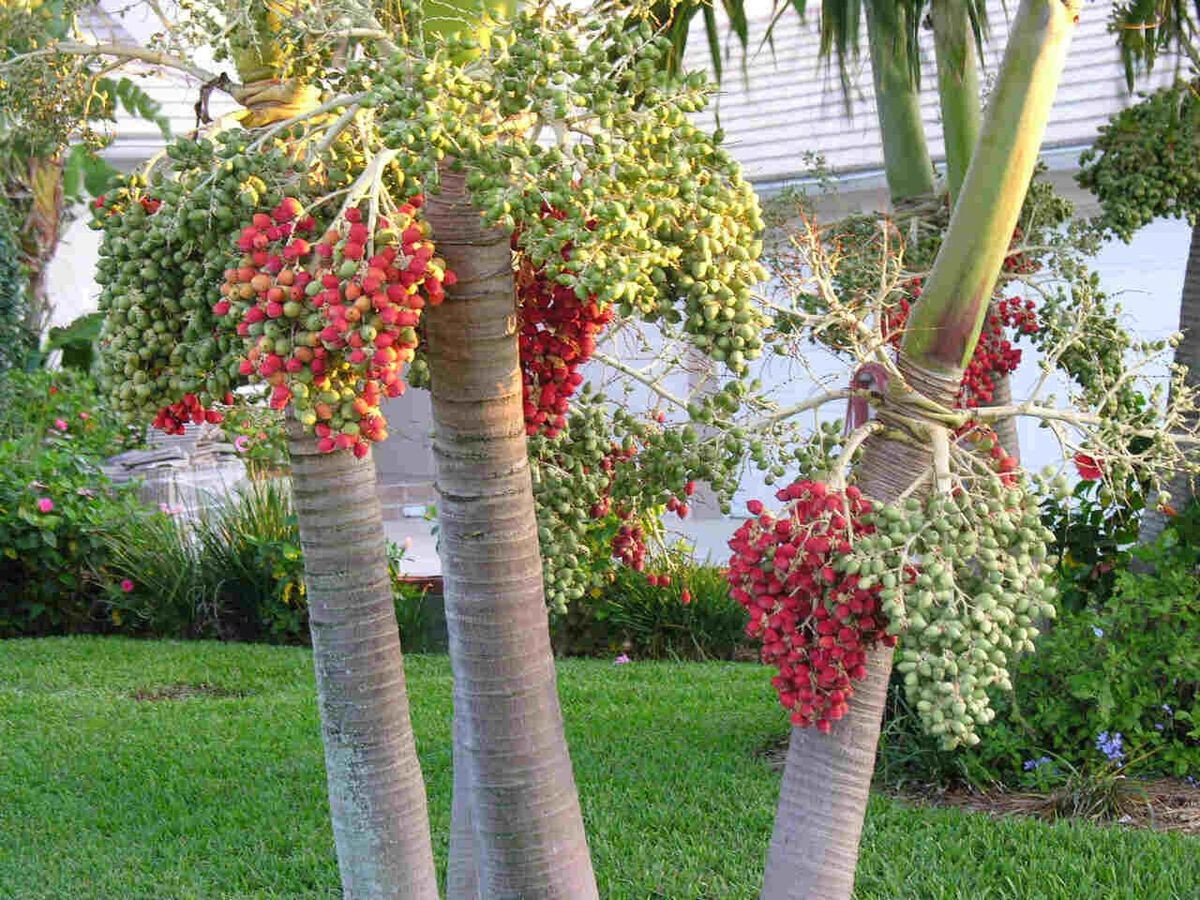
Plant Info: Adonidia Palm is native to the Philippines and nearby parts of Southeast Asia, which is why it is also called Manila Palm. The name Christmas Palm comes from the bright red fruit clusters that often appear around the winter holiday season, giving the palm a festive look. In Florida landscapes, it is popular because it gives a clean, tropical, resort-style appearance while staying smaller and more manageable than many common palms.