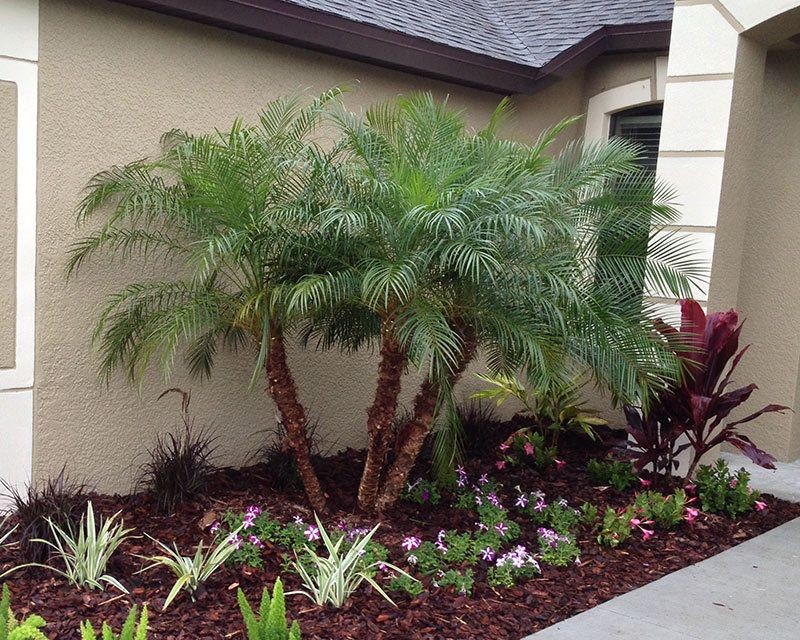
Pygmy Date Palm
Scientific Name: Phoenix roebelenii
Light Requirement: Full sun to partial shade. It can handle full sun, but in hot Florida landscapes it often looks best with some filtered light or afternoon shade.
Height: Typically 6–12 ft. tall, occasionally taller with age.
Plant Spacing: Space about 6–8 ft. apart for individual accent palms or loose groupings. For multi-trunk specimens near entries, patios, or pool areas, allow enough room for the fronds to spread without brushing walkways or structures.
Growth Habit: Slow-growing small feather palm with a graceful, tropical form. It may be grown as a single trunk or, more commonly in landscapes, as a multi-trunk specimen with soft arching fronds.
Hardiness: USDA Zones 9b–11; cold sensitive and may show damage from frost or freezing temperatures; moderately drought tolerant once established but performs best with regular moisture; low to moderate salt tolerance and best protected from heavy direct coastal salt spray.
Maintenance Info: Low to moderate maintenance. Remove dead fronds as needed and use palm fertilizer during the growing season. Be careful with placement because the lower frond bases have sharp spines, which can be painful near walkways, doors, pool edges, or tight garden paths.
Best Uses in the Landscape: Excellent for entryway accents, pool areas, patios, courtyard plantings, tropical foundation beds, containers, and small-space specimen planting. It works well where a customer wants a palm look without using a large-growing palm.
Plant Info: Pygmy Date Palm is native to Southeast Asia, including areas near Laos, Vietnam, and southern China. The name “Pygmy” refers to its naturally smaller size compared to larger date palms, making it a popular choice for compact Florida landscapes. It gives a soft tropical look without overwhelming a small yard, entry, or pool area. While it is related to true date palms, it is mainly grown as an ornamental palm rather than for edible fruit.