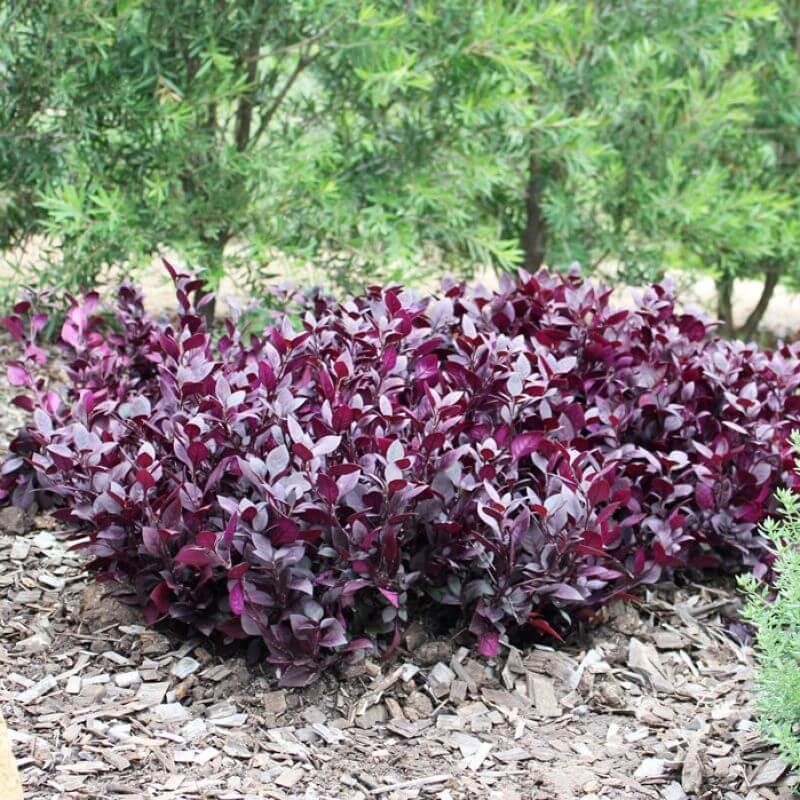
Little Ruby / Little Ruby Alternanthera / Joseph’s Coat
Scientific Name: Alternanthera brasiliana ‘Little Ruby’
Light Requirement: Full sun to partial shade. The richest burgundy-purple color usually develops in full sun, while partial shade may produce slightly greener or softer coloring.
Height: Typically 12–24 inches tall, with a spread of about 18–30 inches.
Plant Spacing: Space about 18–24 inches apart for mass plantings, borders, or low color beds. For faster fill-in, plant closer to 18 inches apart. Allow enough room for the plant to mound and spread without crowding walkways or nearby smaller plants.
Growth Habit: Low-growing, compact tropical perennial with a dense mounding to spreading habit. It is grown mainly for its deep burgundy to ruby-purple foliage rather than flowers.
Hardiness: USDA Zones 9b–11; cold sensitive and may be damaged by frost or freezing temperatures; moderately drought tolerant once established but looks best with regular moisture; low to moderate salt tolerance and best protected from heavy direct coastal salt spray.
Maintenance Info: Low to moderate maintenance. Little Ruby benefits from occasional trimming to keep it compact, full, and colorful. It performs best in well-drained soil with regular watering during establishment. If it becomes leggy, light pruning can refresh the shape. Cold damage may require cutback or replacement in exposed areas after winter events.
Best Uses in the Landscape: Excellent for colorful borders, mass plantings, walkway edges, tropical beds, entryway accents, container plantings, low foundation color, and contrast planting around green shrubs, palms, grasses, or light-colored flowers. It works especially well where a rich burgundy foliage contrast is desired.
Plant Info: Little Ruby is a compact cultivar of Alternanthera, a plant group native to tropical and subtropical parts of the Americas. It is often grouped with plants commonly called Joseph’s Coat because of its colorful foliage. The “Little Ruby” name is a good fit because the plant stays low and compact while producing rich ruby-purple leaves. In Florida landscapes, it is useful for adding bold color contrast without relying on flowers, making it a strong choice for borders, accent beds, and tropical landscape designs.