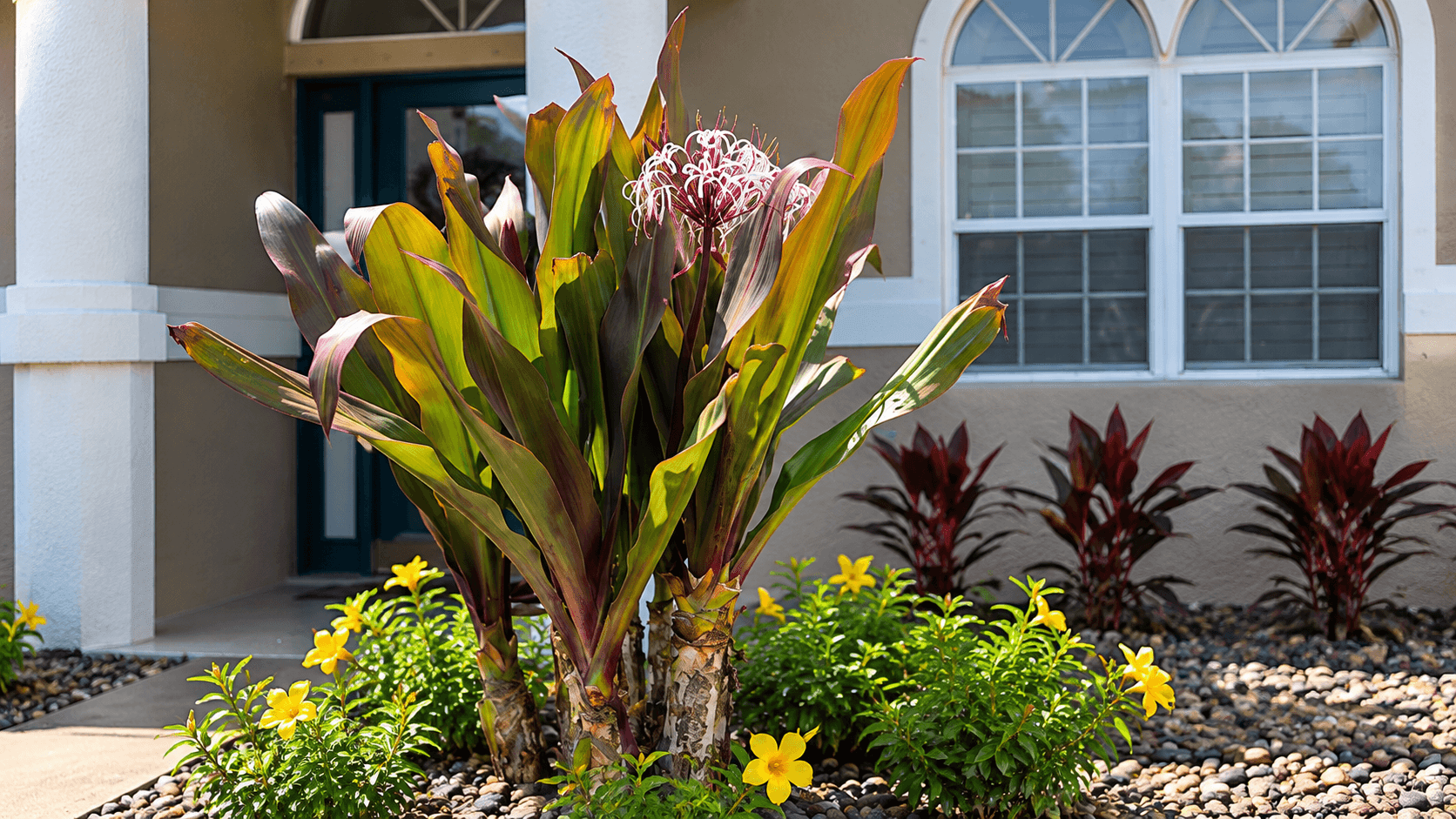
Queen Emma Crinum
Common Name: Queen Emma Crinum / Queen Emma Crinum Lily / Purple Crinum Lily
Scientific Name: Crinum ‘Queen Emma’ / commonly listed as Crinum asiaticum ‘Queen Emma’ or Crinum augustum ‘Queen Emma’
Light Requirement: Full sun to partial shade. Queen Emma Crinum performs best with bright light and can handle full sun in Florida landscapes, but it also tolerates partial shade, especially in hot protected areas.
Height: Typically 4–6 ft. tall and wide in Florida landscapes, depending on age, growing conditions, and maintenance. Flower stalks may rise above the foliage.
Plant Spacing: Space about 4–6 ft. apart for individual specimens, tropical groupings, or large accent plantings. Allow enough room away from walkways, driveways, pool edges, and smaller plants because mature clumps become large, wide, and architectural.
Growth Habit: Moderate-growing tropical bulb-like perennial with a large clumping form, broad strap-like leaves, burgundy to purple-toned foliage, and tall flower stalks with showy pinkish-white to purple-tinted flowers. It creates a bold, coarse-textured tropical look and becomes more impressive as the clump matures.
Hardiness: USDA Zones 9b–11; may show cold damage from frost or freezing temperatures but can often recover from the bulb/root system in warm Florida landscapes; moderate drought tolerance once established; moderate salt tolerance in protected coastal landscapes, but best kept away from heavy direct salt spray unless site experience supports it; adaptable to acidic to alkaline soils as long as drainage is adequate.
Maintenance Info: Low to moderate maintenance when planted in the right location. Water regularly during establishment, then reduce watering once rooted. Remove older, damaged, or declining leaves as needed to keep the plant clean, especially after cold weather or seasonal leaf wear. Divide large clumps only when they become overcrowded or need to be relocated. A slow-release landscape fertilizer during the growing season can support healthy foliage and flowering in sandy Florida soils, but established crinums are generally durable and should not need heavy fertilization. All parts of crinum lilies are considered poisonous if ingested, so use caution around pets and children.
Best Uses in the Landscape: Excellent as a tropical accent, large specimen perennial, pool-area plant, palm underplanting, entryway accent, courtyard plant, foundation-bed focal point, or bold foliage contrast in mixed tropical landscapes. It works especially well where a large, colorful, architectural plant is needed without using a shrub or small tree.
Plant Info: Queen Emma Crinum is a cultivated tropical crinum commonly grown in warm landscapes for its large purple-toned foliage and showy flower stalks. Crinums are native across tropical and subtropical regions of the world, and Queen Emma is commonly associated with tropical Asian and Pacific garden use, though the exact naming can vary in the nursery trade. The name “Crinum” comes from the Greek word for lily, reflecting its lily-like flowers, even though crinums are not true lilies. In Florida landscapes, Queen Emma Crinum is valued for its bold foliage color, large tropical form, durability, and ability to create an instant focal point in sunny or partly shaded beds.