
Concrete Stains: Why More Pressure Isn’t Always the Answer


When people think about pressure washing concrete, it is easy to assume that a stubborn stain simply needs more pressure.
In reality, that is often the wrong approach.
Concrete can become stained by algae, pollen, leaves, irrigation water, rust, oil, paint, and many other contaminants — and they do not all respond to the same cleaning process.
The first step toward getting a good result is understanding what caused the stain. From there, the cleaning solution, dwell time, agitation, pressure, and application method can be adjusted to the problem.
Sometimes pressure does most of the work. Other times, the chemistry is far more important.
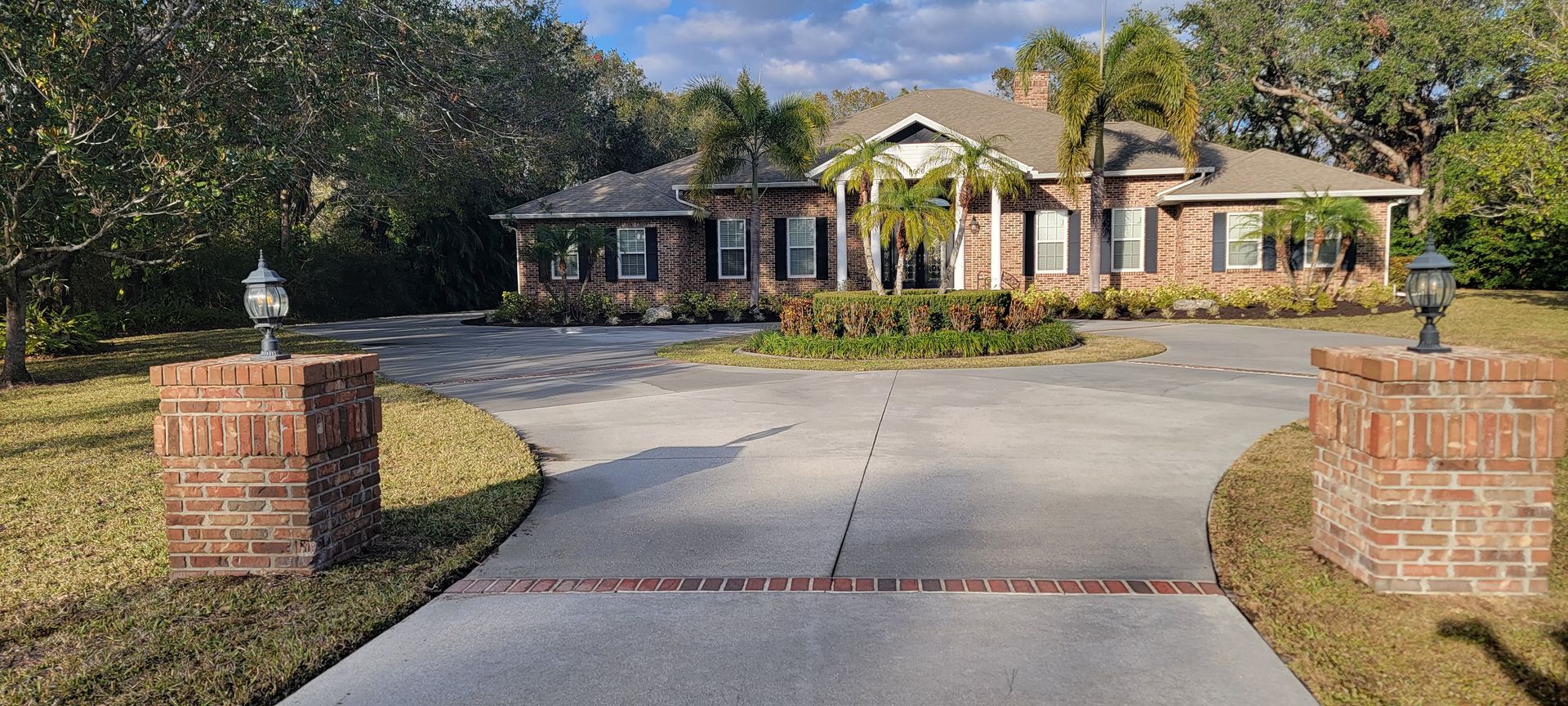
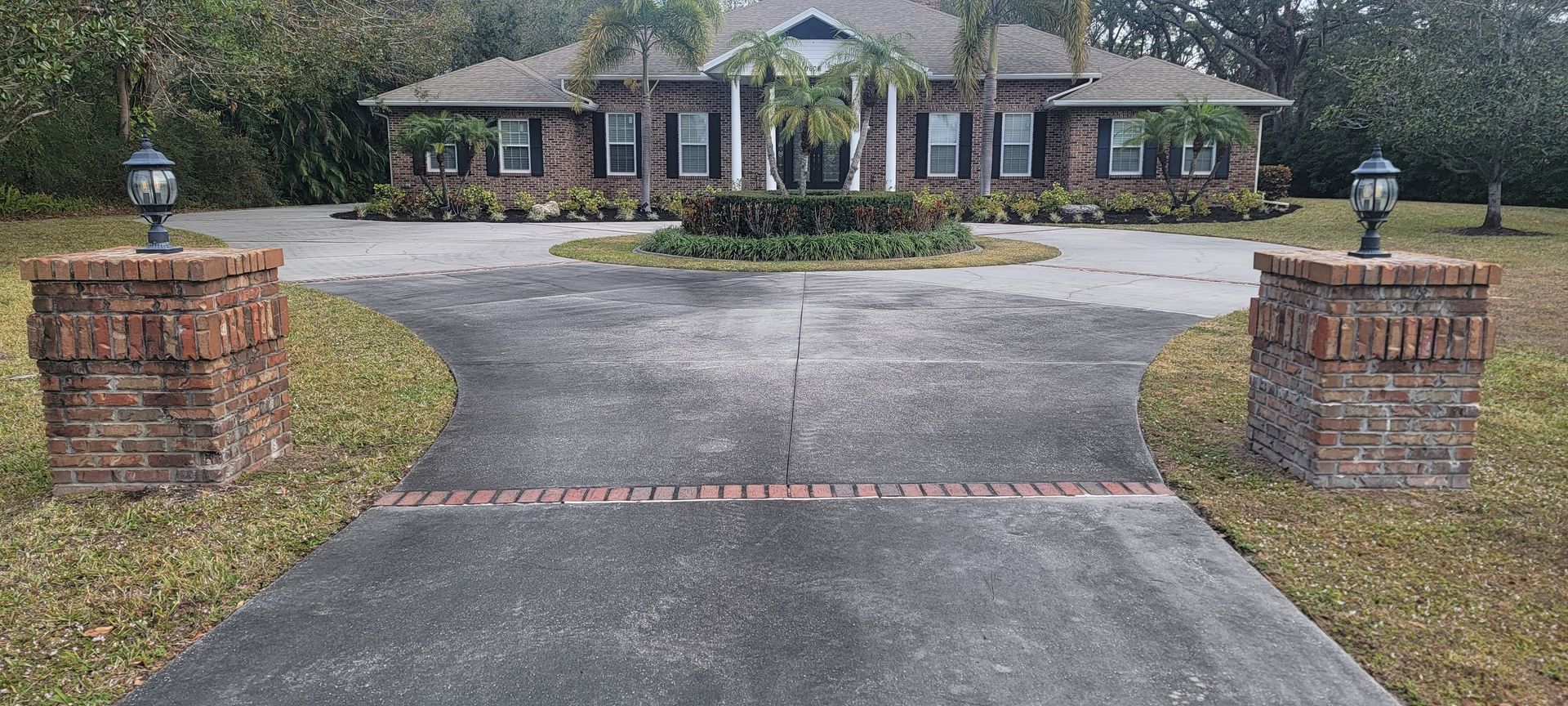
Learn more about our Sarasota concrete and driveway cleaning services:
https://strongsrq.com/sarasota-driveway-cleaning
Algae, Mold, Mildew & Other Organic Growth
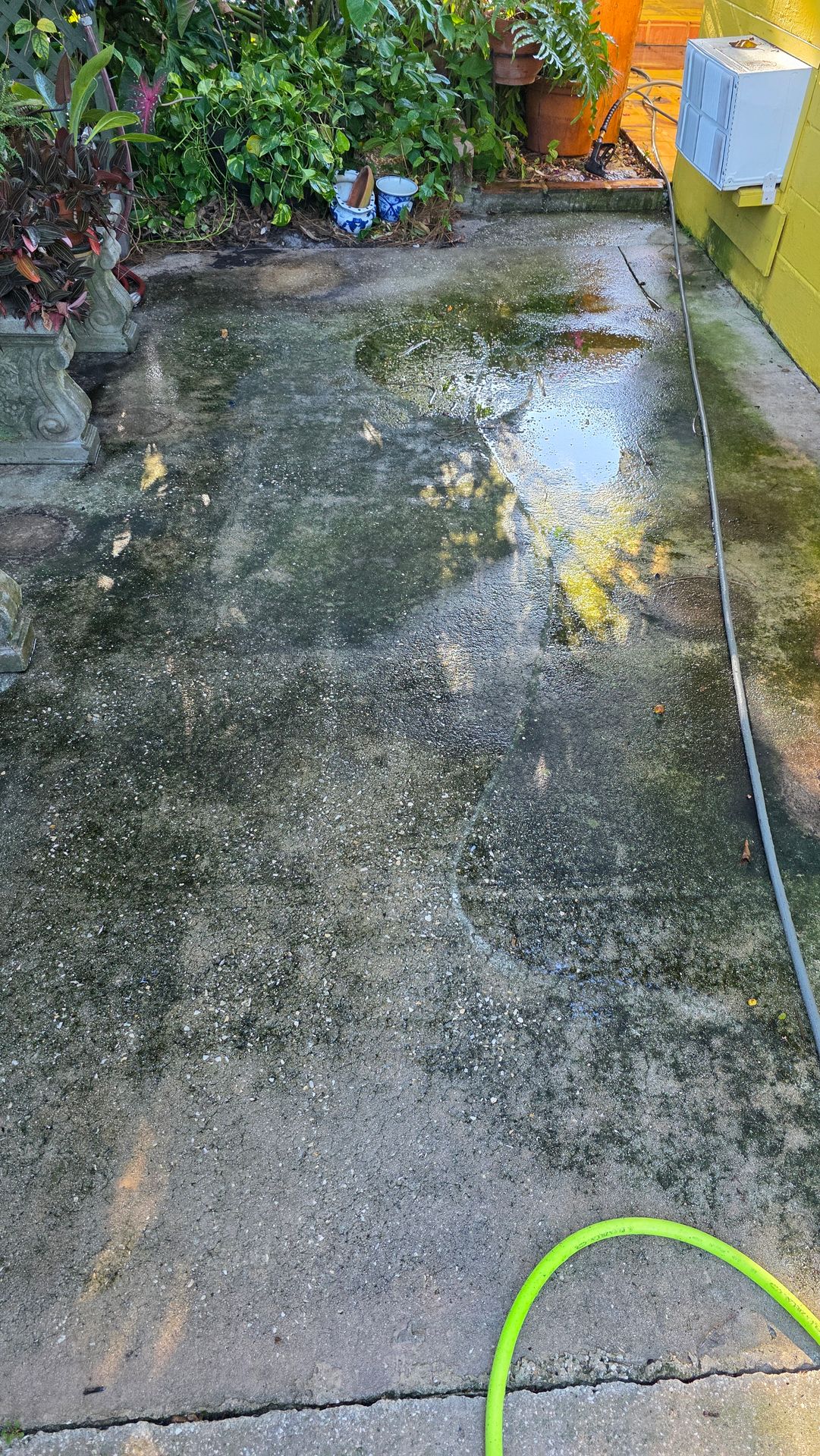
Organic growth is one of the most common reasons Florida concrete becomes dark, green, or dingy.
Algae, mold, mildew, and similar buildup are not simply loose dirt sitting on top of the concrete. Instead of relying entirely on high pressure to force the growth away, the cleaning process can treat the organic material first so it releases much more easily from the surface.
On appropriate concrete, sodium hypochlorite is one of the tools we use for this type of organic contamination. Solution strength and application can be adjusted based on the amount of buildup, condition of the concrete, surrounding landscaping, weather, and ambient temperature.
The goal is not to use the strongest cleaning solution or highest pressure possible. It is to use the appropriate combination of chemistry and mechanical cleaning to get the result without unnecessarily abusing the concrete.
Lichen Can Be One of the Toughest Concrete Stains
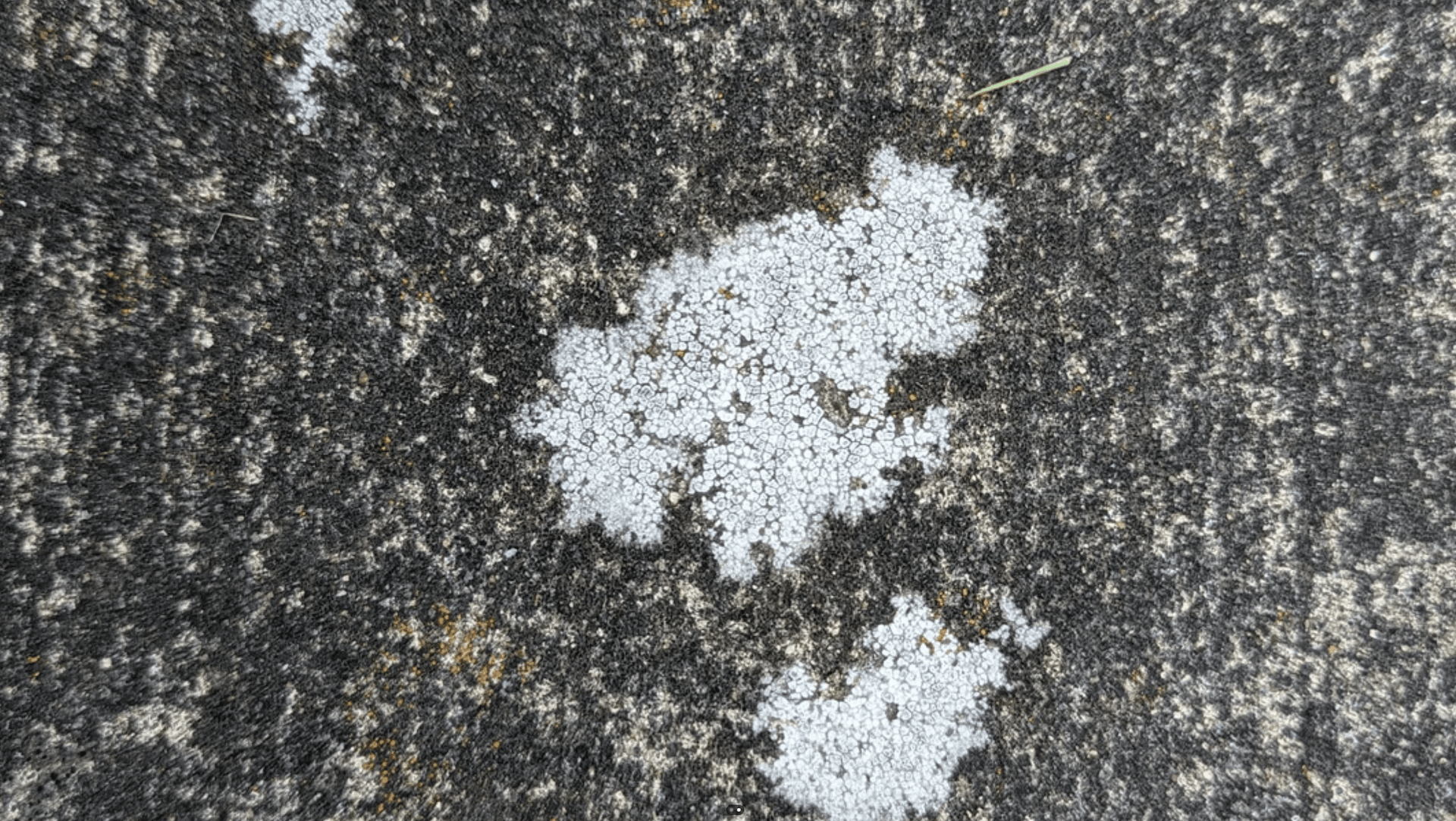
Some of the most stubborn concrete staining we see is actually lichen, including what is commonly called “black spot” lichen.
Lichen can appear in several colors, including white, gray, yellow, tan, brown, and black, and it often bonds very tightly to the concrete surface. Because of that, it may not come off completely with standard surface cleaning alone.
This is one reason our driveway-cleaning process includes a post-treatment step after surface cleaning. That additional treatment will usually remove or significantly reduce lichen that remains after the first pass.
Results can still vary depending on how heavy and established the growth is, the age and condition of the concrete, and how long the lichen has been present.
Rust & Irrigation Stains
Rust is a completely different problem.
Orange or brown rust staining can come from irrigation systems, well water, metal furniture, tools, fertilizer, or other sources containing iron.
Unlike algae and mildew, rust is mineral-based. Simply increasing the pressure often does very little to remove the discoloration.
Instead, rust removal typically relies on a cleaner designed to react with and break down the mineral staining. Once that chemistry has done its work, the surface can be thoroughly rinsed.
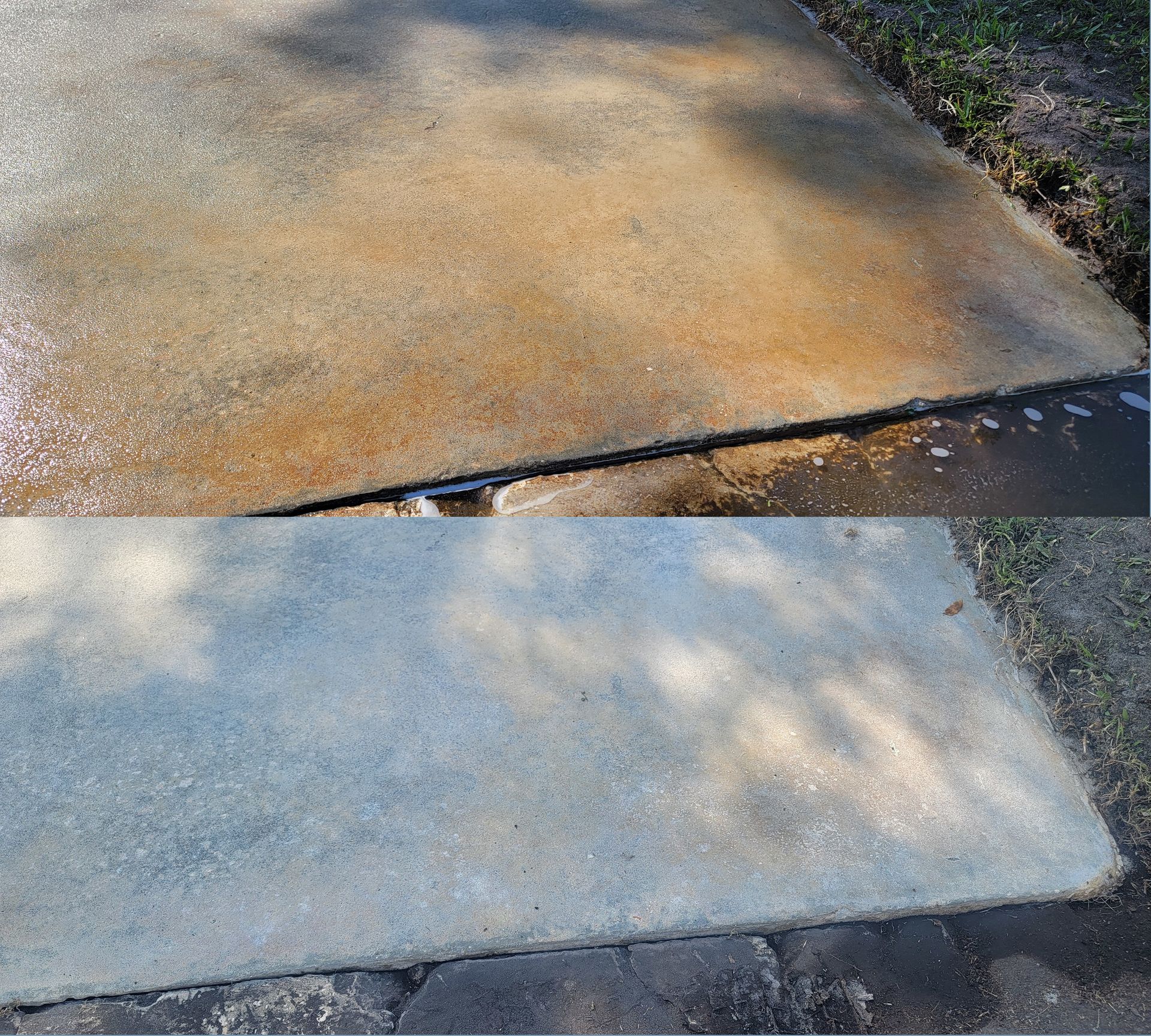
Rust removal can also be included as part of a larger driveway or concrete-cleaning project when needed.
Pollen & Brown Organic Staining
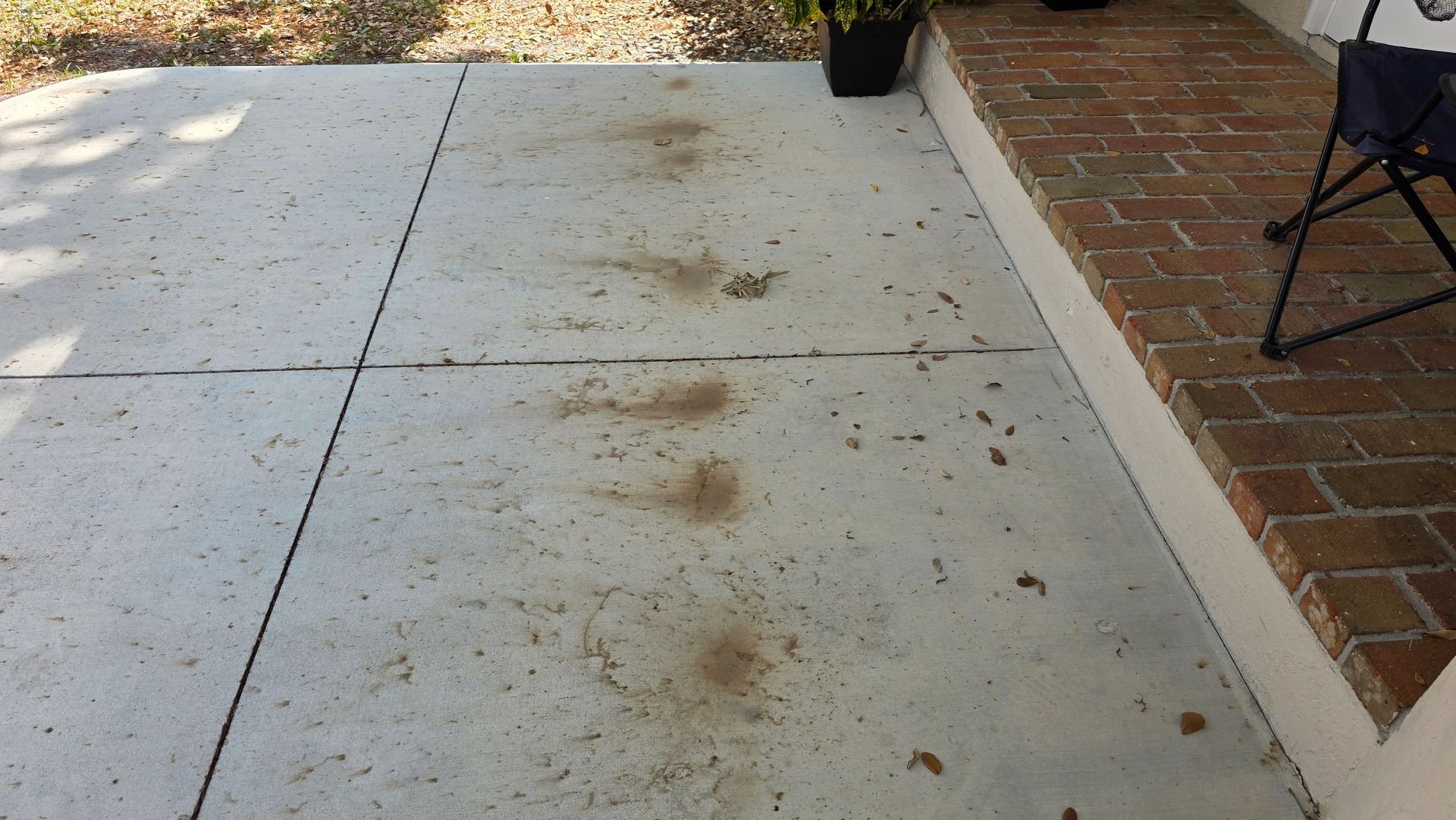
Pollen can create surprisingly stubborn yellow or brown discoloration on concrete, particularly when it accumulates, becomes wet, and sits on the surface.
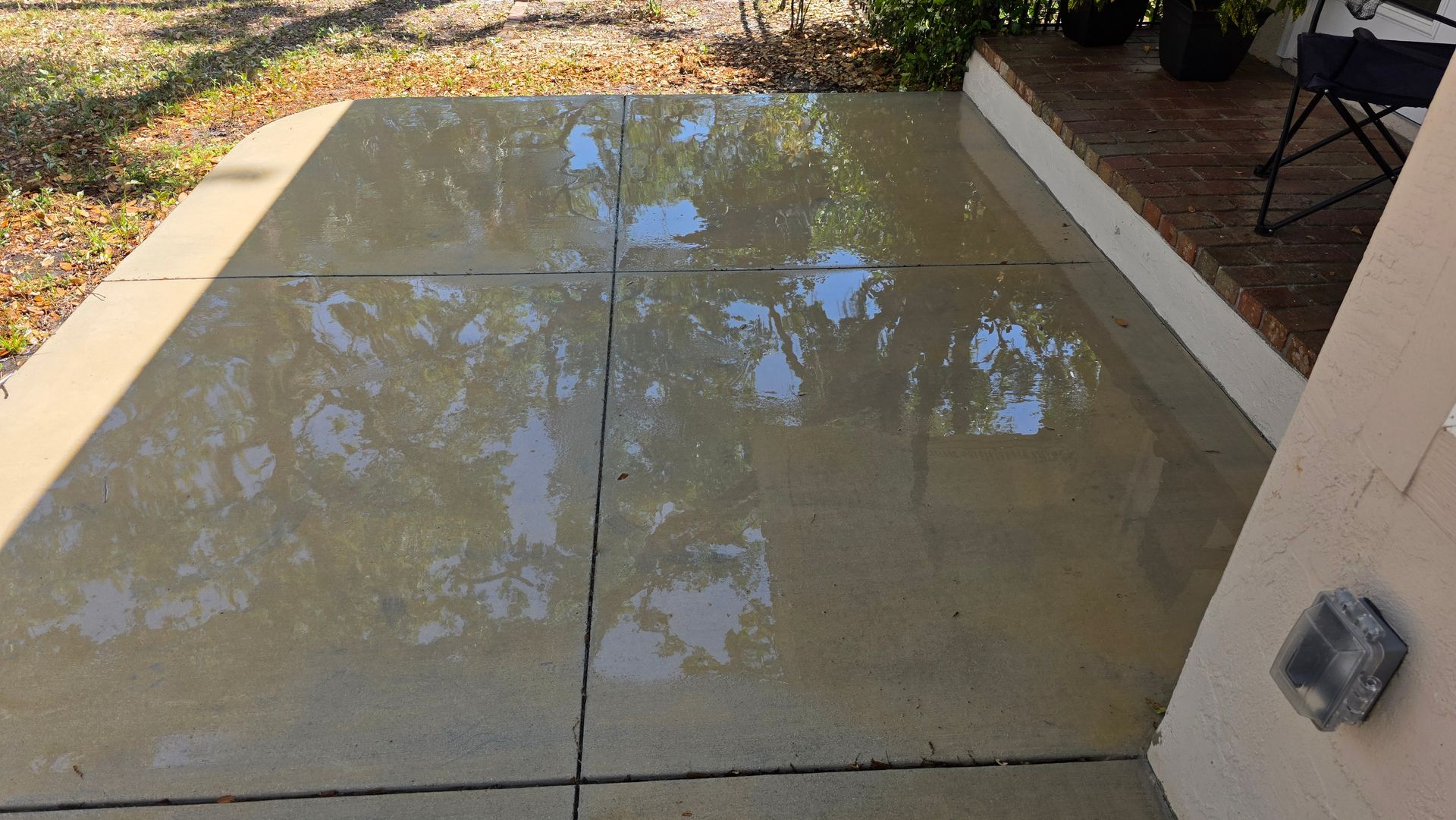
We have encountered concrete where the normal washing process removed the surface dirt but left noticeable brown staining behind.
On appropriate concrete surfaces, sodium hypochlorite can be extremely effective on pollen and other brown organic staining. Rather than continuing to increase the pressure, we can adjust the treatment strength and give the solution time to work before rinsing the surface.
The difference can be dramatic.
Tannin Stains from Leaves, Acorns, Mulch & Berries
Another common source of brown staining is plant material.
Leaves, acorns, mulch, berries, bark, and other vegetation contain naturally occurring compounds known as tannins. When that material remains wet against concrete, the tannins can leach out and leave brown, yellow, or tea-colored marks behind.
Sometimes the debris is long gone but the outline or discoloration remains.
Tannin staining is another situation where identifying the cause matters. Depending on the stain and the condition of the concrete, treatment may involve an appropriate cleaning solution, dwell time, agitation, and then pressure washing or rinsing.
A stain left behind by wet leaves is not necessarily going to respond exactly the same way as rust, oil, or algae — even if they all look like “brown stains” at first glance.
Oil & Grease Stains
Oil and grease create another challenge because concrete is porous.
Fresh spills can sometimes be significantly improved with degreasers and agitation before washing. Older oil stains can be considerably harder because the contamination may have soaked deeper into the concrete.
That means an oil stain can sometimes be greatly improved without disappearing completely.
This is also a situation where simply applying more pressure has limitations. A pressure washer can remove contamination at and near the surface, but increasing pressure does not necessarily pull oil that has penetrated deeply back out of the concrete.
At some point, becoming more aggressive can begin damaging the concrete without providing a meaningful improvement in the stain.
Paint Spills on Concrete
Paint spills present another good example of why the age and type of contamination can change the cleaning approach.
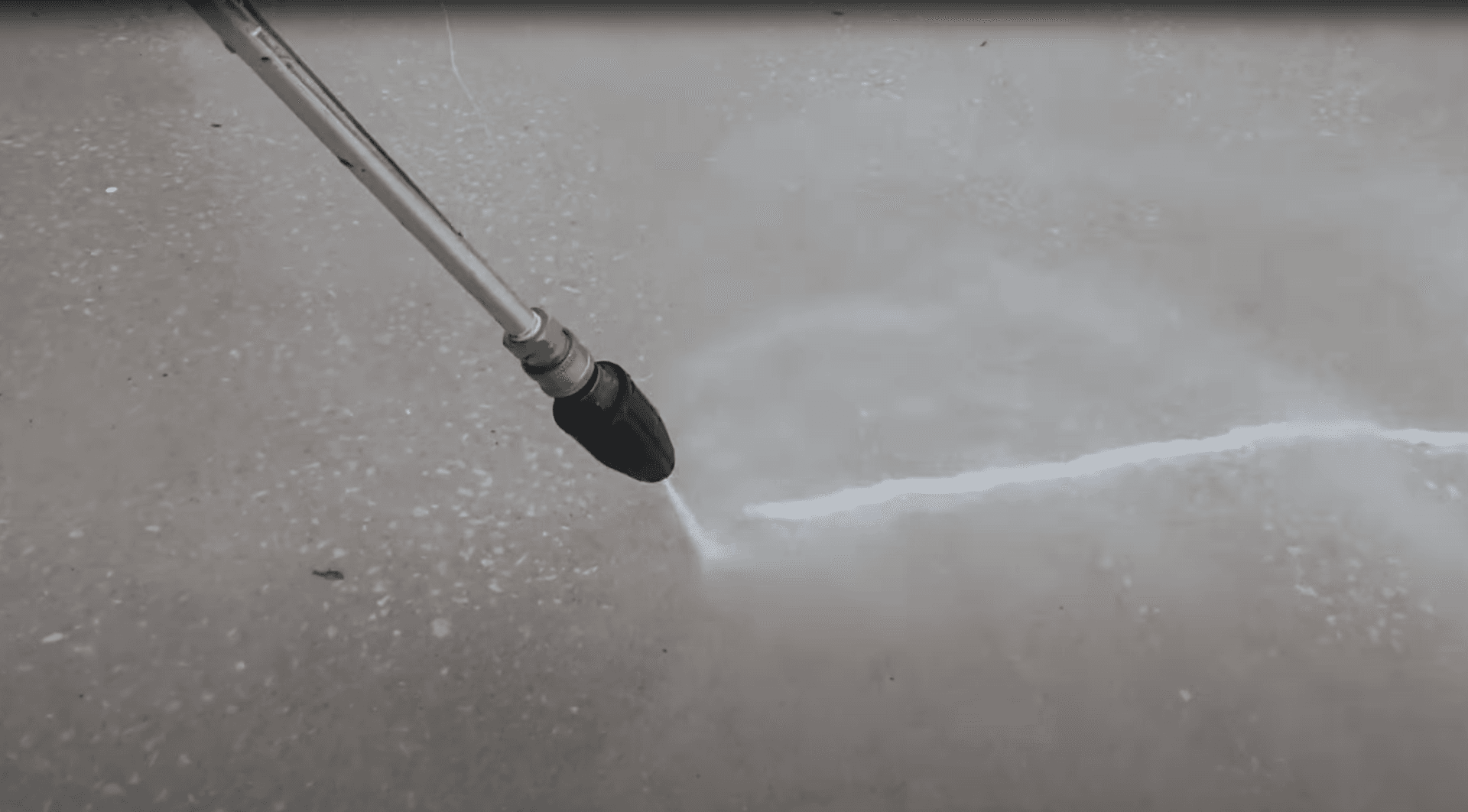
If a paint spill is relatively recent, we can sometimes remove it from concrete using a specialized pressure-washing attachment that concentrates the cleaning action differently than a standard wand or surface cleaner.
Older paint can be much more difficult because it has had time to cure and bond to the surface.
For some older paint spills, we can apply a citrus-based paint stripper to soften the paint before returning with the specialized pressure-washing attachment. Allowing the stripper to work first can make it possible to remove paint that ordinary pressure washing alone would struggle with.
Results still depend on the type of paint, age of the spill, condition of the concrete, and how deeply the coating has penetrated.
The goal is to remove as much of the unwanted paint as reasonably possible without unnecessarily damaging the concrete underneath.
Efflorescence & Mineral Deposits
Not every white or chalky mark on concrete is ordinary dirt.
Concrete and masonry can sometimes develop mineral deposits as moisture moves through the material and carries dissolved salts toward the surface. As the moisture evaporates, those minerals can remain behind.
This is generally referred to as efflorescence.
Because this is a mineral deposit rather than organic growth, the cleaning approach is different from the process used for algae or pollen. Depending on the surface and severity, specialty cleaning products may be needed.
It is also important to recognize that cleaning the visible deposit does not necessarily address the moisture conditions that caused it to form.
Why Dwell Time Matters
One of the most important — and least visible — parts of professional concrete cleaning is dwell time.
A cleaning solution generally needs time to react with the contaminant it is intended to treat.
Applying the appropriate product and immediately washing it away may not give it enough time to work. On the other hand, allowing certain products to dry on the concrete or nearby surfaces can create an entirely different problem.
Temperature, direct sunlight, weather conditions, stain severity, and the product being used can all affect how quickly the cleaning process works.
Stronger Isn’t Always Better
The same principle applies to cleaning solutions.
If a certain concentration works, making it dramatically stronger does not automatically make the job better.
Depending on the project, we may adjust:
- Cleaning solution and strength
- Dwell time
- Agitation
- Water pressure
- Water flow
- Nozzle or cleaning attachment
- Application method
- Rinse method
We also consider surrounding landscaping, painted surfaces, metals, drainage, weather conditions, and ambient temperature.
The objective is to use the right process for the stain and surface, not simply the strongest process available.
Some Concrete Stains May Not Completely Disappear
It is important to have realistic expectations with older or deeply embedded stains.
Oil that has penetrated deeply into concrete, severe rust, old paint, fertilizer-related discoloration, and other long-standing stains may improve substantially without completely disappearing.
Concrete itself can also change over time. Wear, previous pressure-washing damage, repairs, coatings, aggregate exposure, and differences between old and new sections can affect how uniform a finished surface looks.
There comes a point where continuing to attack a stubborn mark can do more damage to the concrete than the remaining stain is worth.
A good cleaning result is about getting the best reasonable improvement while protecting the surface.
Identify the Stain Before Choosing the Treatment
From a distance, all of these problems can simply look like dirty concrete.
Up close, however, algae, rust, pollen, tannins, oil, paint, and mineral deposits are very different problems.
That is why identifying the cause of the stain is so important.
At Strong Landscape & Pressure Wash, we adjust our concrete-cleaning process according to the type of contamination, condition of the surface, surrounding property, and current conditions rather than treating every driveway or walkway exactly the same way.
Sometimes pressure does the work.
Sometimes chemistry does the work.
Most good results come from knowing when and how to use both.
Learn More About Our Pressure Washing Services
For driveway, sidewalk, patio, and other concrete cleaning in Sarasota:
https://strongsrq.com/sarasota-driveway-cleaning
For information about our complete pressure and soft-washing services:
https://strongsrq.com/sarasota-pressure-washing
Strong Landscape & Pressure Wash
Sarasota, Florida
941-323-8668
StrongSRQ.com