
Featured Plant: American Beautyberry — Brilliant Purple Fruit, Florida Wildlife and a Surprisingly Green Bee


Some Florida native plants are easy to overlook for much of the year.
Then American Beautyberry (Callicarpa americana) starts producing those almost impossibly bright purple clusters of fruit, and suddenly it becomes one of the hardest plants in the landscape to ignore.
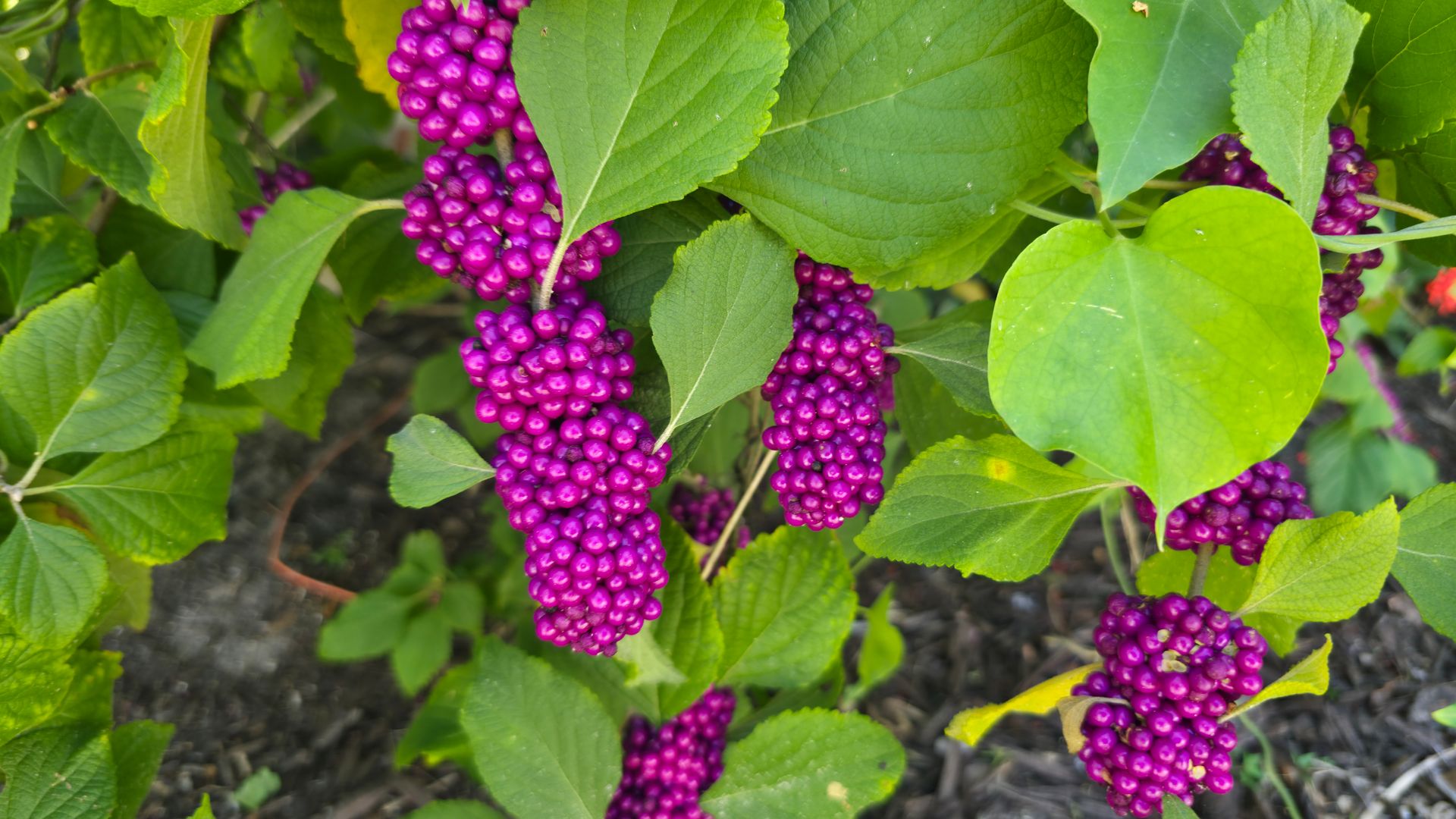
We photographed this Beautyberry here in the Sarasota area in late September, right when the plant was putting on the display that earned it its name. Dense clusters of glossy magenta-purple fruit were wrapped tightly around the stems, standing out against the light-green foliage.
And although those purple clusters are what usually get our attention first, Beautyberry has much more going for it than appearance alone. It is a Florida native, provides food for birds, flowers for pollinators, tolerates periods of drought once established, and can work beautifully in a more natural Florida landscape.
A Florida Native That Really Comes Alive in Fall
American Beautyberry is native to Florida and much of the southeastern United States.
For a large part of the growing season, it can look like a fairly understated green shrub. Its leaves are relatively large, light green and somewhat coarse in texture, and mature branches develop an arching habit that can give an established plant a loose, almost weeping appearance.
Then comes the fruit.
UF/IFAS describes Beautyberry as generally reaching somewhere around 3 to 8 feet tall and roughly 4 to 8 feet wide, although individual plants can vary with growing conditions and pruning.
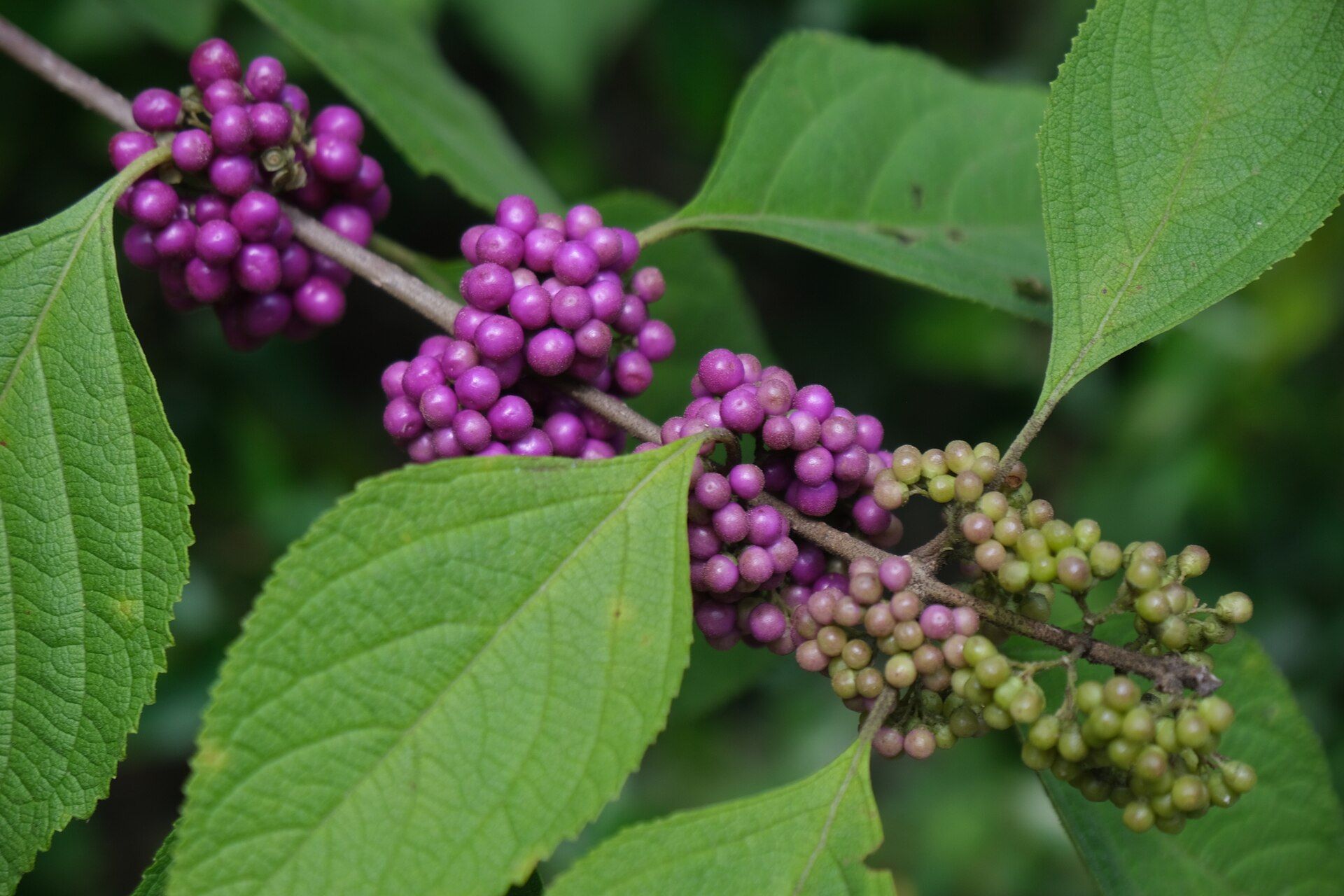
By late summer and into fall, clusters of fruit begin developing directly around the stems. The fruit changes from green through pale pink and lavender before reaching the intense purple-magenta color most people associate with the plant.
That seasonal transformation is part of what makes Beautyberry so interesting.
Technically, Those Aren't Berries
Here is a fun botanical detail.
Despite the name Beautyberry, those colorful fruits are technically drupes rather than true botanical berries.
A drupe contains one or more seeds enclosed within a harder inner structure, while a botanical berry has a different fruit structure.
That technical distinction probably isn't going to make anyone start calling the plant “Beautydrupe,” but it is another interesting detail hidden behind a very familiar Florida native.
From Tiny Flowers to a Huge Fall Display
The fruit gets most of the attention, but it begins with flowers that are much more subtle.
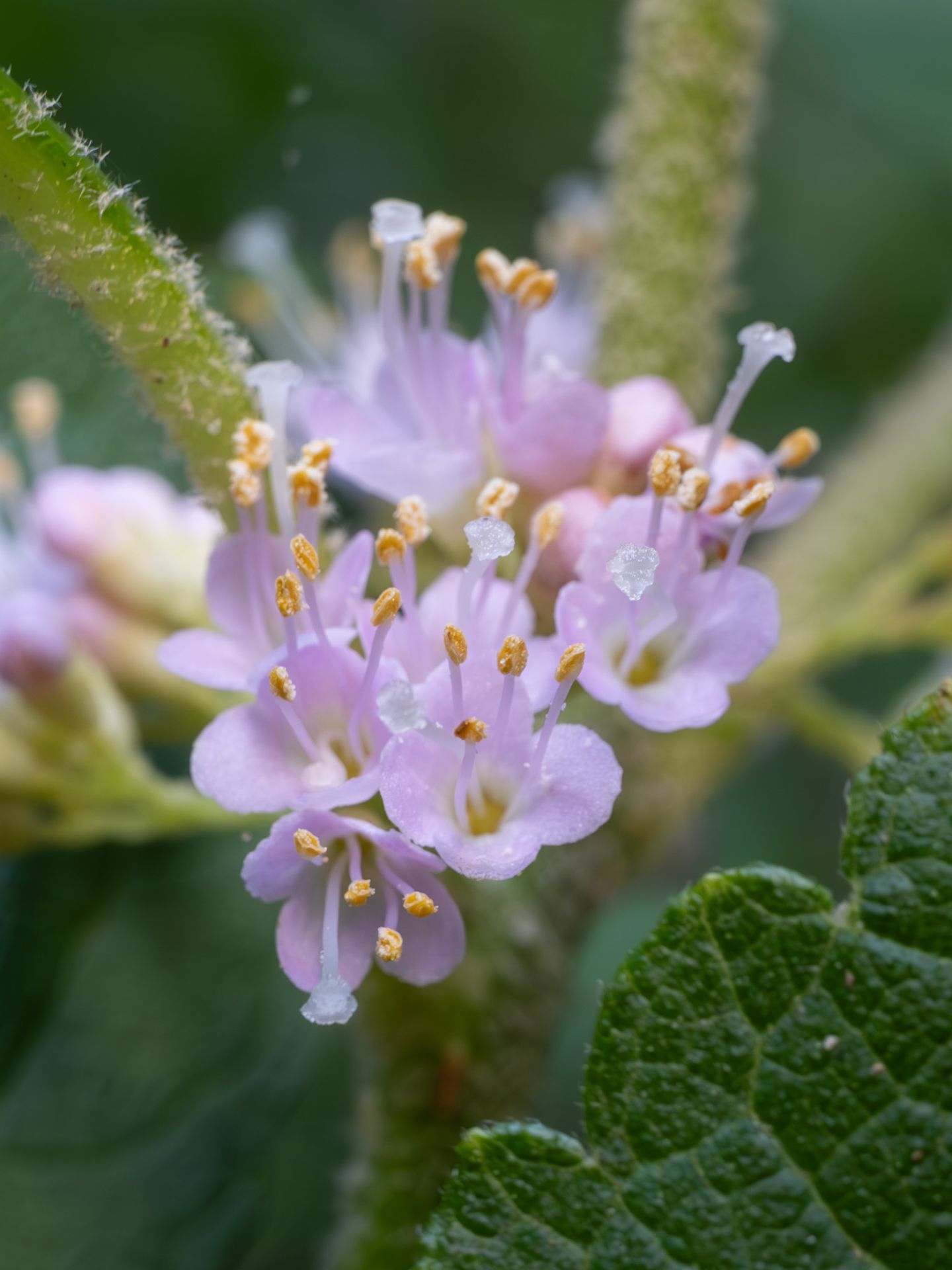
American Beautyberry produces clusters of small pale-pink to lavender flowers along the stems. UF/IFAS generally places the main flowering period during the warmer months, with fruit developing afterward and becoming especially noticeable by late summer and fall.
Up close, the flowers are surprisingly intricate.
From a distance, however, flowering Beautyberry is considerably more understated than it is during fruiting season.
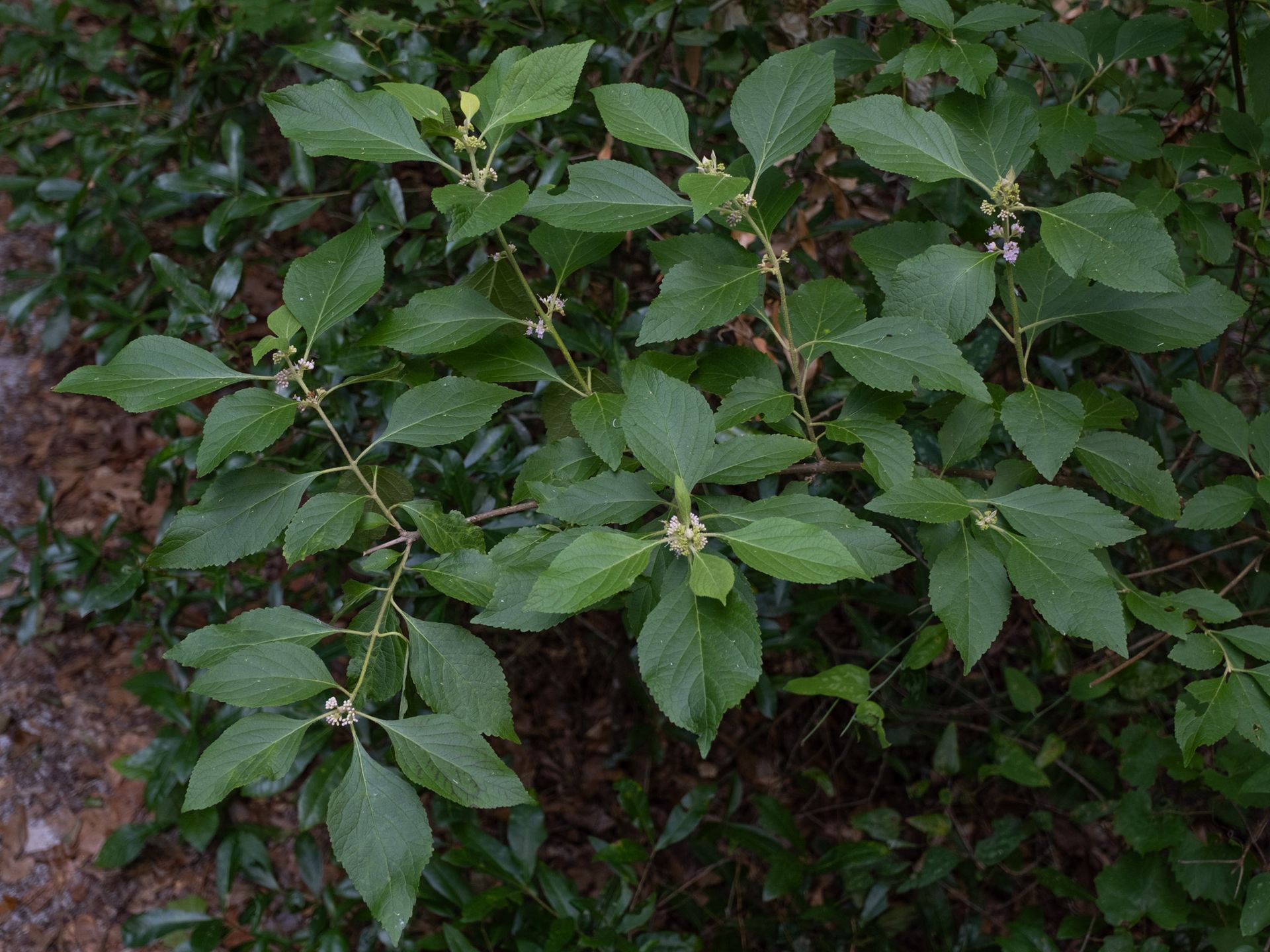
That difference makes the fall fruit display even more dramatic. A plant that may blend quietly into a naturalized planting during spring and early summer can suddenly become covered in brilliant purple fruit.
Beautyberry Is Valuable to Florida Wildlife
Those colorful fruits aren't there just for us to look at.
UF/IFAS Extension Sarasota County identifies American Beautyberry as an important food source for both resident and migratory birds. Birds documented using the fruit include bluebirds, cardinals, mockingbirds and catbirds.
As birds eat the fruit, they also help move Beautyberry seeds through the landscape.
The flowers provide another ecological benefit earlier in the season by attracting pollinating insects.
And one of those visitors can look surprisingly exotic.
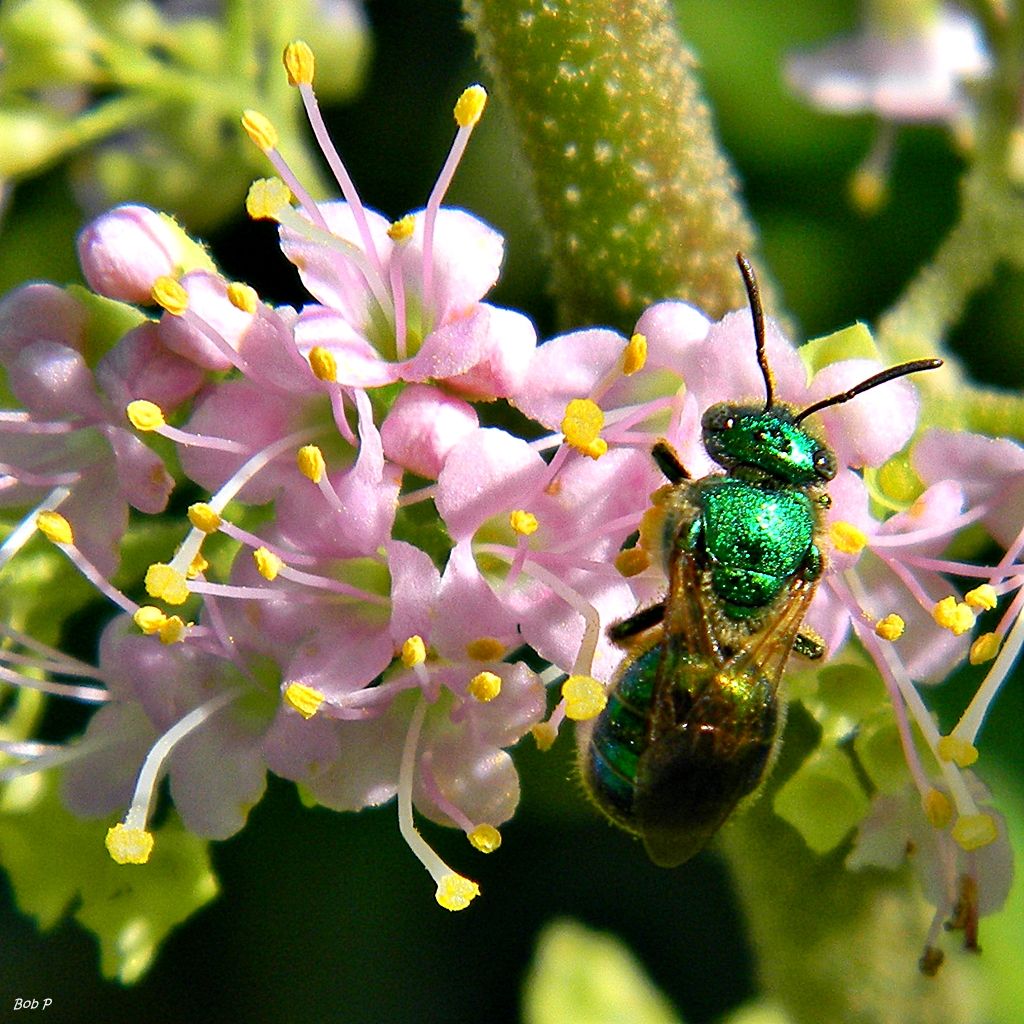
Yes, Some Bees Really Are Metallic Green
At first glance, the insect in this photo barely looks like what many people picture when they hear the word “bee.”
Its body is an intense metallic emerald green.
Florida is home to naturally metallic-green native bees, including members of groups commonly referred to as sweat bees. Their brilliant green or blue-green coloration is completely natural.
The exact species of the bee in this particular photograph is not identified on the image record, so we won't try to give it a species name that hasn't been confirmed.
What the photograph does show beautifully is something easy to miss once Beautyberry's purple fruit steals the show: the plant begins supporting wildlife before the berries ever develop.
Flowers feed visiting pollinators.
Fruit later feeds birds and other wildlife.
That gives this native shrub ecological value across more than one season.
What Beautyberry Actually Looks Like in a Landscape
It is important to look beyond close-up photographs when choosing plants.
A berry-covered stem can make Beautyberry look like a compact ornamental, but the mature plant can become a substantial shrub.
This Sarasota-area Beautyberry shows the characteristic loose, arching growth habit of the species.
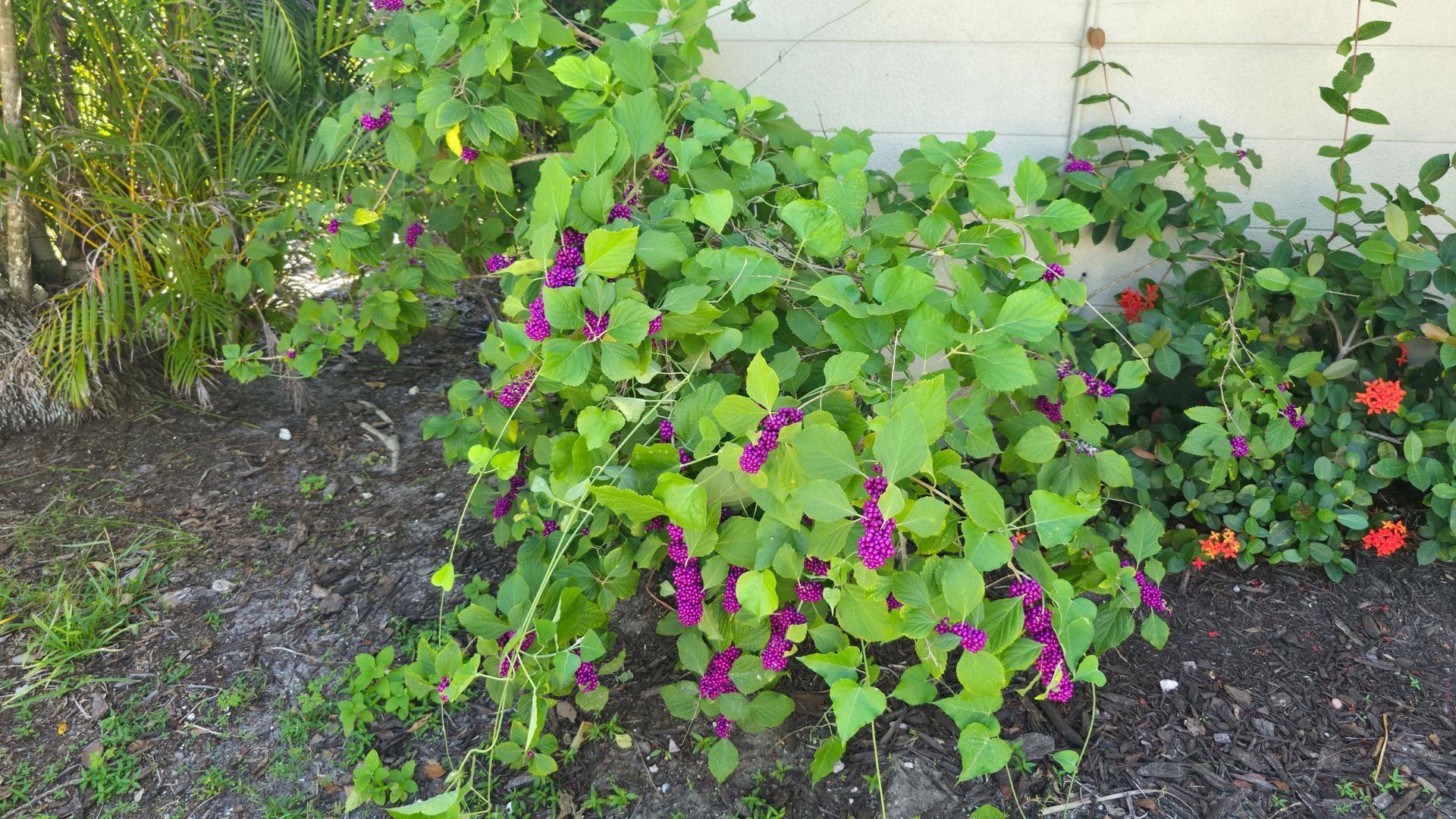
Beautyberry often works best where it has enough room to develop its natural form rather than being repeatedly sheared into a tight hedge.
Good uses can include:
- Native and Florida-Friendly landscapes
- Naturalized planting areas
- Woodland-edge plantings
- Wildlife gardens
- Informal shrub borders
- Mass plantings
- Specimen shrubs where the fall fruit can be appreciated
Its somewhat informal habit also makes plant placement important.
This isn't necessarily the plant we would choose for every small, highly manicured foundation bed where a perfectly rigid shape is expected year-round. In the right setting, however, its relaxed form is part of the appeal.
Sun, Soil and Water
Beautyberry is quite adaptable.
It grows in full sun to partial shade, and established plants have good drought tolerance.
UF/IFAS notes that it can grow in a variety of Florida soils, including relatively poor sandy soils, provided drainage is suitable.
For the strongest fruit display, good light is helpful. Beautyberry can tolerate considerable shade, but plants growing with more appropriate sunlight generally produce a better fruit display than heavily shaded specimens.
One important limitation for our coastal area is **salt tolerance**.
Beautyberry is considered to have **low salt tolerance**, so despite being a Florida native, it isn't automatically the right choice for exposed coastal sites receiving substantial salt spray.
“Florida native” does not mean “appropriate everywhere in Florida.”
As with nearly every landscape plant, right plant, right place still matters.
Pruning Beautyberry
Beautyberry can respond well to pruning, but timing matters if the goal is a strong fruit display.
UF/IFAS recommends doing significant pruning between late fall and late winter. Beautyberry flowers and fruits on new growth, so allowing the new seasonal growth to develop helps support the next crop of flowers and fruit.
Repeated heavy shaping during the growing season can reduce the flowering and fruiting that make the plant so valuable and attractive.
If Beautyberry is constantly being cut back just to fit into its planting space, that is usually a sign that the original location may have been too small for the plant's natural mature size.
Can People Eat Beautyberry?
Yes — the fruit is considered edible.
That does not necessarily mean you'll want to stand beside the shrub eating handfuls of it.
UF/IFAS describes fresh Beautyberry fruit as edible but generally not especially appealing on its own. The fruit is much more commonly associated with jellies and preserves, where sugar and preparation improve the flavor considerably.
As with any plant being considered for food use, correct identification is important before consuming anything from the landscape.
Beautyberry Has Another Strange Trick
Beautyberry has even attracted scientific attention for compounds found in its foliage.
Research cited by UF/IFAS has identified compounds from American Beautyberry leaves associated with repelling mosquitoes and ticks.
That does not mean rubbing random Beautyberry leaves on your skin should be treated as a replacement for a tested insect repellent.
But it is another fascinating example of how much can be going on chemically inside a plant that most people notice only because of its purple fruit.
A Strong Native Choice — In the Right Place
American Beautyberry combines several qualities that are especially valuable in Florida landscapes:
- It is native to Florida.
- It provides food for birds.
- Its flowers support pollinators.
- It tolerates drought after establishment.
- It produces an exceptional fall fruit display.
- It can work in naturalized and wildlife-oriented landscapes.
- It generally requires relatively little attention when given enough room.
And right now is one of the best times of year to notice it.
If you see clusters of almost neon-purple fruit wrapped around arching stems while traveling around Sarasota this fall, there is a good chance you are looking at American Beautyberry.
Take a closer look.
There may be a bird waiting for the fruit — or perhaps even a metallic-green bee visiting the flowers earlier in the season.
Have Beautyberry Growing Around Sarasota?
If you have an established American Beautyberry in your yard, or know of an especially impressive specimen growing around Sarasota, we'd love to see it.
We are particularly interested in documenting local plants through different stages of the year — flowering, developing fruit, peak purple fruit and wildlife actually using the plant.
Send us a photo if you catch something interesting.
Learn More
American Beautyberry — StrongSRQ Plant Gallery
https://strongsrq.com/medium-shrubs/american-beautyberry
Explore the StrongSRQ Florida Plant Gallery
https://strongsrq.com/plant-gallery
Continued Reading & References
University of Florida / IFAS — American Beautyberry (Callicarpa americana)
UF/IFAS Environmental Horticulture / Florida-Friendly Landscaping™
University of Florida / IFAS Gardening Solutions — Beautyberry
Plant characteristics, flowering and fruiting, growing conditions, landscape use, fruit, pruning and wildlife information.
UF/IFAS Extension Sarasota County — “Plants at Their Peak: Bountiful Beautyberry!”
Local Sarasota County discussion of Beautyberry's fall display, wildlife value and use by bluebirds, cardinals, mockingbirds and catbirds.
UF/IFAS Extension Sarasota County — Low-Maintenance Landscaping: Shrubs
Local guidance on mature size, light, drought tolerance, salt tolerance and wildlife benefits.
Florida Native Plant Society — American Beautyberry (Callicarpa americana)
Native range, landscape use, mature size and horticultural information.
Photo Credits
Original Sarasota-area Beautyberry photographs by Strong Landscape & Pressure Wash / StrongSRQ.
`Callicarpa americana infructescence.jpg` — Alex Abair, via Wikimedia Commons. Licensed under Creative Commons Attribution 4.0 International (CC BY 4.0).
`Callicarpa americana shrub.jpg` — Alex Abair, via Wikimedia Commons. Licensed under Creative Commons Attribution 4.0 International (CC BY 4.0).
`Callicarpa americana flowers.jpg` — Alex Abair, via Wikimedia Commons. Licensed under Creative Commons Attribution 4.0 International (CC BY 4.0).
`Beautyberry blossoms and Bee (8115444650).jpg` — Bob Peterson, via Wikimedia Commons. Licensed under Creative Commons Attribution-ShareAlike 2.0 (CC BY-SA 2.0).