
American Beautyberry / Beautyberry
Scientific Name: Callicarpa americana
Light Requirement: Full sun to partial shade. Beautyberry can grow in full sun, filtered light, or partial shade, but it often performs best with some protection from the hottest afternoon sun in Florida landscapes. More sun usually produces denser growth and heavier berry production, while more shade can create a looser, more open plant.
Height: Typically 4–8 ft. tall and wide in Florida landscapes, depending on pruning, sunlight, and growing conditions.
Plant Spacing: Space about 4–6 ft. apart for natural groupings, wildlife plantings, or informal shrub borders. For a looser native screen or woodland-edge planting, allow about 6–8 ft. of space so the plant can develop its natural arching form.
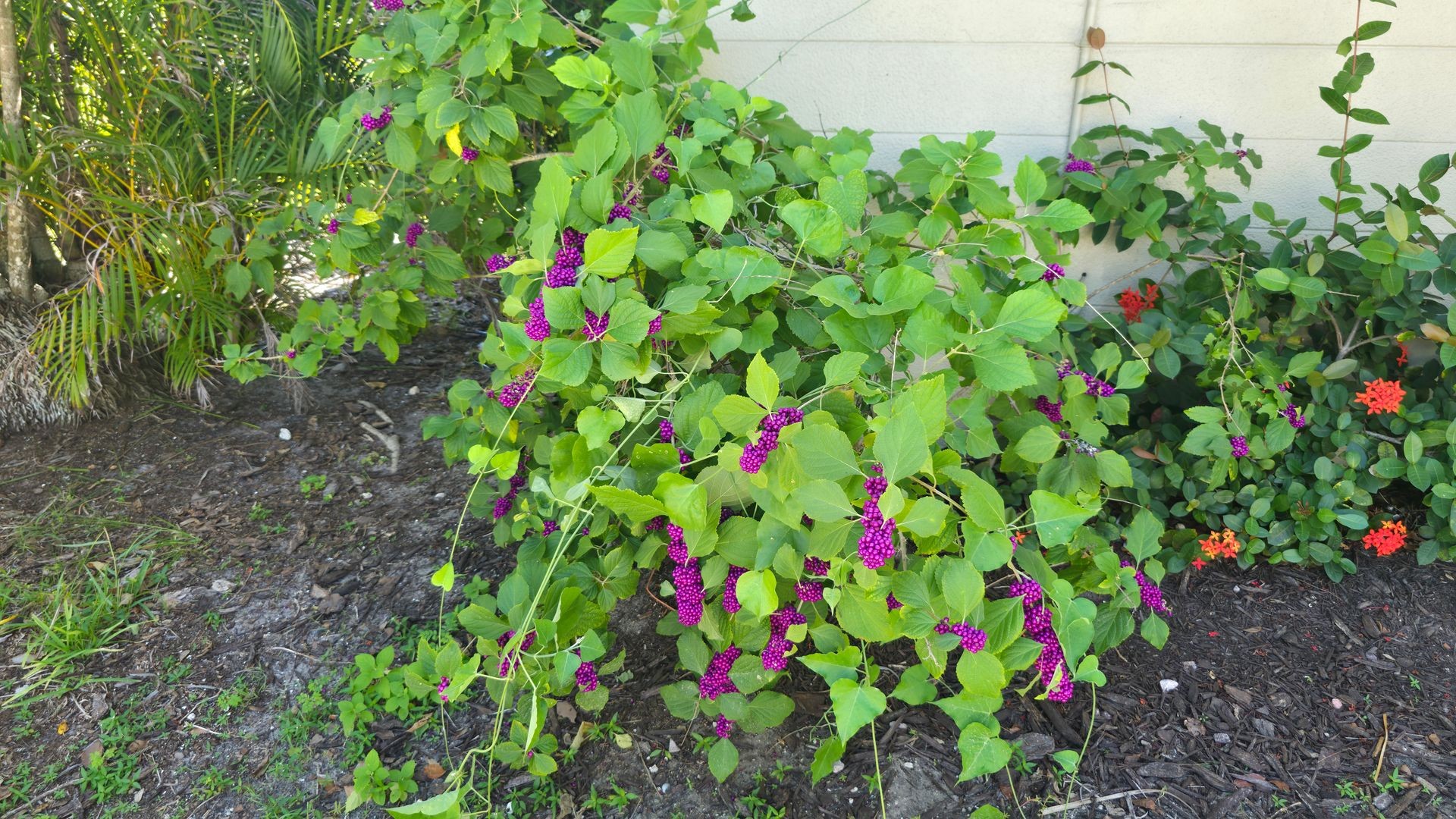
Growth Habit: Moderate-growing deciduous to semi-deciduous native shrub with an open, arching, rounded habit. It produces small pink to lavender flowers followed by clusters of bright purple berries along the stems, usually becoming most noticeable in late summer through fall.
Hardiness: USDA Zones 7–11; cold hardy throughout Florida; drought tolerant once established; not salt tolerant and best kept away from direct coastal salt exposure; adaptable to a range of soil pH levels, including acidic to neutral and some mildly alkaline soils, as long as drainage is adequate.
Maintenance Info: Low maintenance when planted in the right location. Water regularly during establishment, then reduce watering once rooted. Beautyberry can be pruned in late winter or early spring to control size, refresh older growth, or encourage a fuller shape. Avoid constant shearing, since its natural beauty comes from its loose arching branches and berry-covered stems. A light application of slow-release landscape fertilizer during the growing season can support healthy growth in poor sandy soils, but established native plantings usually do not need heavy fertilization.
Best Uses in the Landscape: Excellent for Florida native plantings, wildlife gardens, bird-friendly landscapes, woodland-edge plantings, informal shrub borders, natural screens, pollinator gardens, and mixed native beds. It works especially well where seasonal berry color and wildlife value are desired over a tightly formal hedge.
Plant Info: American Beautyberry is native to Florida, the southeastern United States, the Caribbean, Mexico, and parts of Central America. The name “Beautyberry” comes from the bright purple berries that form in clusters around the stems and create one of the most recognizable fall displays of any Florida native shrub. The flowers attract pollinators, and the berries are eaten by birds and other wildlife. The berries are also sometimes used by people to make jelly, though they are more often valued in the landscape for their color and wildlife benefits than for fresh eating. In Florida landscapes, American Beautyberry is one of the best native shrubs for adding seasonal interest, habitat value, and a natural Florida look with very little maintenance once established.
Revitalize Your Outdoors Today


Revitalize surfaces with our high-quality pressure washing for homes and businesses.

