
Featured Plant: Bottle Palm


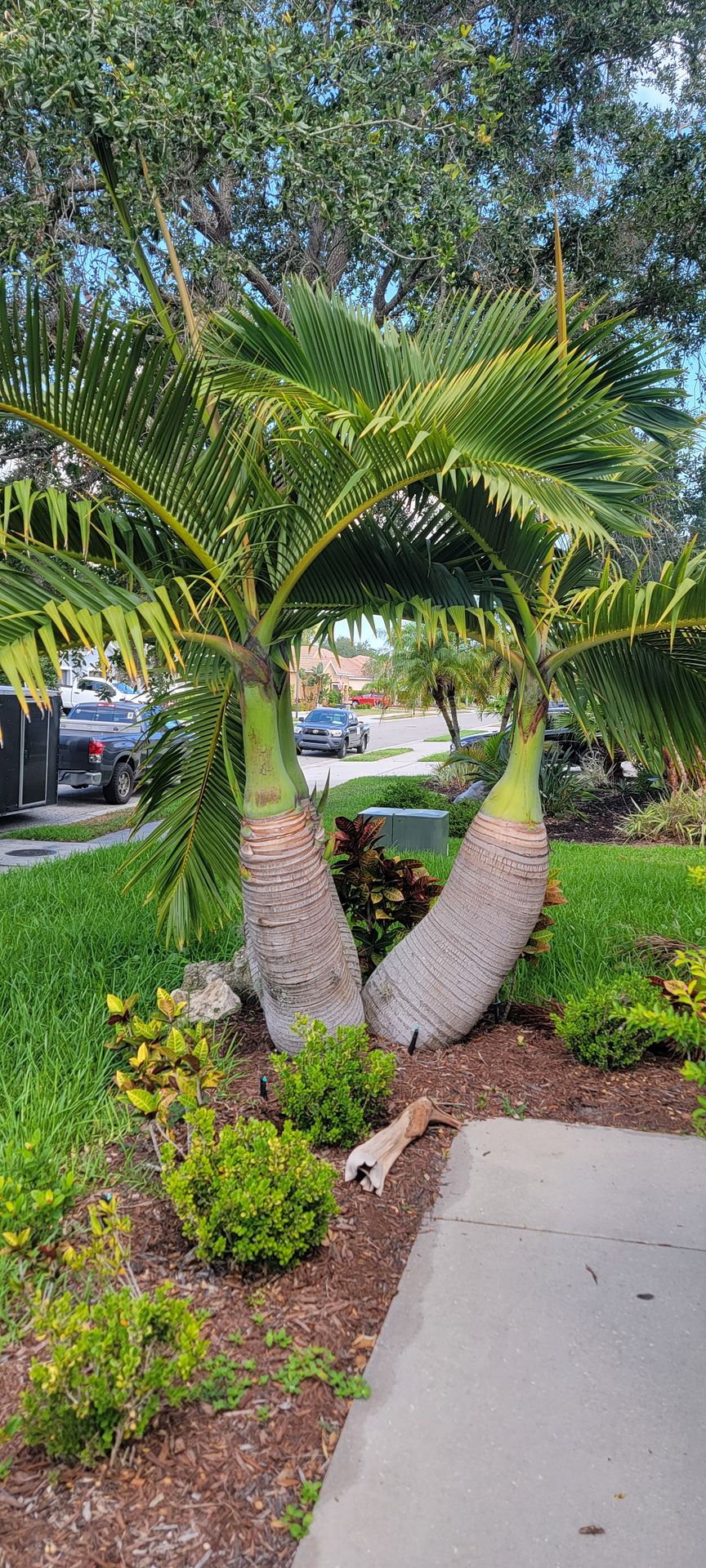
The Bottle Palm (Hyophorbe lagenicaulis) is one of those plants that can become a focal point without needing to be large, colorful, or heavily flowering.
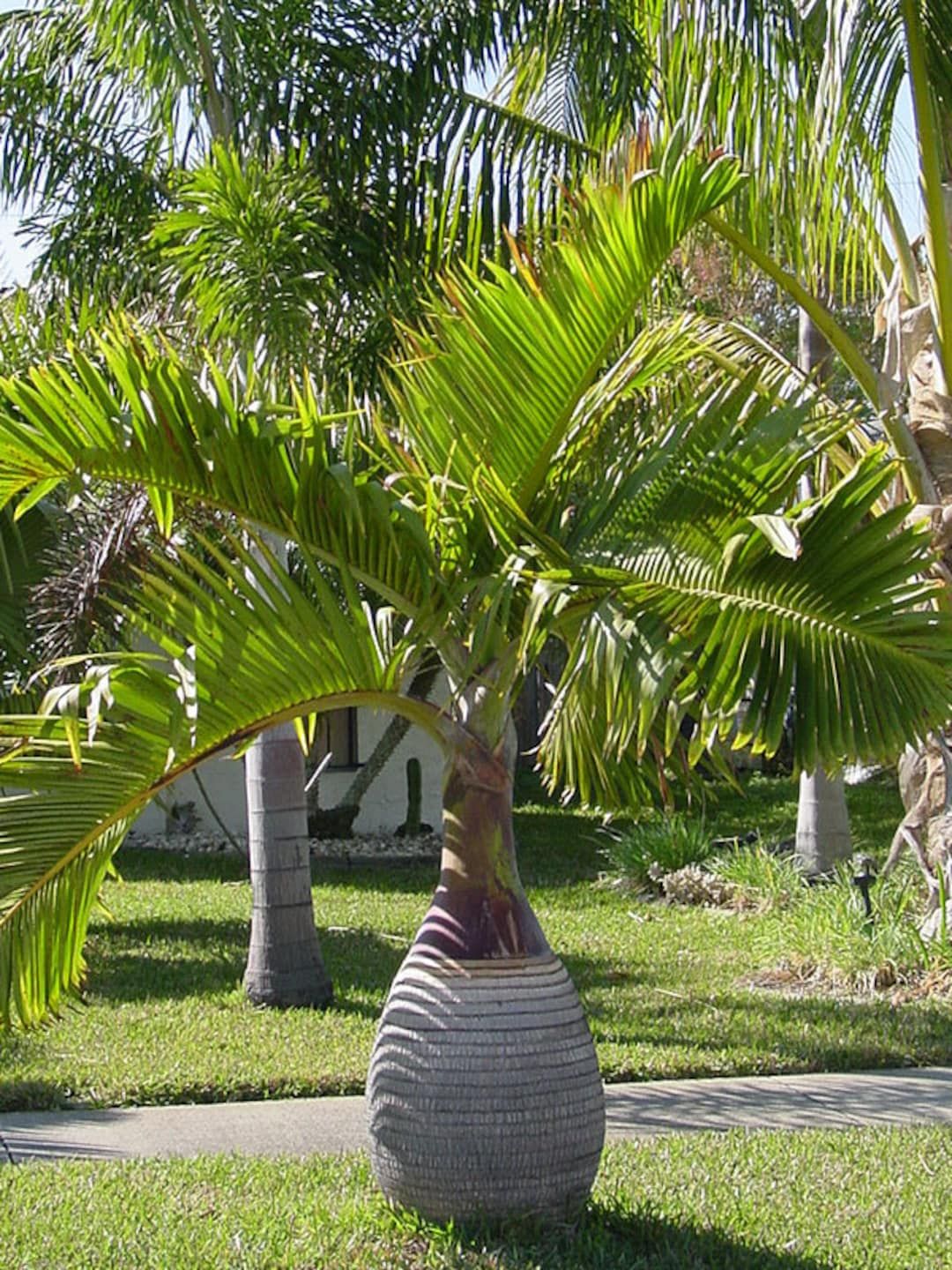
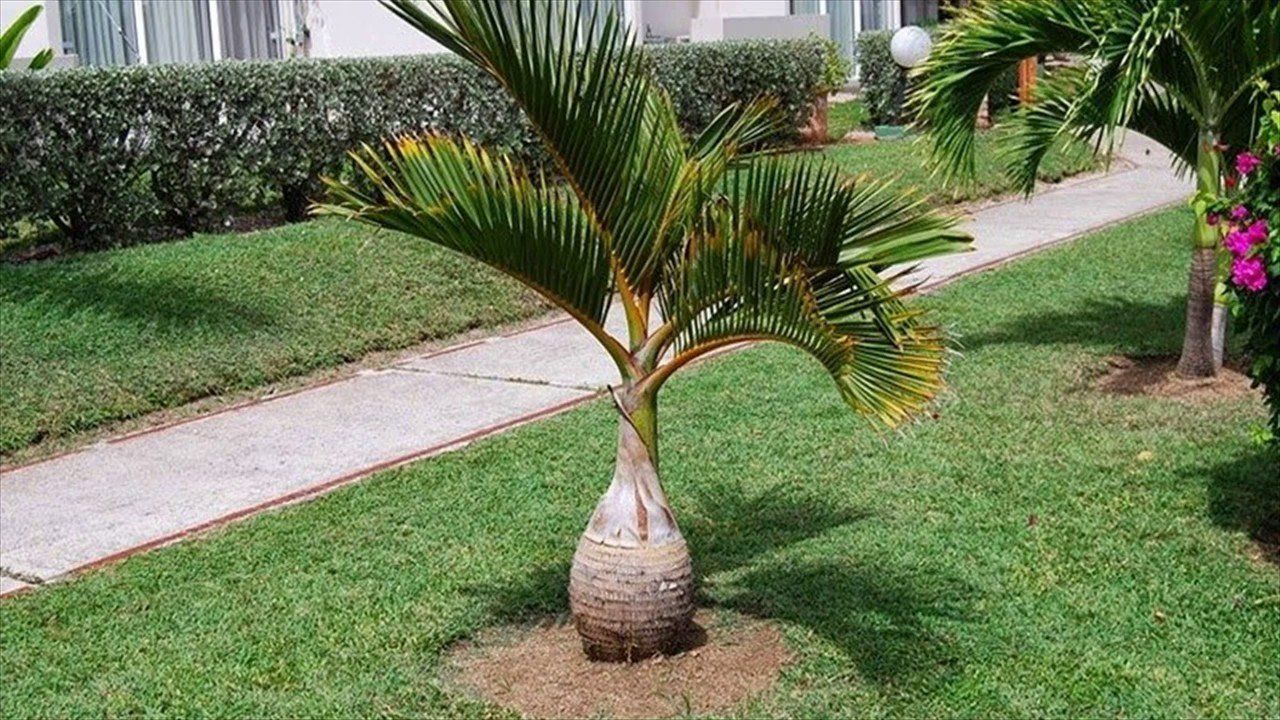
Its attraction is almost entirely in its form. A swollen lower trunk tapers into a much narrower upper trunk, topped by a smooth green crownshaft and a relatively compact crown of arching, feather-like fronds. The result is a palm that looks almost sculpted—and one that is easy to recognize once you know what you’re looking at.
For landscapes where space is limited or a smaller specimen palm is needed, Bottle Palm can offer a very different look from many of the larger palms commonly used throughout Florida.
A Small Palm With a Lot of Character
Bottle Palm is a slow-growing, single-trunk palm that stays relatively compact for many years.
Unlike palms that eventually dominate a landscape with a huge canopy or massive trunk, Bottle Palm works particularly well where the palm itself is intended to be seen and appreciated as an individual feature.
Good locations can include:
- Entry areas
- Courtyards
- Pool landscapes
- Tropical or tropical-modern planting beds
- Patio areas
- Smaller focal-point beds
- Groups of several palms where space allows
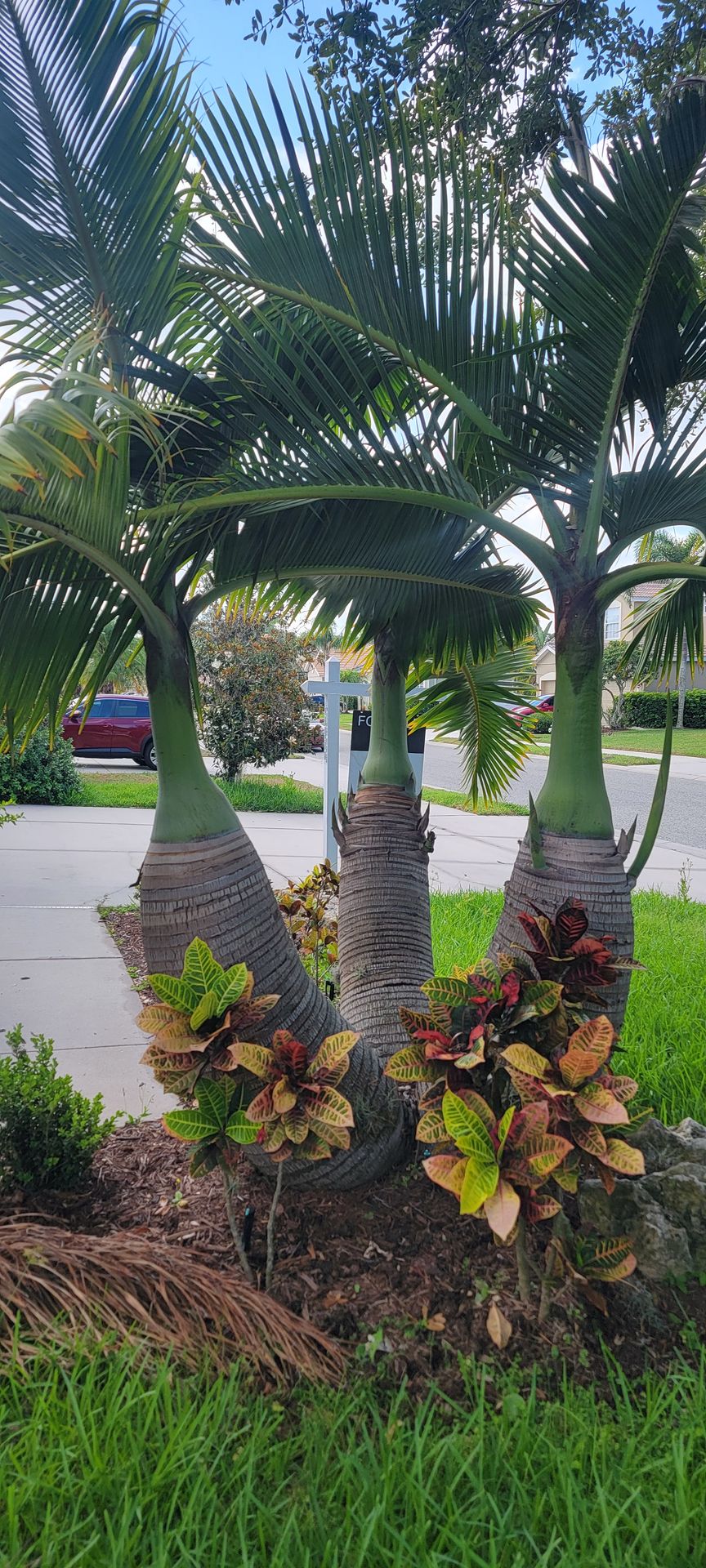
Although each Bottle Palm naturally develops a single trunk, several individual palms are commonly planted close together to create double- or triple-trunk groupings.
The distinctive trunk is especially noticeable on younger and middle-aged specimens. As the palm becomes older, the exaggerated bottle shape can become somewhat more elongated and less pronounced.
Where Bottle Palm Comes From
Its natural home is in the Mascarene Islands in the Indian Ocean near Madagascar, with its native range associated with Mauritius and particularly Round Island.
In its natural habitat, it grows in tropical conditions on well-drained soils.
Interestingly, while Bottle Palm is widely cultivated as an ornamental palm in tropical and subtropical landscapes around the world, it is considered critically endangered in its natural range.
That makes it an unusual example of a plant homeowners may encounter fairly easily in cultivation even though its wild populations are extremely limited.
Why Is It Called a Bottle Palm?
This one doesn’t require much imagination. The lower portion of the trunk becomes noticeably swollen while the upper portion remains much narrower, producing the bottle-like profile that gives the palm its common name.
Even the botanical name references this feature. The species name lagenicaulis refers to a flask- or bottle-shaped stem.
Well Suited to Warm Florida Landscapes
Bottle Palm likes bright light, warmth, and very well-drained soil. Full sun generally produces the strongest landscape specimen, although it can tolerate some shade.
Its relatively small size also makes it useful around structures and pool areas where a homeowner wants the appearance of a palm without eventually dealing with the scale of a much larger species.
Bottle Palm is moderately drought tolerant once established, but it generally performs and looks best when it receives consistent moisture during extended dry periods.
Cold Is the Biggest Concern
Bottle Palm is more cold-sensitive than many palms commonly planted in Southwest Florida.
UF/IFAS recommends it primarily for Zone 10B, and sheltered locations in 10A may sometimes work but can be more vulnerable during unusually cold weather. Freezing temperatures can cause significant damage, so microclimate and placement are worth considering.
A warmer location protected by surrounding structures or other vegetation can be a better choice than an exposed area that routinely experiences colder nighttime temperatures.
Even with that cold sensitivity in mind, Bottle Palms are by no means uncommon in our area. We’ve seen many healthy, well-established specimens growing successfully here over the years, especially in warmer, protected locations.
The Bottle Palms shown in several of the photographs in this article are local specimens and provide a good example of how well the species can perform in the right setting.
Maintenance and Nutrition
Bottle Palm is relatively low maintenance when it is planted in an appropriate location.
It needs good drainage and benefits from appropriate palm nutrition. Like many palms grown in Florida’s sandy soils, Bottle Palm can develop potassium deficiency, which may first show up in older fronds as spotting, browning, or discolored margins.
The palm has a crownshaft and is considered largely self-cleaning, meaning older fronds normally shed naturally rather than requiring frequent pruning.
Its slow growth is both an advantage and a disadvantage. It helps Bottle Palm remain manageable in smaller landscapes, but it also means a damaged or poorly maintained palm can take a long time to replace lost growth.
Designing With Bottle Palm
Bottle Palm is best treated as a specimen plant rather than background filler.
Because much of its appeal comes from the trunk, surrounding it with plants that completely hide the base can defeat part of the reason for choosing it. Giving the palm some visual space allows its unusual form to stand out.
It can work particularly well with lower tropical foliage, flowering shrubs, stone or gravel accents, and landscapes where a clean architectural plant is needed without introducing a very large palm.
Bottle Palms can also be especially attractive when two or three are planted together. Variations in trunk angle, height, and development can give the grouping a much more natural appearance than simply repeating identical specimens.
And because Bottle Palm grows slowly, landscape planning should consider both the palm’s eventual size and how quickly it will actually reach that size.
Bottle Palm Right for Every Landscape?
Not necessarily—and that is worth considering before planting one.
Bottle Palm may be a good choice when you want:
- A smaller specimen palm
- A very tropical appearance
- An unusual architectural focal point
- A palm suitable for courtyards, entries, or pool areas
- Something significantly different from many of the palms commonly seen throughout the area
It may be a poorer choice for an exposed cold location, a poorly drained area, or a landscape where rapid growth and quick screening are the goal.
The right location is what makes this palm work.
Why We’re Featuring Bottle Palm
One of the goals of our Featured Plant Series is to show that plant selection involves more than simply choosing something attractive at the nursery.
Bottle Palm has a particularly interesting combination of characteristics: an unusual trunk, manageable mature size, very slow growth, strong tropical character, and enough cold sensitivity that placement deserves some thought.
Used in the right location, it can become one of the most recognizable plants in a landscape.
Explore Bottle Palm in Our Plant Gallery
See additional photos, mature size, spacing, maintenance information, and landscape-use ideas:
Bottle Palm Plant Gallery:
https://strongsrq.com/small-palms-2/bottlepalm
Explore more palms, trees, shrubs, Florida natives, and Florida-friendly landscape plants:
StrongSRQ Plant Gallery:
https://strongsrq.com/gallery
Sources & Further Reading
Plant information for this feature was cross-referenced with the University of Florida IFAS Extension, including its Bottle Palm species profile and UF/IFAS Extension information for Southwest Florida. Native-range information was also checked against Royal Botanic Gardens, Kew.