
Featured Plant: Firebush — A Florida Native Built for Sarasota Landscapes


Firebush (Hamelia patens) is one of those plants that checks a lot of boxes for a Florida landscape. It is native, fast growing, heat tolerant, colorful, attractive to wildlife, and adaptable enough to work in everything from tropical landscape beds to more natural Florida-friendly designs.
Around Sarasota, Firebush can flower for much of the year, producing clusters of orange-red tubular blooms against rich green foliage. Hummingbirds, butterflies, and other pollinators are frequent visitors, while the small fruits that follow flowering can provide food for birds.
It is also a plant we have seen handle some surprisingly difficult conditions firsthand.
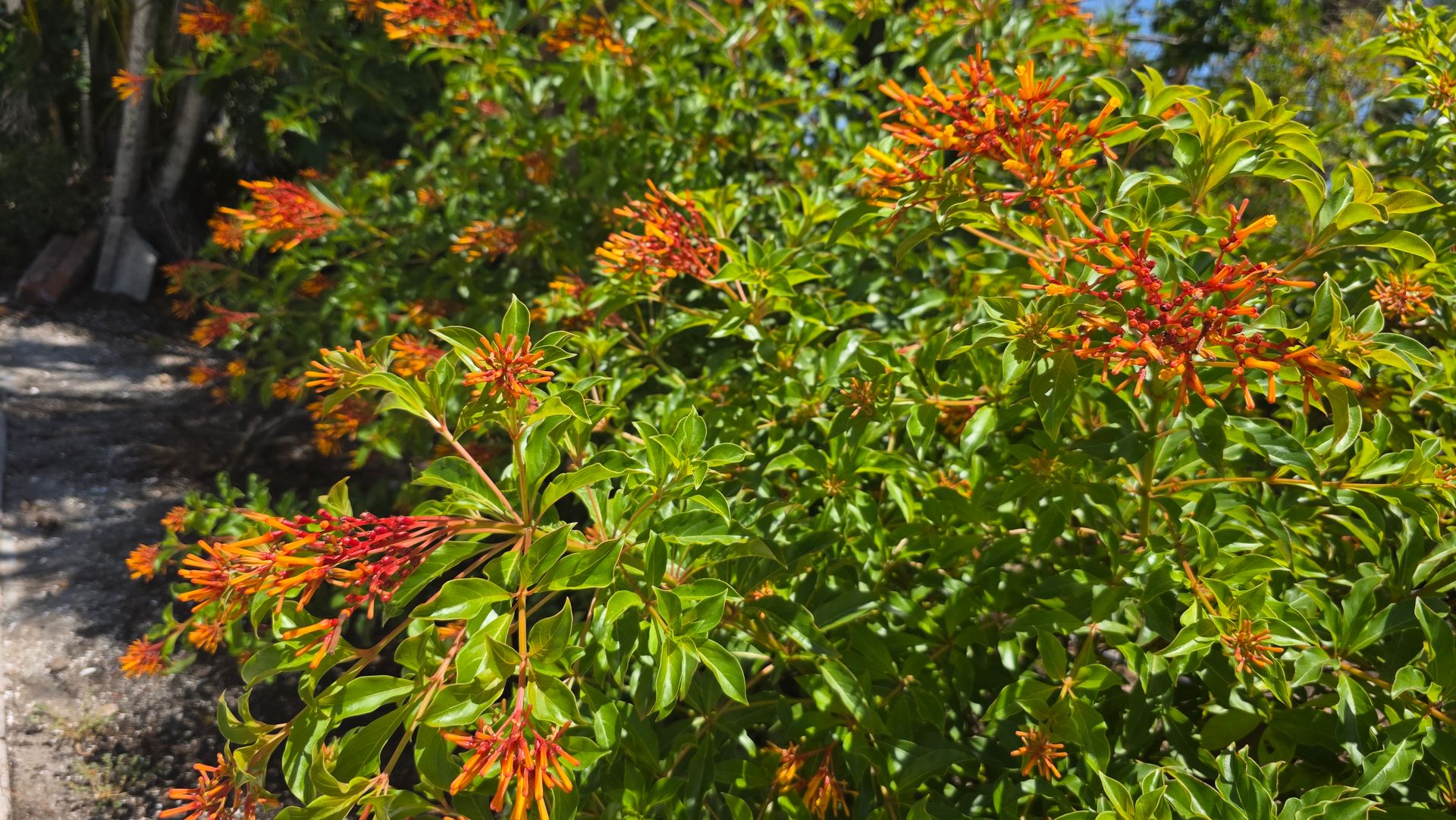
Native Firebush — Hamelia patens
Native Firebush occurs naturally in Florida and is particularly well adapted to our long, hot growing season.
Although homeowners often see Firebush for sale as a relatively small nursery shrub, it should not be mistaken for a small foundation plant. Given enough room and limited pruning, native Firebush can develop into a substantial shrub. In South Florida it can potentially reach well over 10 feet, although plants maintained in residential landscapes are commonly kept smaller.
That growth habit makes Firebush especially useful for larger beds, informal screens, wildlife gardens, mixed tropical plantings, and areas where a flowering shrub is allowed to develop a more natural shape.
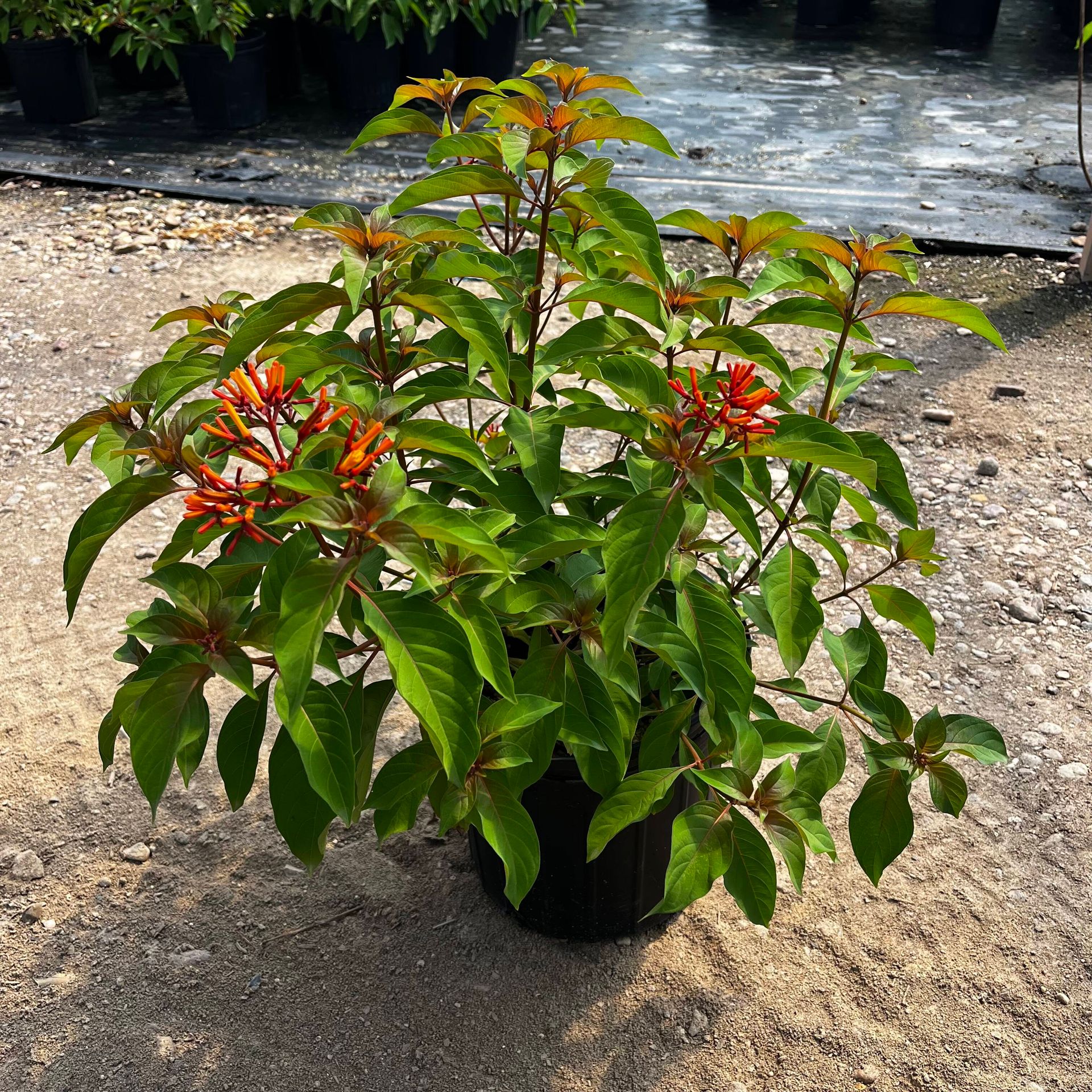
Why Is It Called Firebush?
The name becomes fairly obvious once the plant is in bloom.
Clusters of narrow red and orange flowers develop at the ends of the branches, creating splashes of fiery color throughout the shrub. In a mature specimen covered with blooms, the effect can be impressive.
The flowers are tubular, which makes them particularly attractive to hummingbirds and nectar-feeding butterflies.
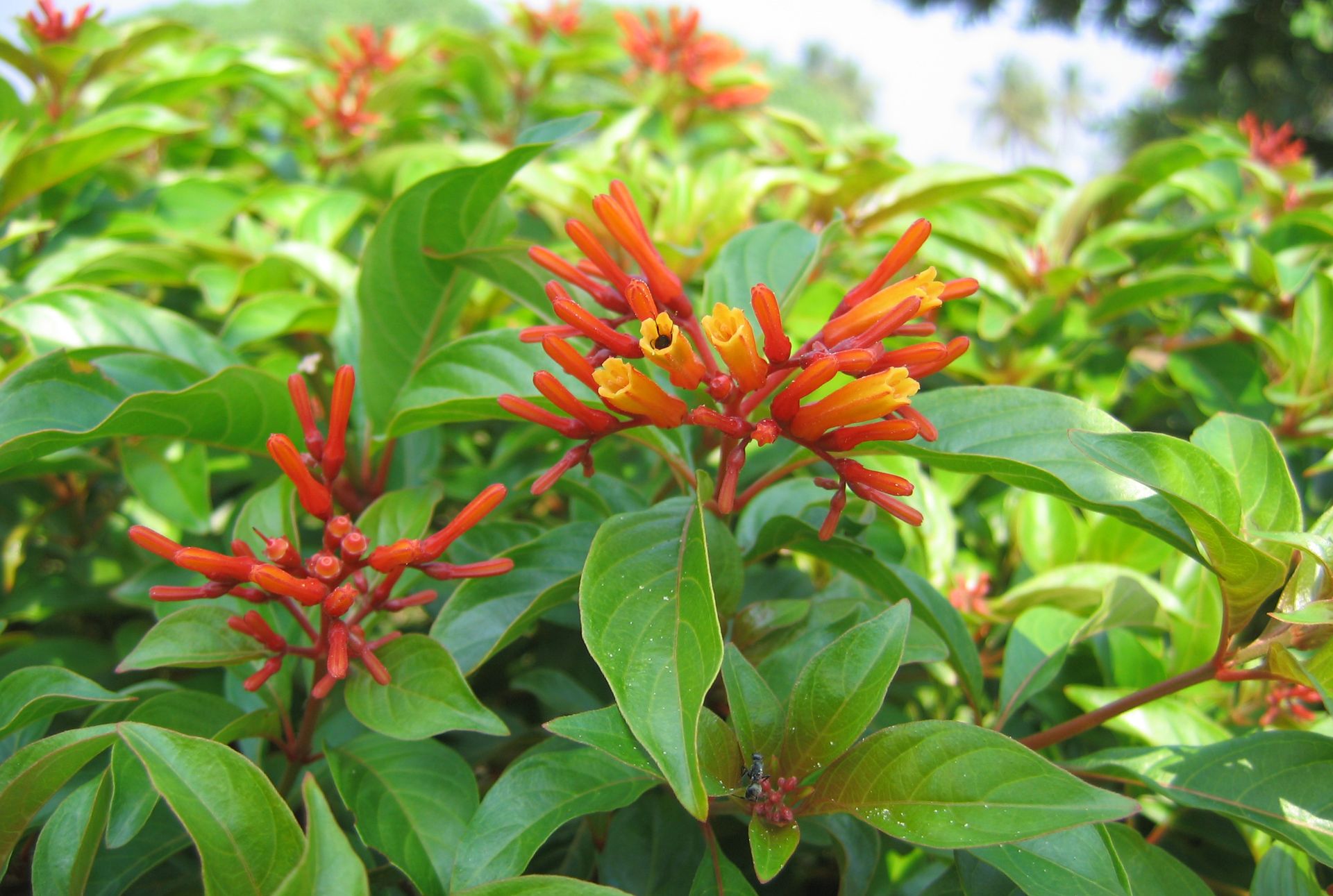
Full Sun Brings Out the Best Flowering
Firebush will grow in full sun or partial shade, but more sunlight generally means better flowering.
For homeowners choosing Firebush primarily for its orange-red blooms and wildlife value, we prefer a location receiving plenty of direct sunlight whenever the property allows.
Plants growing with more shade can still develop attractive foliage, but flowering may be reduced.
Firebush Is Excellent for Florida Wildlife
One of the best reasons to include Firebush in a Florida landscape is the amount of wildlife activity it can bring into the yard.
Its red-orange tubular flowers are an excellent nectar source for butterflies and hummingbirds, while the small fruits that develop after flowering are eaten by birds. This allows Firebush to provide both ornamental color and genuine wildlife value throughout much of the year.
A Favorite of the Ruby-throated Hummingbird
The hummingbird Sarasota homeowners are most likely to encounter is the Ruby-throated Hummingbird (Archilochus colubris).
UF/IFAS notes that the Ruby-throated Hummingbird is the hummingbird most commonly encountered in west-central Florida, particularly during its spring and fall migrations. Some individuals may also remain in Florida outside of the main migration periods.
These tiny birds are especially adapted to feeding from tubular flowers. Their long bills and extendable tongues allow them to reach nectar deep inside blooms that many other animals cannot easily access.
UF/IFAS specifically lists native Firebush (Hamelia patens) as a hummingbird-attracting plant for Florida landscapes. Its clusters of red-orange tubular flowers provide exactly the type of nectar source hummingbirds naturally seek out.
Interestingly, UF/IFAS also notes that Florida Ruby-throated Hummingbirds often make extensive use of flowering landscape plants rather than relying solely on artificial hummingbird feeders. Planting nectar-rich species such as Firebush can therefore help create a landscape that naturally encourages hummingbird visits.
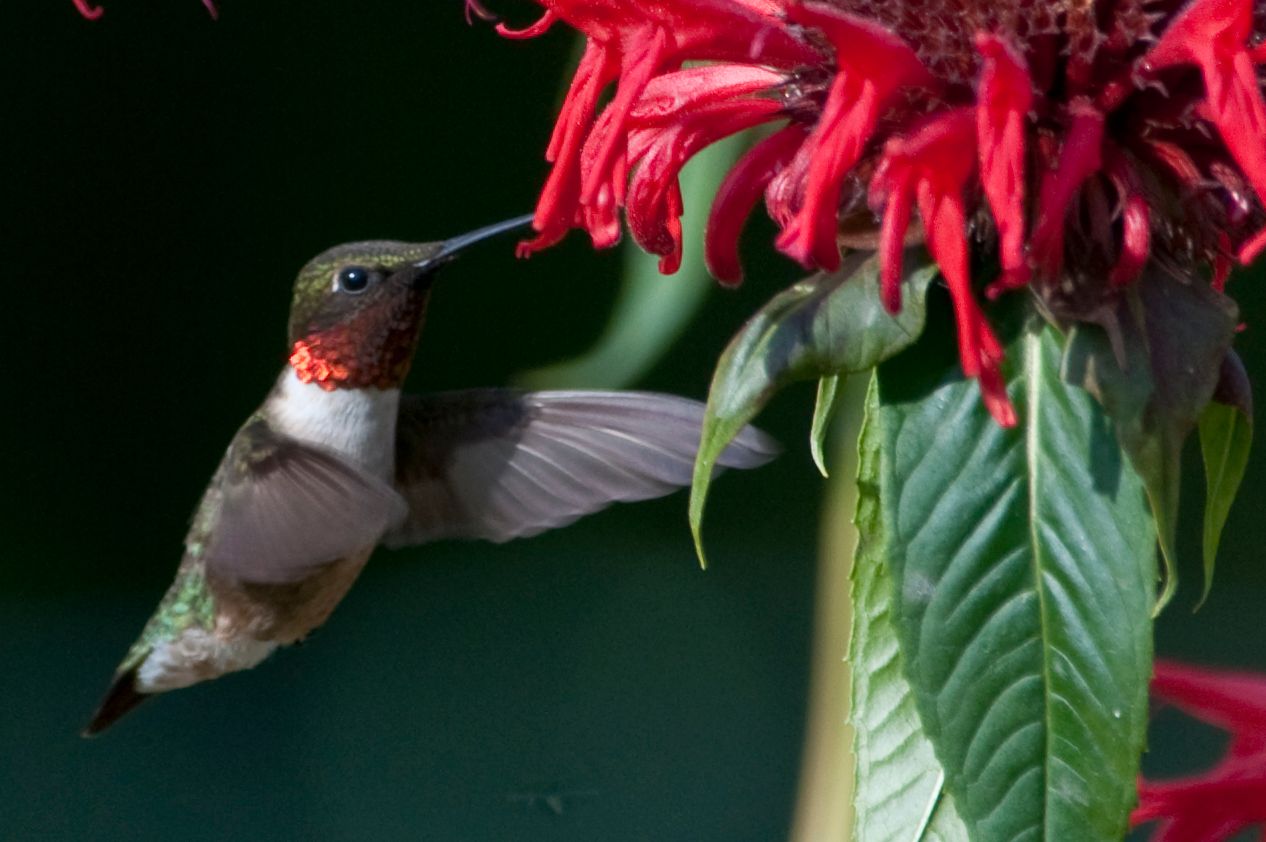
Firebush also attracts a variety of butterflies, including some of Florida's familiar native species, and its berries provide another food source for birds once flowering is complete.
For homeowners interested in creating a more active wildlife or pollinator garden, Firebush is one of those plants that can contribute far more than just color.
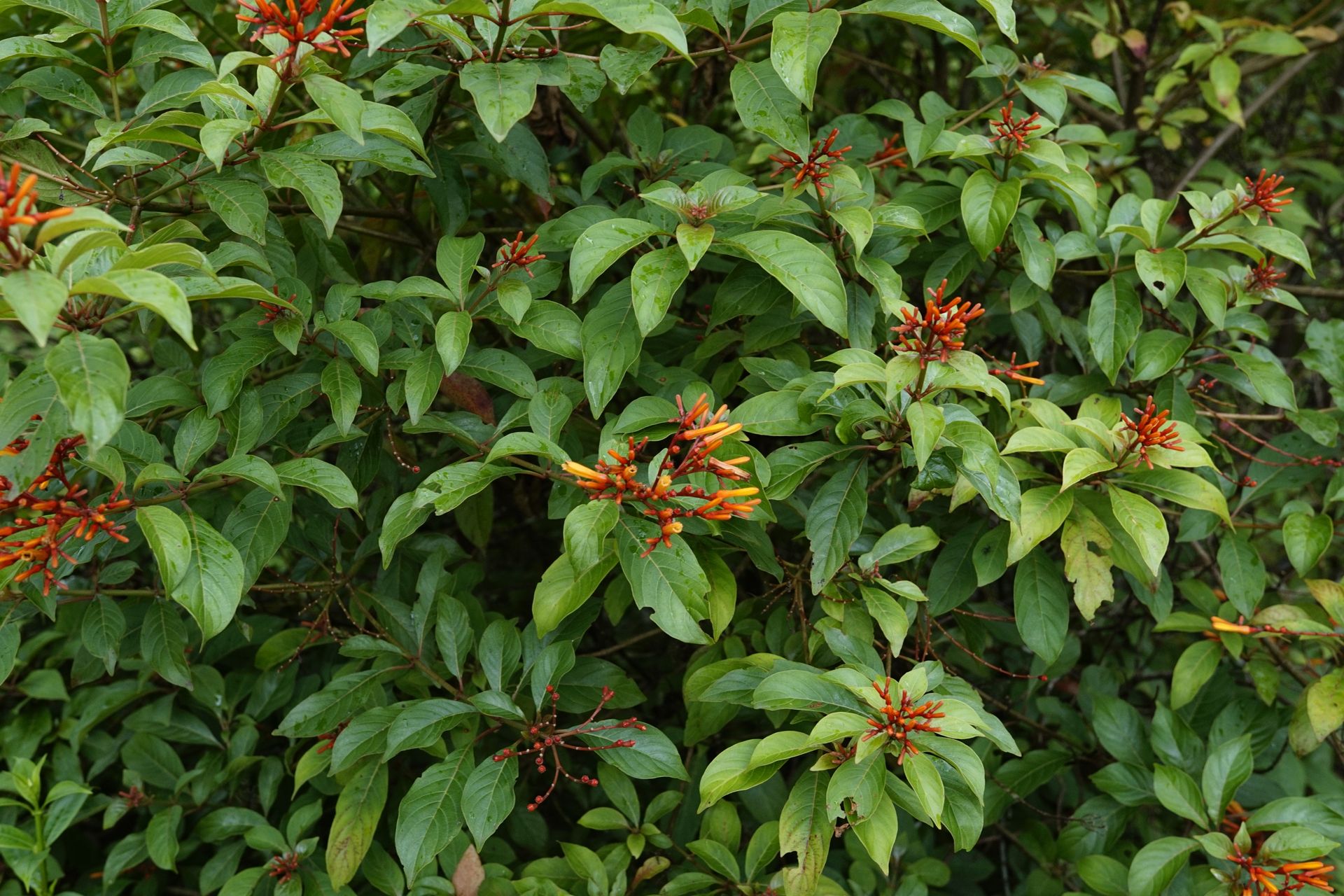
Give Firebush Enough Room
One of the biggest mistakes that can be made with Firebush is planting it according to the size of the nursery container instead of the size of the mature plant.
A young 3-gallon Firebush may look easy to tuck into a small space. A few growing seasons later, that same plant can occupy a considerable portion of the bed.
For larger groupings or informal hedges, several feet of spacing between plants gives them room to fill out. A specimen intended to develop naturally should be given even more room.
This is also why Firebush usually performs better visually when it is allowed to maintain a somewhat loose, natural form rather than being repeatedly sheared into a tight box.
Don't Prune Away the Flowers
Firebush responds well to pruning, but there is a difference between selective pruning and constantly shearing the plant.
Flowers develop on the ends of new growth. Frequent hedge trimming can continually remove developing flowers and flower buds.
When possible, we prefer selective pruning to manage size while preserving the plant's natural form and flowering potential.
There are situations, however, where much harder pruning can be appropriate.
Field Observation: Firebush Recovery After Hurricane Saltwater Flooding
We had an opportunity to see just how resilient established Firebush can be after a very difficult event.
These Firebush shrubs were exposed to hurricane-related saltwater flooding. Afterward, the plants looked essentially dead, declining back to little more than bare sticks.
They were cut back hard rather than immediately removed.
The recovery was impressive.
New growth returned vigorously, the shrubs filled back in, and they eventually returned to heavy flowering.
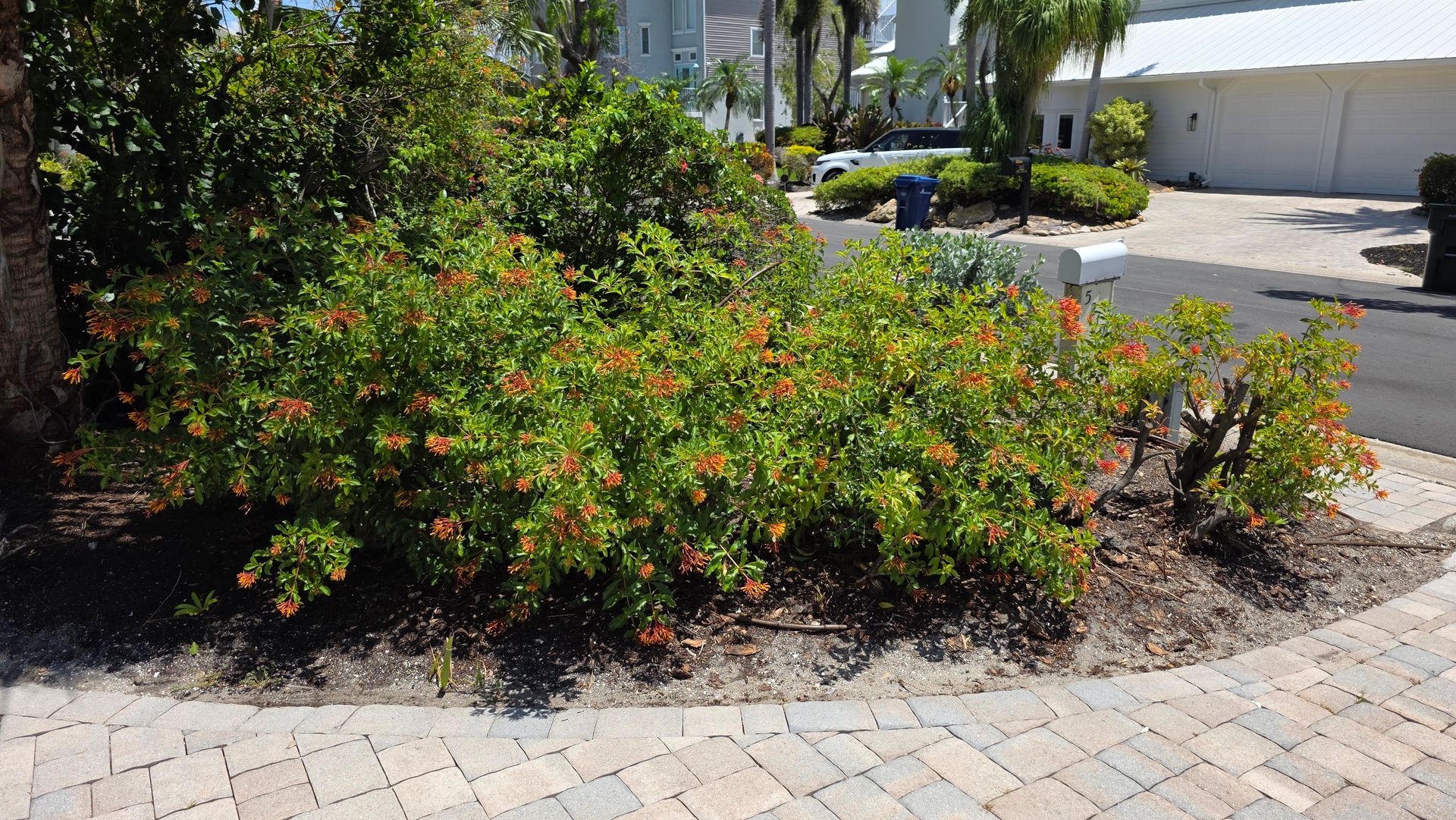
This does not mean Firebush should be considered immune to saltwater flooding. Prolonged salt exposure can severely damage landscape plants, and recovery will depend on factors such as the severity and duration of flooding, the health and maturity of the plant, soil conditions, rainfall, and what happens afterward.
But in this particular Sarasota landscape, established Firebush demonstrated excellent recovery after severe stress.
It is one of the reasons we are sometimes hesitant to declare a well-established landscape plant dead immediately after an unusual weather event. Some plants are capable of recovering from more damage than their appearance initially suggests.
Another Field Observation: Distorted New Growth
We recently encountered a different Firebush showing an unusual problem.
The older foliage remained relatively normal while portions of the newest growth were becoming tightly curled and distorted. Looking closely at the affected stems and leaves also revealed numerous very small insects.
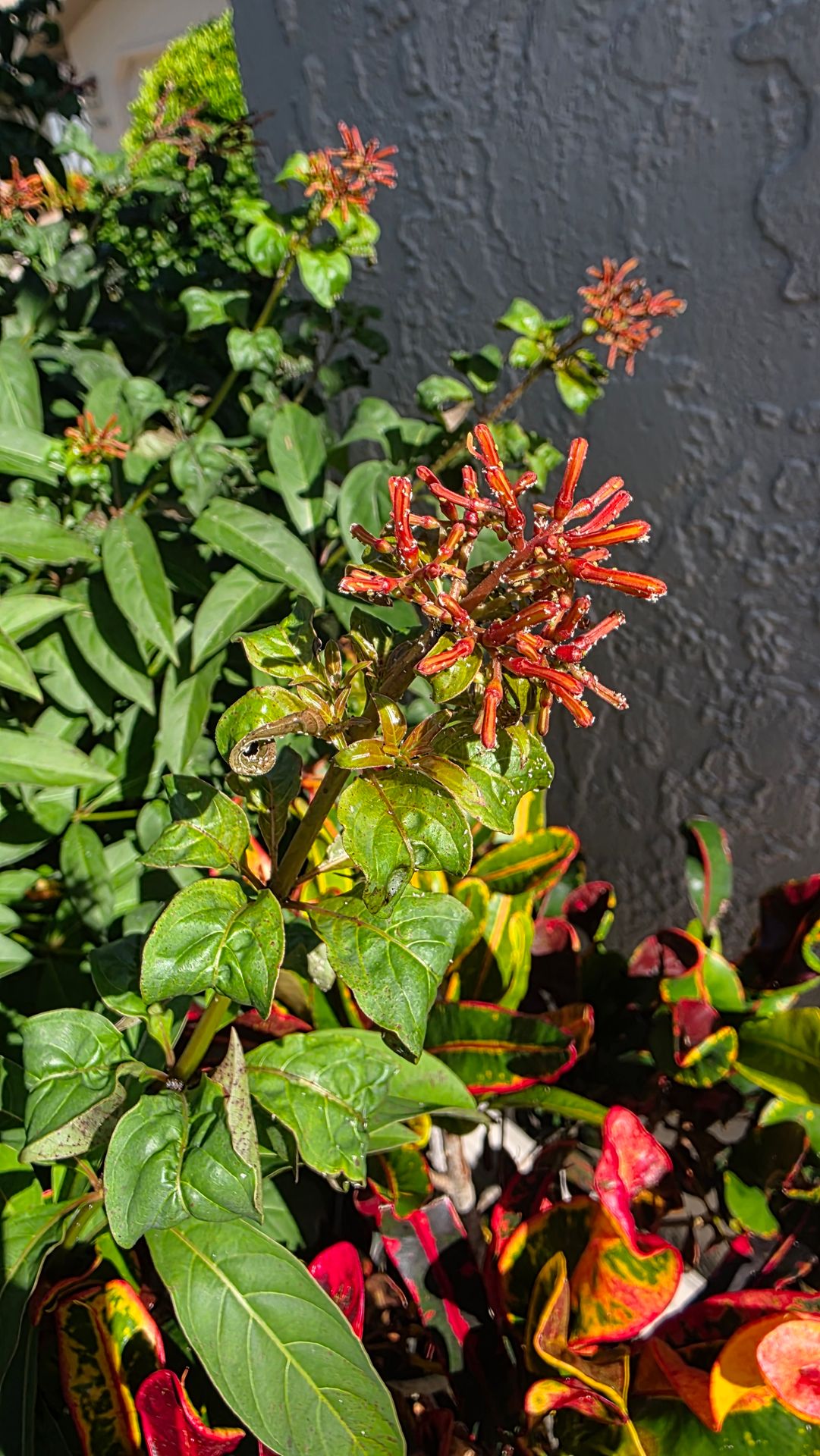
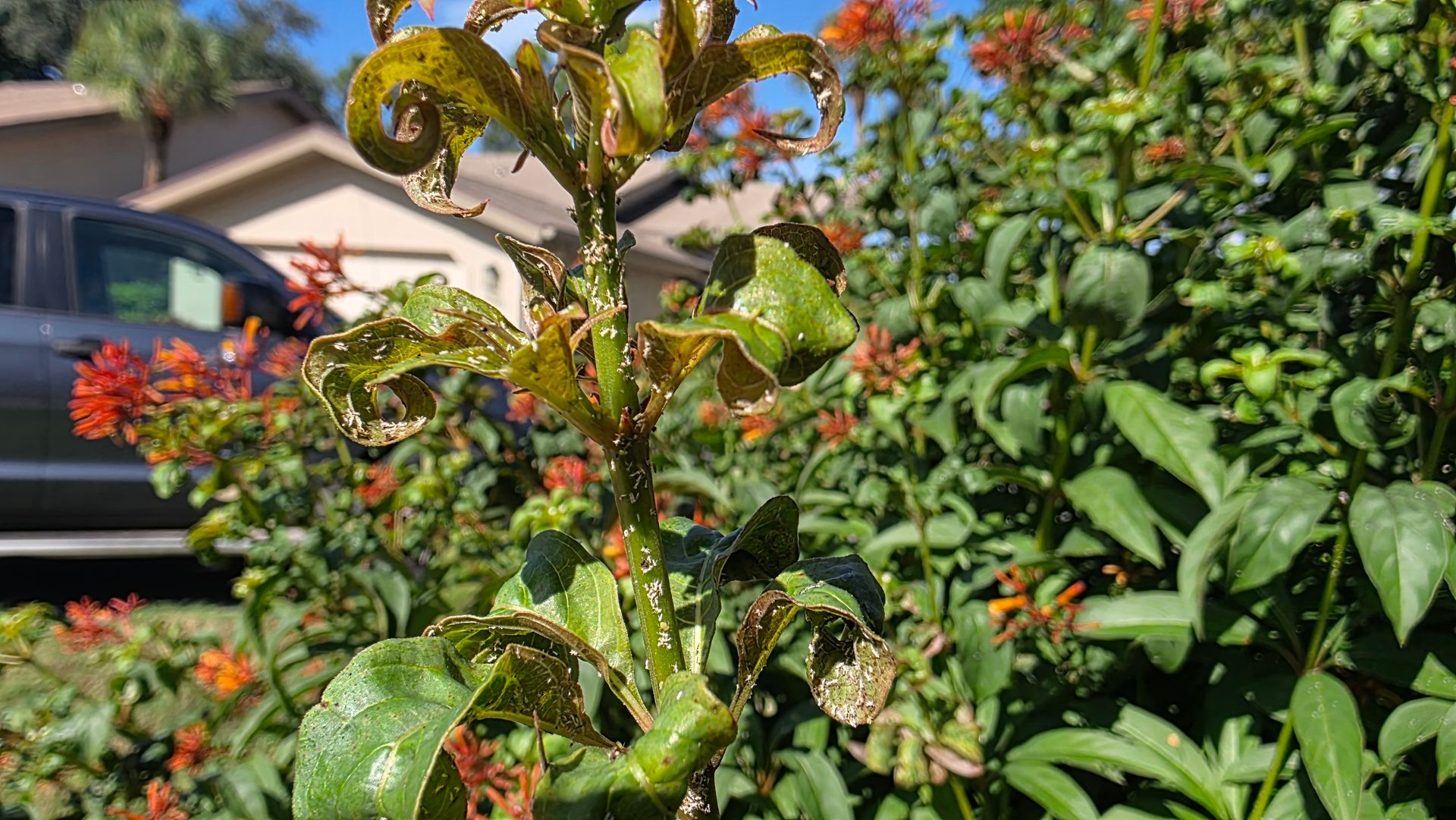
Distorted new growth can have several possible causes, so we would not diagnose a plant solely from appearance. Small sap-feeding insects such as aphids can attack tender new Firebush growth, and other pests or environmental stresses can create similar symptoms.
The important clue is often where the symptoms are occurring.
When older foliage looks relatively normal but fresh leaves emerge curled, twisted, or undersized, it is worth closely examining the growing tips and undersides of the newest leaves. Tiny insects can be easy to overlook until the damage becomes obvious.
Firebush is generally considered a relatively trouble-free landscape plant, but even tough Florida natives can occasionally experience pest or stress problems.
Native Firebush Isn't the Only Firebush You'll Find
One thing that can become confusing when shopping for Firebush is that several plants are sold using the Firebush name.
They are not all identical, and they are not all Florida natives.
Dwarf Firebush
Dwarf Firebush is commonly marketed as a smaller alternative to the native form. It tends to develop a more compact growth habit and can be useful where the larger size of native Firebush would be difficult to accommodate.
However, homeowners specifically trying to create a native Florida landscape should know that the commonly sold dwarf form is generally associated with Hamelia patens var. glabra and is not considered Florida native.
Its flowers and foliage also differ somewhat from the native form.
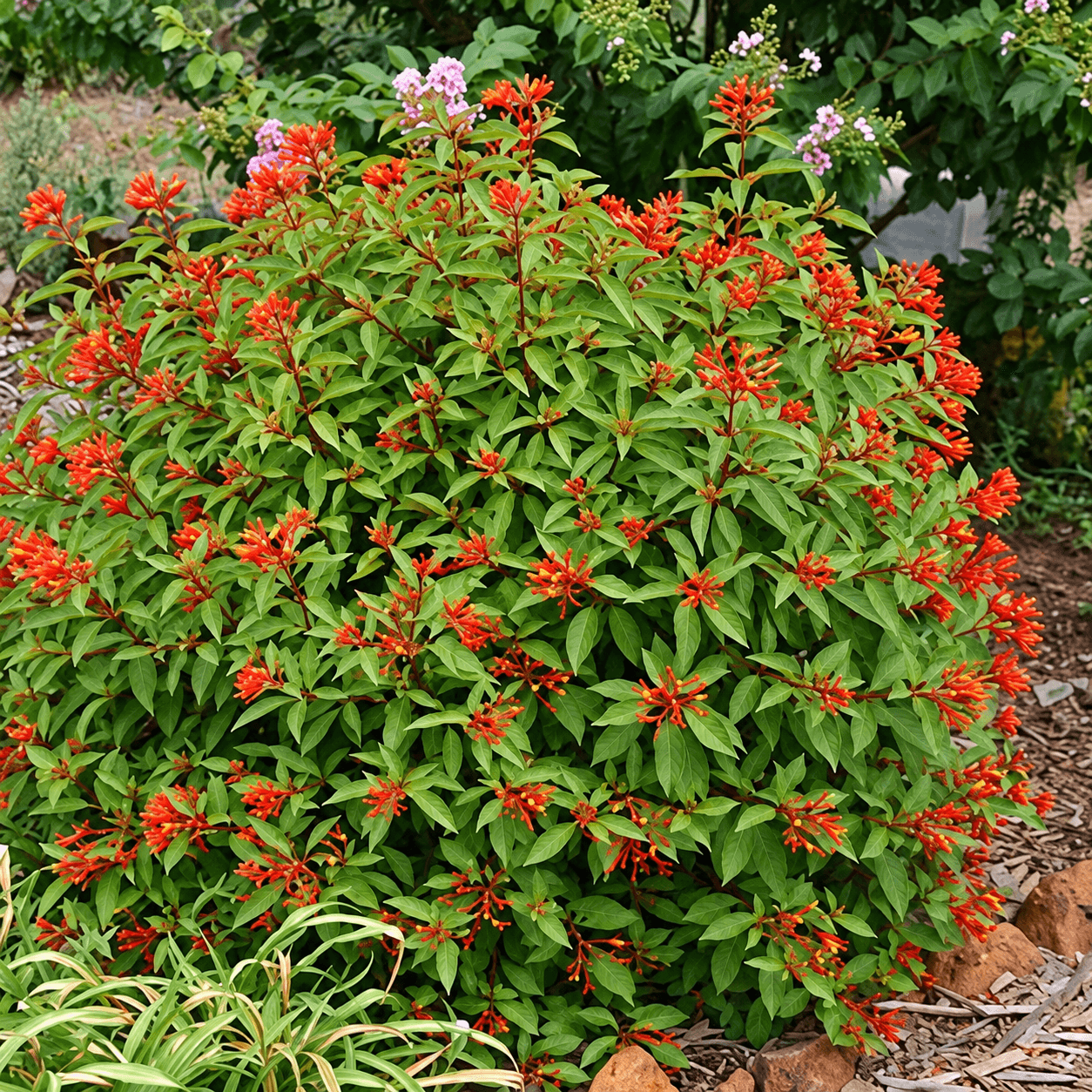
For a homeowner who simply wants a colorful flowering shrub in a smaller space, Dwarf Firebush can still be an attractive landscape option. If native status is one of the primary goals of the planting, we would choose native Hamelia patens instead.
Lime Sizzler Firebush
One of the more unusual Firebush selections is Lime Sizzler.
Rather than relying only on flowers for color, Lime Sizzler produces dramatic variegated foliage with bright yellow to lime-colored leaves broken by irregular areas of green. Warm reddish tones can also appear in the new growth.
The familiar red-orange Firebush flowers provide an additional layer of color.
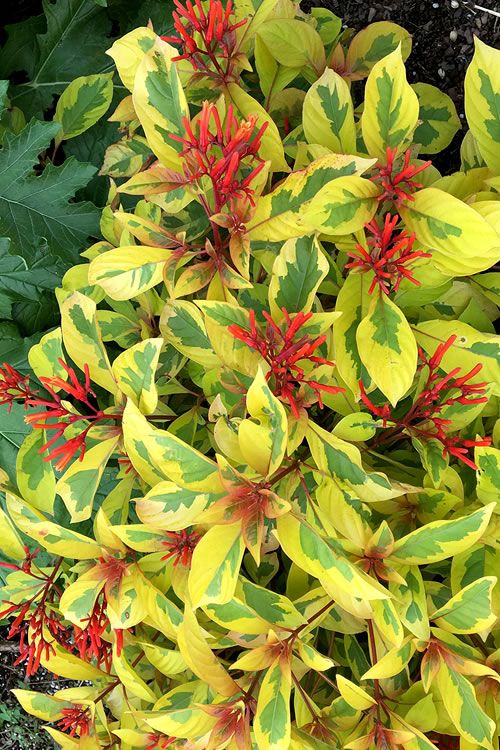
Lime Sizzler can work especially well as a specimen plant where its foliage can be appreciated up close. It can also add contrast to beds dominated by darker green tropical foliage.
We like it when the landscape design calls for something noticeably different without moving completely away from plants that are well suited to our climate.
Which Firebush Should You Choose?
The best choice depends on the landscape.
Native Firebush is our preference when wildlife value, Florida-native planting, natural growth, and a larger flowering shrub are priorities.
Dwarf Firebush can make sense where a smaller-growing flowering shrub is preferred and native status is not essential.
Lime Sizzler is a good choice when ornamental foliage and contrasting color are major parts of the landscape design.
For many Sarasota properties, native Firebush remains difficult to beat.
Is Firebush a Good Plant for Sarasota?
For the right location, absolutely.
Firebush offers:
- Florida-native options
- Long periods of flowering
- Excellent hummingbird and butterfly value
- Fast growth
- Good heat tolerance
- Moderate drought tolerance once established
- Attractive natural form
- Useful screening potential
- Strong recovery potential from pruning
- Good compatibility with tropical and Florida-friendly landscapes
Its biggest requirement is simply giving it enough room.
Plant Firebush where its mature size makes sense, provide plenty of sunlight for good flowering, and avoid constantly shearing away the new growth. In return, it can provide years of color and wildlife activity with relatively straightforward maintenance.
Learn More About Firebush
Visit the StrongSRQ Plant Gallery Firebush page for additional information on mature size, light requirements, plant spacing, growth habit, hardiness, maintenance, and landscape uses. https://strongsrq.com/medium-shrubs/firebush
You can also explore the StrongSRQ Florida Plant Gallery for more palms, trees, shrubs, flowering plants, native species, and landscape ideas suited to Sarasota and Southwest Florida. https://strongsrq.com/plant-gallery