
Featured Plant: Silk Floss Tree — Fall Flowers, Giant Thorns and One of Florida’s Most Unusual Trees


Some plants are nice.
Some plants are useful.
And then there are plants like the Silk Floss Tree (Ceiba speciosa) that are so unusual they almost stop people in their tracks.
If you have ever seen one in bloom, or stood next to one of its green trunks covered in giant conical thorns, you probably understand why this tree is so memorable. It is bold, strange, beautiful, and not easily forgotten.
And for Sarasota homeowners, now is a good time to start keeping an eye out for them. Silk Floss Trees typically put on their biggest show in fall, when their large pink flowers begin appearing and make an already dramatic tree even harder to ignore.
If you have a Silk Floss Tree in your yard, or know of one blooming around Sarasota this fall, we would love to see it. Feel free to share a photo with us.
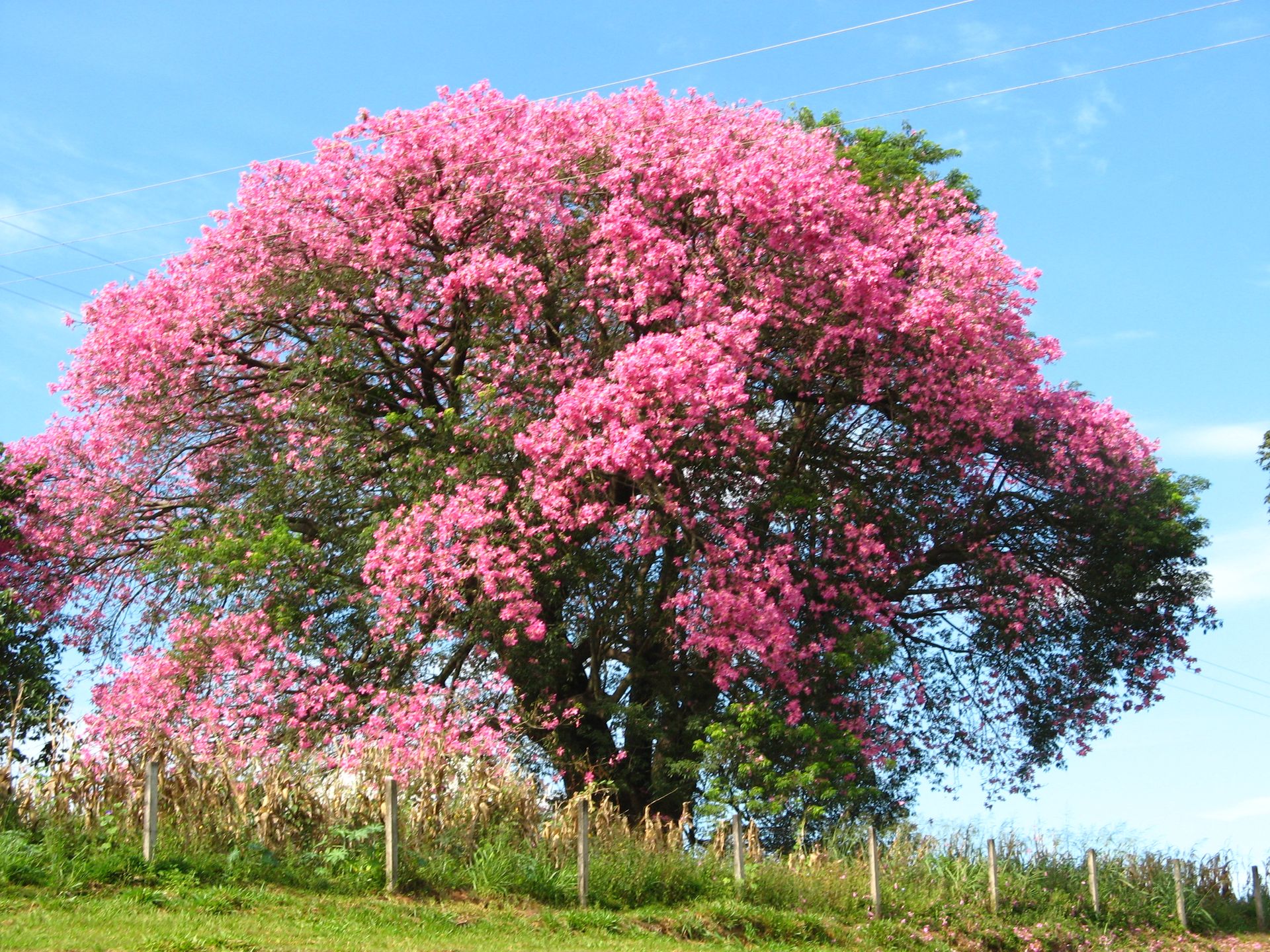
One of the Most Distinctive Trees You’ll See in Florida
Silk Floss Tree is not a subtle plant.
It is best known for three standout features:
large pink flowers
a green trunk and branches covered with large thorns
seed pods filled with silky white floss
Most ornamental trees have one main claim to fame. Silk Floss Tree somehow manages to have several.
Even before it blooms, the trunk alone can make people stop and ask what they are looking at. Once flowers begin to open, the tree becomes even more striking.
In the right setting, it is one of the most unforgettable flowering trees you can plant.
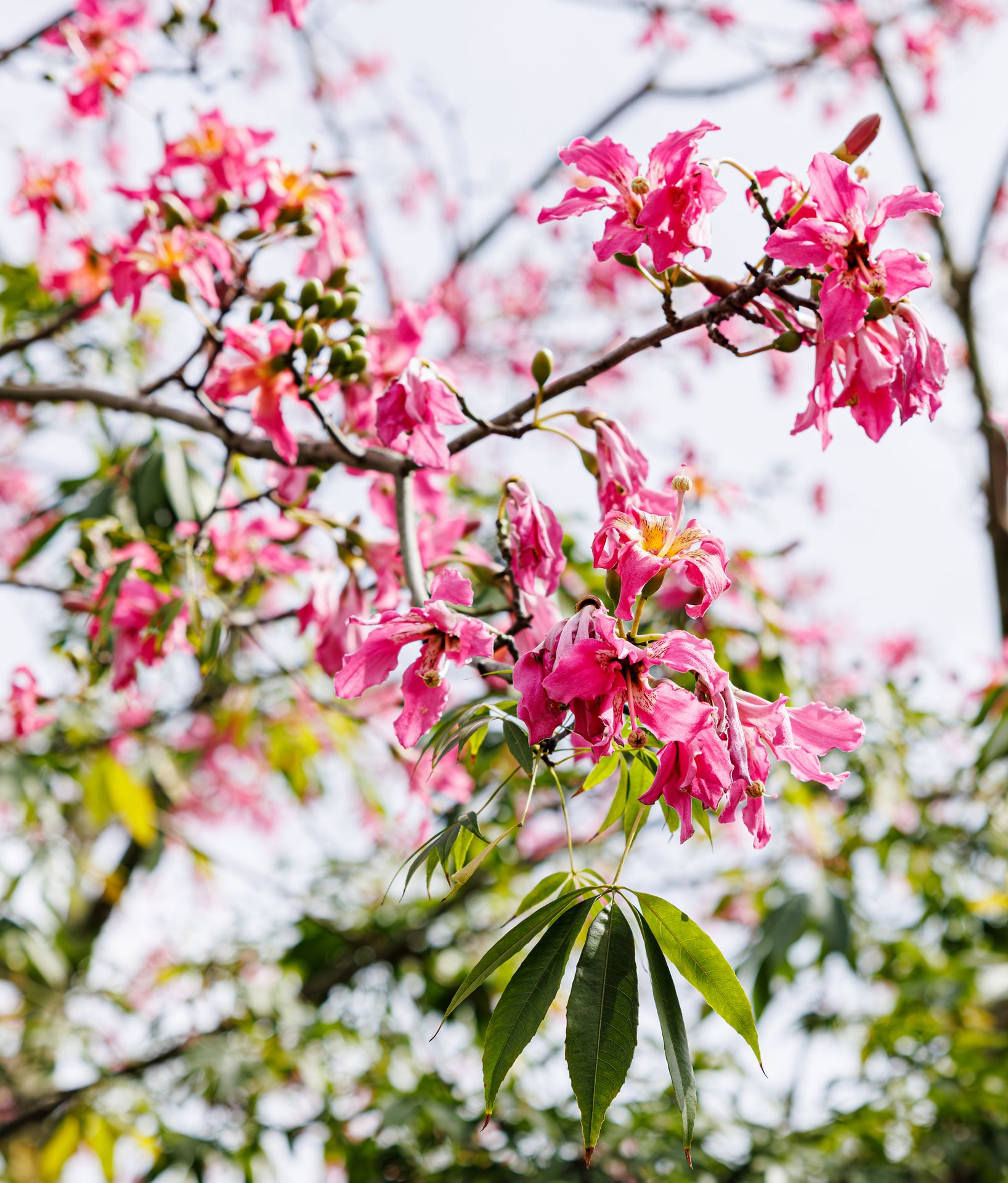
Fall Flowers Worth Watching For
One of the reasons we wanted to feature Silk Floss Tree now is simple: its show season is approaching.
In our part of Florida, Silk Floss Trees typically bloom in the fall, often from around September into November. That makes them especially interesting this time of year, when many other landscape plants are not producing the same kind of dramatic floral display.
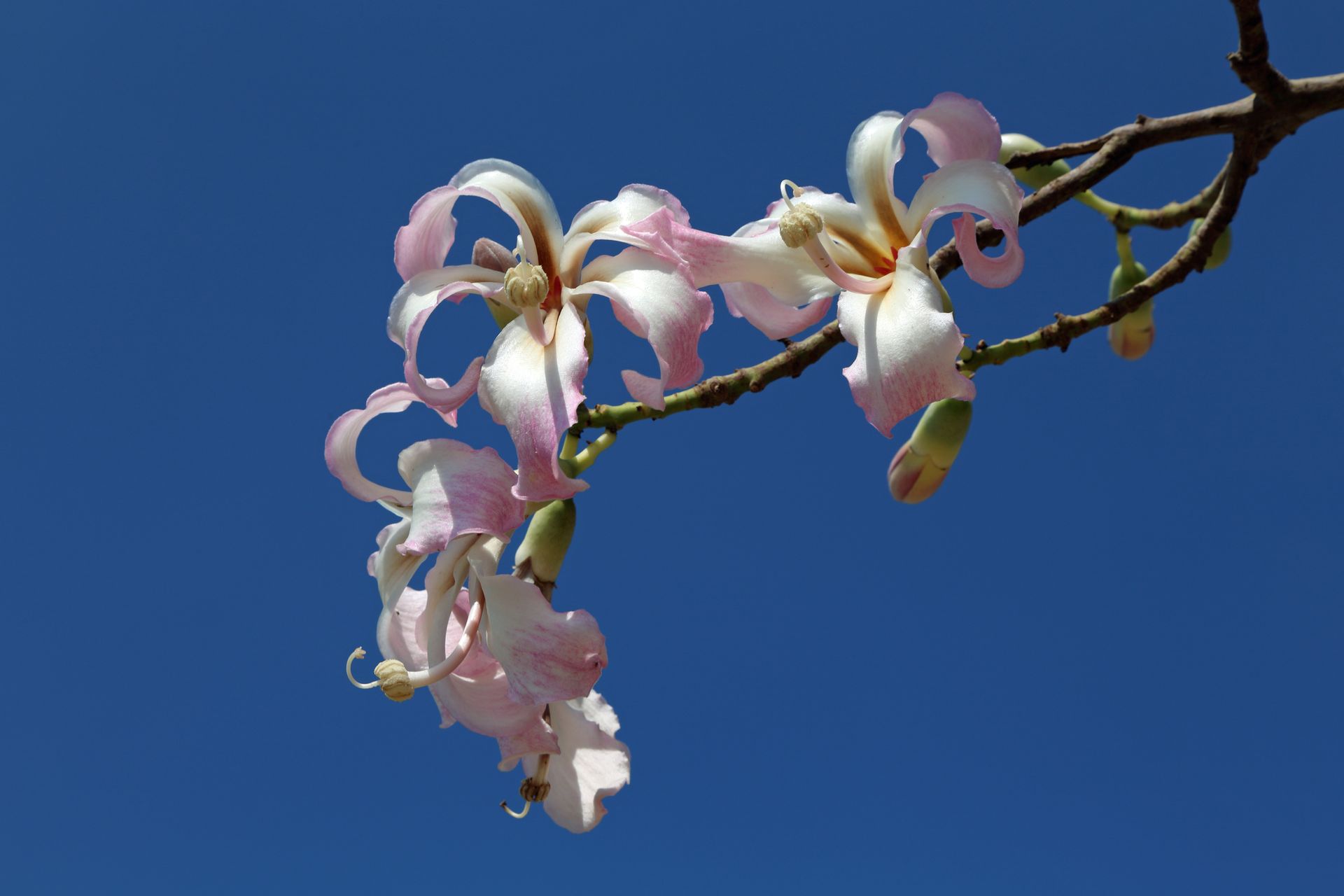
The flowers are large and showy, usually pink with a paler center and a tropical, almost orchid-like appearance. On some trees, the bloom display becomes even more dramatic because the tree may have shed much of its foliage before or during flowering. That allows the blossoms to stand out even more against the branches.
This is not the kind of plant that quietly disappears into the background. When a mature Silk Floss Tree is flowering well, it demands attention.
The Trunk Is Half the Story
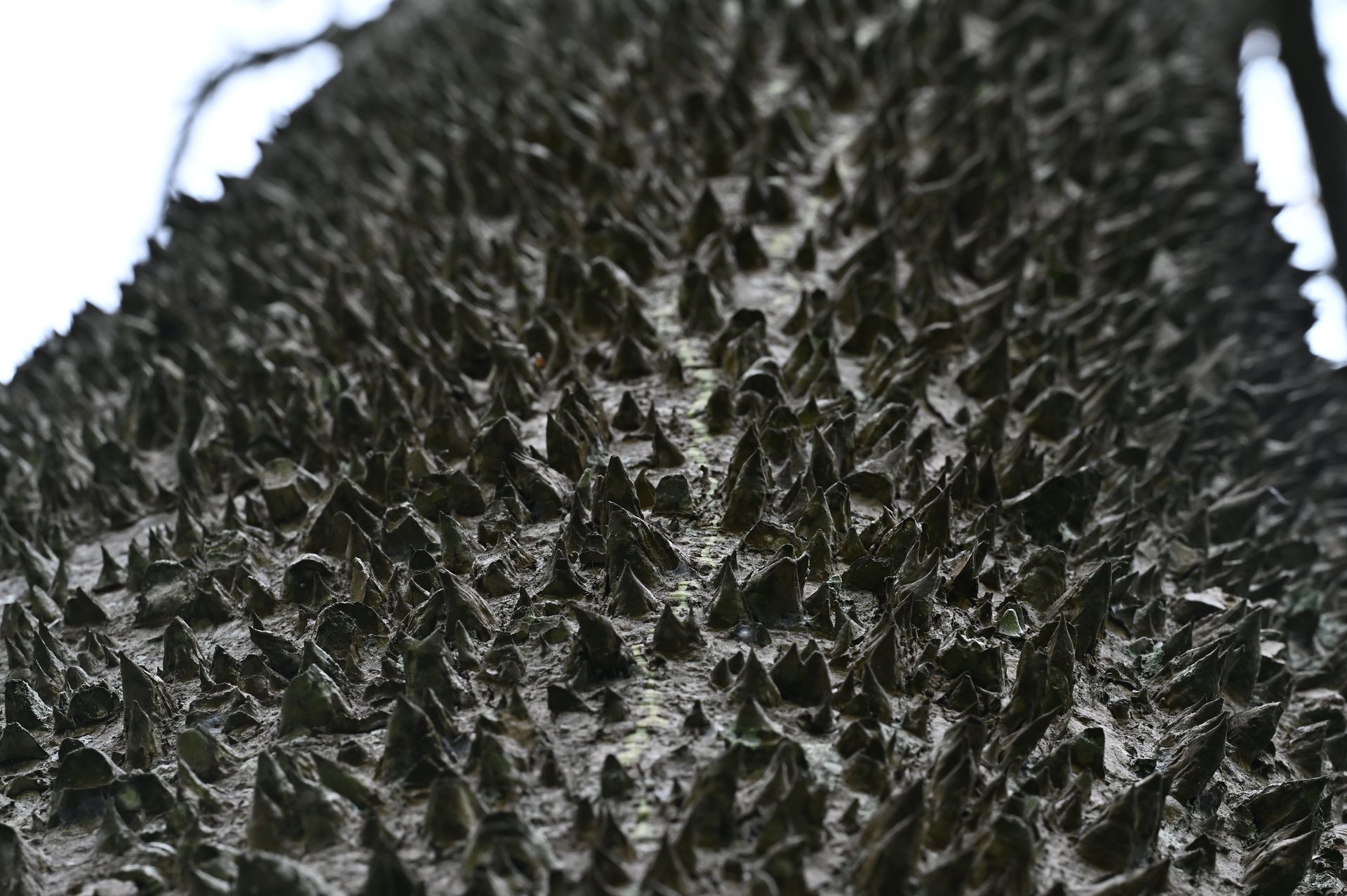
As impressive as the flowers are, many people are even more fascinated by the trunk.
Young and middle-aged Silk Floss Trees often develop green trunks and larger branches armed with thick, pointed, cone-shaped thorns. In some cases, the density of the thorns is remarkable. They do not just appear here and there. They can cover substantial portions of the trunk and scaffold branches, giving the tree an almost armored appearance.
It is one of the most visually unusual bark and trunk characteristics you will find in an ornamental tree.
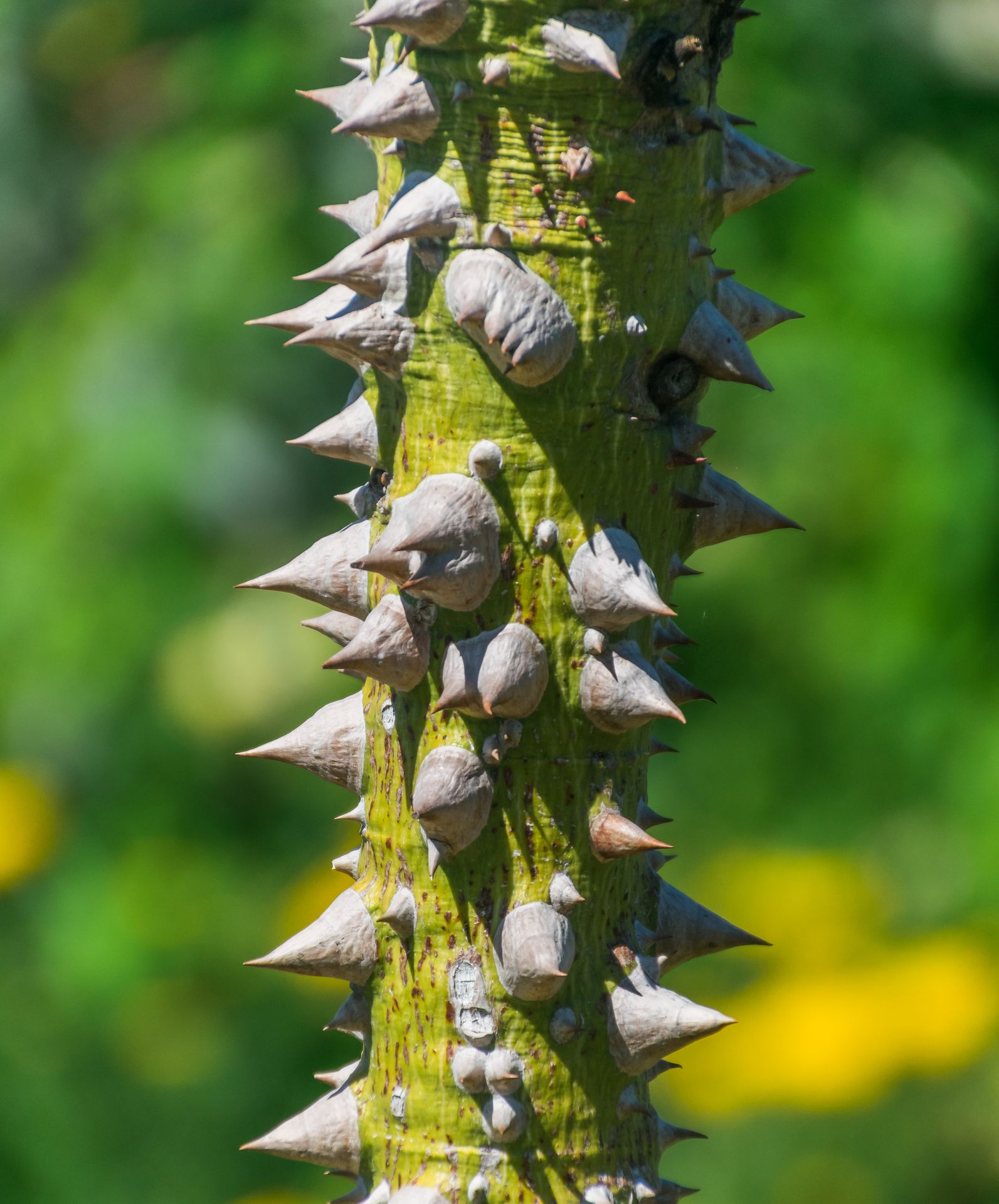
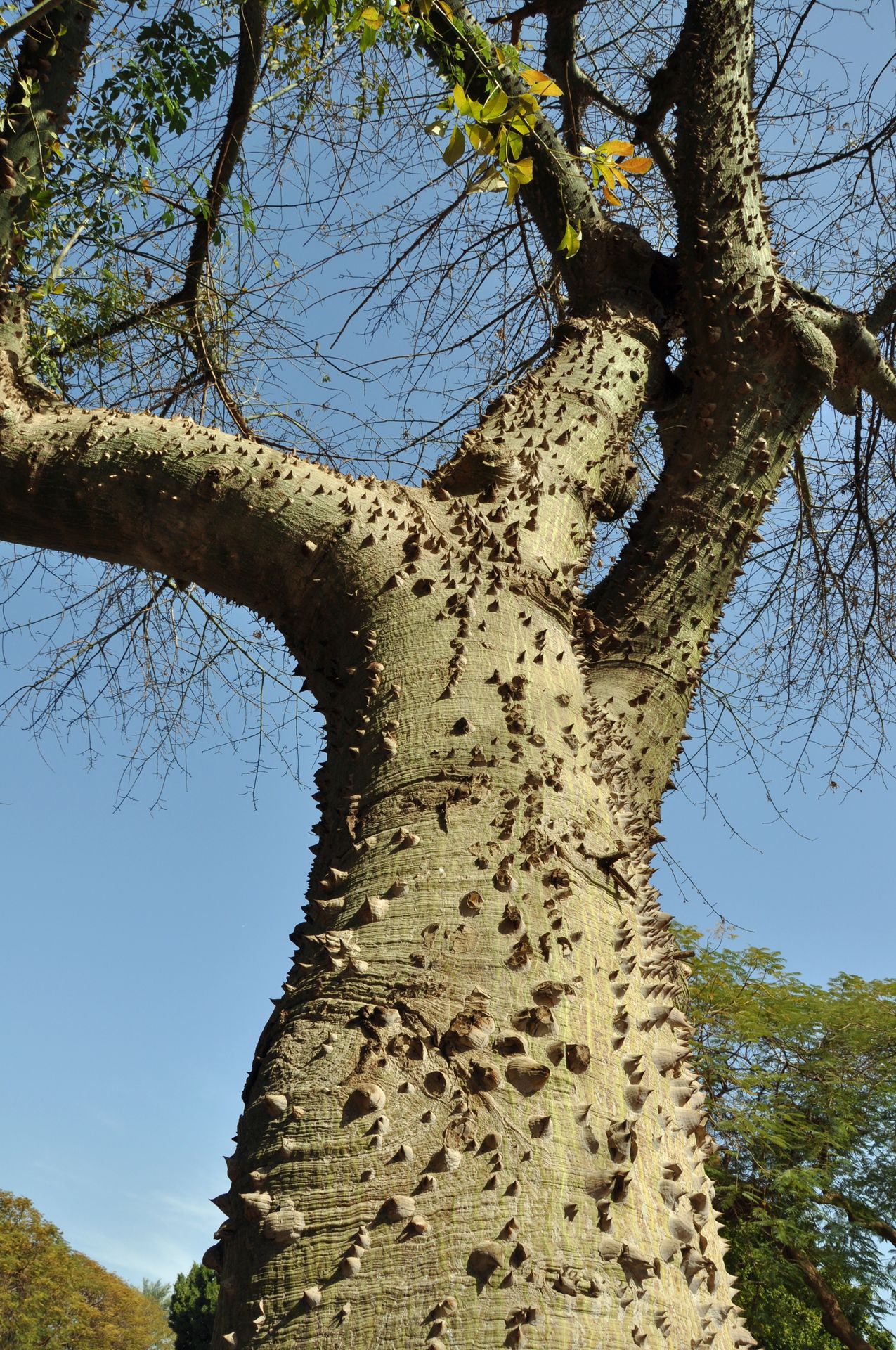
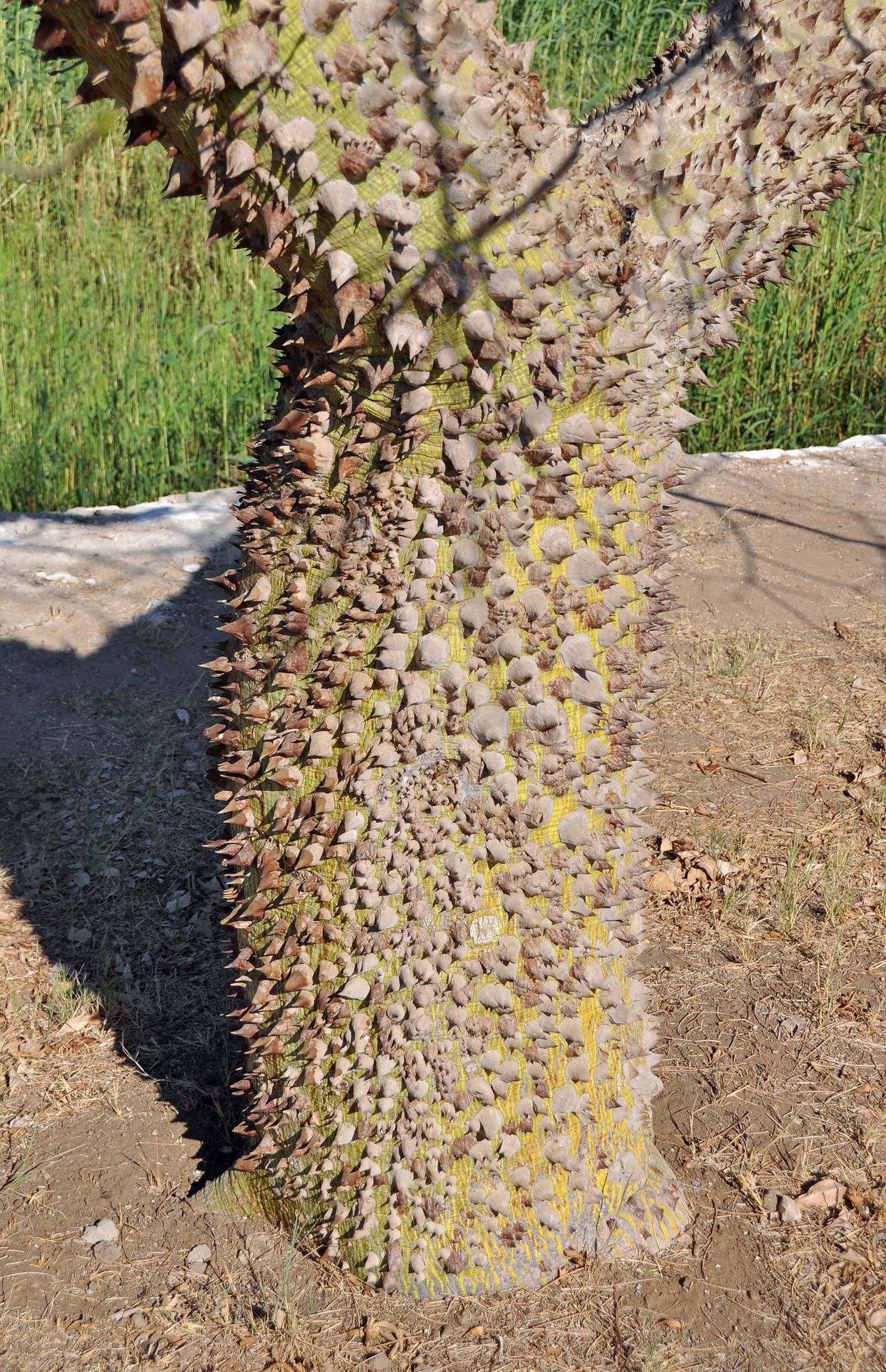
This feature is part of what gives the Silk Floss Tree so much personality. Even in seasons when it is not flowering, it remains interesting.
Of course, those thorns also mean this is not a tree for every location. It is not something we would want planted where children are constantly climbing, where people are squeezed tightly against the trunk, or where the planting space is simply too confined for a tree with this kind of character.
But as a conversation piece and ornamental feature, it is hard to beat.
Why Would a Tree Have Thorns Like That?
This is one of the more interesting parts of the Silk Floss Tree story.
A commonly discussed theory is that the thorns developed as a defense against browsing by large animals. Some horticultural and natural-history discussions even connect them to extinct megafauna, with the idea that these heavily armed trunks may reflect a much older evolutionary past when giant animals posed a very different kind of threat to young trees.
Whether or not that is the entire explanation, the result today is a tree that looks almost prehistoric.
That “ancient oddity” feel is part of the appeal. Silk Floss Tree is not just pretty. It feels unusual in a way that many ornamental trees do not.
Why Is It Called Silk Floss Tree?
The common name comes from the seed pods.
After flowering, the tree produces pear-shaped seed capsules. As they mature and open, they reveal masses of silky white floss surrounding the seeds. The floss has a cotton-like appearance, which is where the “silk floss” name comes from.
Historically, this fiber has been used as a stuffing material, much like kapok.
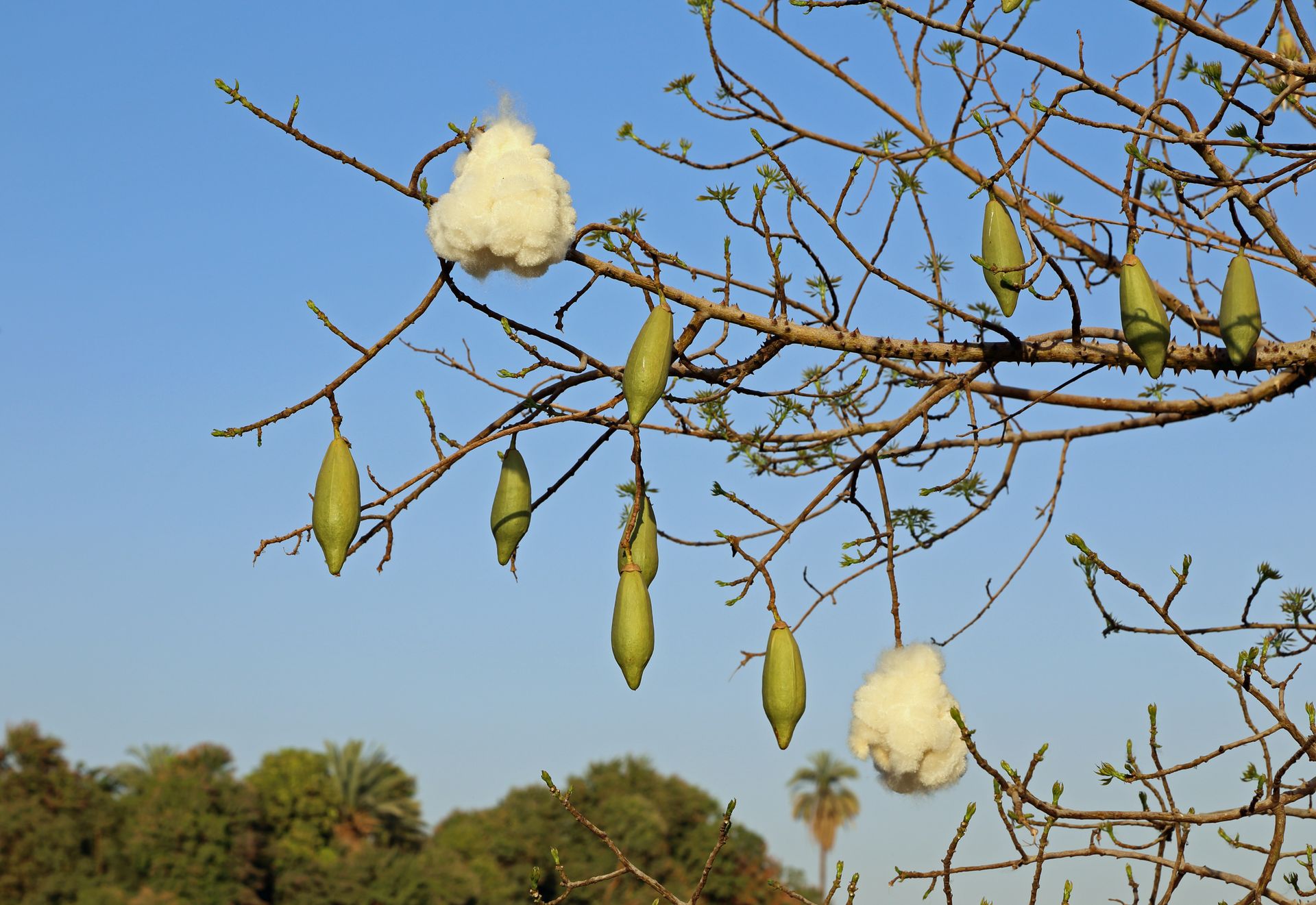
That means the tree offers yet another visual stage beyond flowering and foliage. Even the seed pods add interest.
For a plant lover, it is the kind of tree that rewards attention in more than one season.
How Big Does a Silk Floss Tree Get?
This is where the practical side of the conversation matters.
Silk Floss Tree is not a small ornamental tree. It can eventually reach roughly 35 to 50 feet tall, with a broad canopy that may spread about 40 to 55 feet wide. Young trees can grow fairly quickly, and over time they become substantial landscape specimens.
That size is part of what makes them so impressive, but it also means they need room.
This is not the tree to tuck into a narrow side yard, jam close to a driveway, or wedge between a house and the street just because the nursery specimen looks manageable at the moment.
Like many larger shade or flowering trees, Silk Floss Tree should be planted with its mature size in mind. It can develop large surface roots, and it generally deserves significant clearance from sidewalks, curbs, driveways, foundations, and other hardscape features.
If a property has the room, though, the payoff can be tremendous.
Where Does It Work Best in the Landscape?
Because of its size and character, Silk Floss Tree is best used where it has space to be appreciated.
Good settings include:
- larger front yards
- open lawn areas
- estate-style properties
- parks and community landscapes
- larger corner lots
- wide planting beds with generous setback space
It works best as a specimen tree rather than as something hidden in a crowded mixed planting. This is a tree you plant where it has room to become the feature.
If properly placed, it can become the kind of tree neighbors notice every year.
What Growing Conditions Does It Prefer?
Silk Floss Tree performs best in full sun.
It is generally considered well suited to warm climates and, once established, it has good drought tolerance. That makes it an appealing option for Florida landscapes that need tough, heat-adapted trees with strong ornamental value.
It is not, however, the best choice for heavy salt exposure. So while it works well in many inland and suburban Florida settings, it is not something we would automatically choose for the harshest salt-affected coastal sites.
As with many trees, good drainage and appropriate placement go a long way toward long-term performance.
A Tree With Beauty, Character and Some Practical Warnings
Silk Floss Tree is easy to admire, but it is also worth understanding before planting.
The same features that make it amazing are also the things that require thought:
- it gets large
- it can develop big roots
- it has heavy thorns
- it needs space
- it is better suited to the right location than to every location
That does not take away from its value. If anything, it reinforces the larger landscaping principle of right plant, right place.
In the correct setting, Silk Floss Tree can be one of the most breathtaking and memorable trees in the landscape.
In the wrong setting, it can become a tree that is simply too large, too thorny, or too close to everything around it.
Are There Different Varieties?
Yes.
There are named selections and improved forms in circulation, and some are chosen for particular traits such as stronger flowering or a somewhat more refined growth habit.
There are also thornless selections, which may appeal to homeowners who love the flowers and general appearance of the tree but are less enthusiastic about the heavily armed trunk.
Even so, for many people the thorns are part of the magic. They are one of the features that make the tree so distinctive in the first place.
Is Silk Floss Tree Right for Sarasota?
For the right property, absolutely.
If you have enough room and want something genuinely memorable, Silk Floss Tree offers an unusual combination of traits:
- spectacular fall flowering
- a dramatic thorn-covered trunk
- impressive mature size
- interesting seed pods and silky floss
- strong specimen value
- excellent conversation-starting character
It is not a tree for every yard, but it is exactly the sort of plant that can make a landscape stand out when used properly.
And because its bloom season is approaching, now is a perfect time to start watching for them around Sarasota. Once you know what to look for, they are hard to forget.
Keep an Eye Out This Fall
If you spot a Silk Floss Tree blooming around Sarasota this fall, take a closer look.
Notice the flowers.
Look at the trunk.
Check out the thorns.
And if you have one in your own yard, or know of a beautiful local specimen, we would love to see it. Feel free to share a photo with us.
Silk Floss Tree is one of those plants that reminds us just how unusual and interesting the landscape can be.
Learn More
For detailed plant information, including mature size, growth habit, light requirements, maintenance, and landscape uses, visit our Silk Floss Tree page:
https://strongsrq.com/large-flowering-trees-2/floss-silk
Explore more palms, trees, shrubs, flowering plants, and Florida-friendly landscape ideas in the StrongSRQ Plant Gallery:
https://strongsrq.com/plant-gallery
Continued Reading & References
Additional information for this article was referenced from UF/IFAS Extension resources covering Silk Floss Tree (Ceiba speciosa), including its mature size, growth habit, fall flowering season, drought tolerance, root characteristics, landscape placement, and distinctive trunk and seed pods.
UF/IFAS Extension — Silk Floss Tree (Ceiba speciosa):
https://ask.ifas.ufl.edu/publication/ST162
UF/IFAS Extension Sarasota County — Petals in Their Prime: The Silk Floss Tree:
https://blogs.ifas.ufl.edu/sarasotaco/2023/11/01/petals-in-their-prime-the-silk-floss-tree/
Photo Credits
Several images in this article are used from Wikimedia Commons under their respective public-domain or Creative Commons licenses. Photographer names and license information are credited directly with each image.