
Floss Silk Tree / Silk Floss Tree
Photo by Marc Ryckaert, via Wikimedia Commons, licensed under CC BY-SA 4.0.
Scientific Name: Ceiba speciosa
Light Requirement: Full sun. It performs best in bright, open locations with plenty of space for the canopy and trunk to develop.
Height: Typically 30–50 ft. tall in Florida landscapes, with a canopy spread of about 25–40 ft. when mature.
Plant Spacing: Space at least 25–35 ft. away from structures, driveways, sidewalks, patios, pools, and other large trees. This tree needs open space for its broad canopy, surface roots, thorny trunk, and seasonal drop.
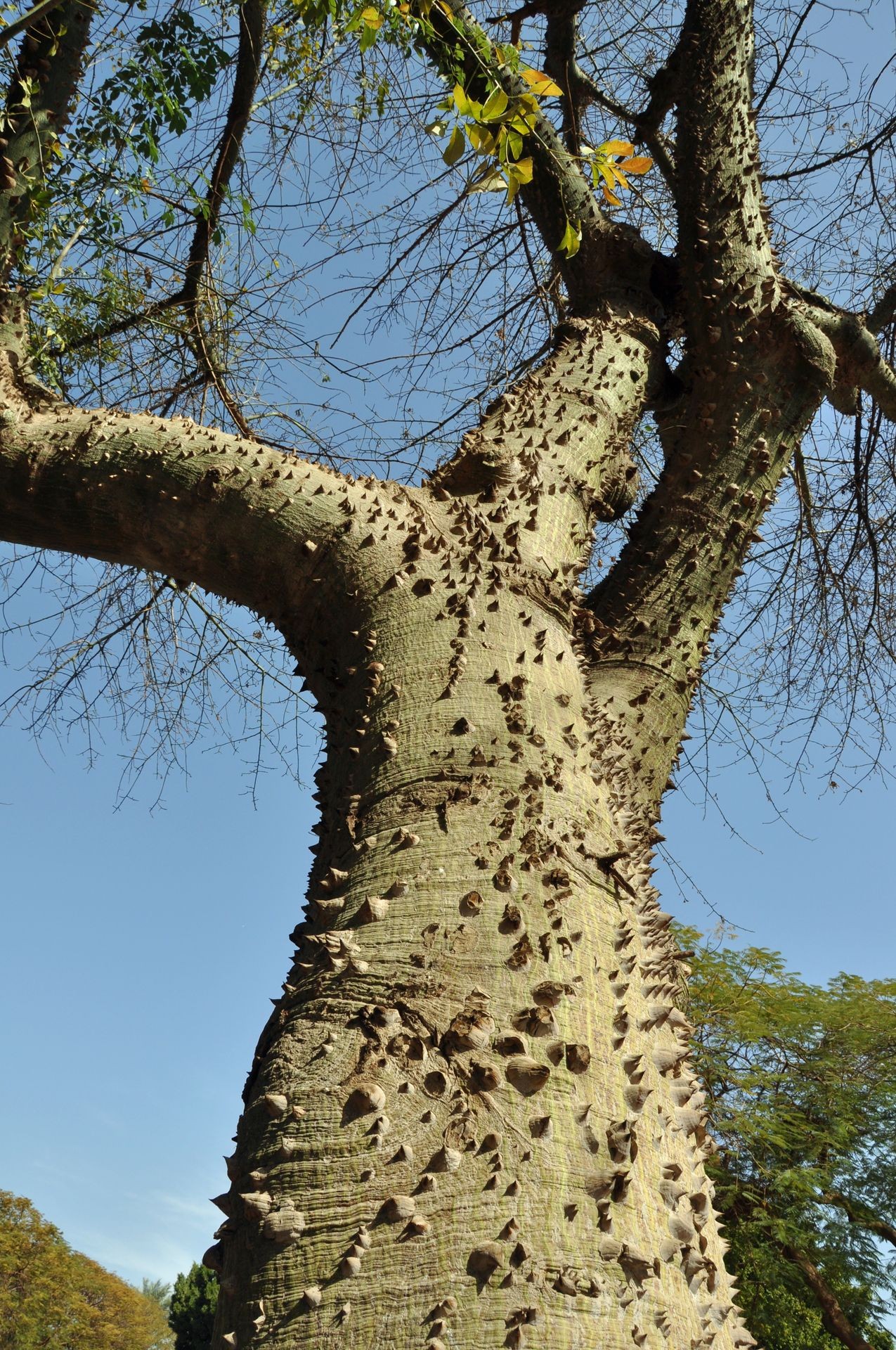
Growth Habit: Fast-growing deciduous to semi-deciduous ornamental tree with a broad canopy, green trunk, and large cone-shaped thorns. It is known for its dramatic trunk and showy pink flowers.
Hardiness: USDA Zones 9b–11; moderately cold hardy once established, but young trees may be damaged by frost or hard freezes; moderately drought tolerant once established; low to moderate salt tolerance and best protected from heavy direct salt spray.
Maintenance Info: Moderate maintenance. Give this tree plenty of room away from walkways, driveways, patios, and play areas because the trunk and branches can have sharp thorns. It may drop leaves, flowers, seed pods, and silky seed fiber seasonally, so some cleanup should be expected. Prune young trees to develop good structure and avoid planting too close to buildings or tight spaces.
Best Uses in the Landscape: Excellent as a large specimen tree, front-yard focal point, tropical accent tree, commercial landscape feature, flowering shade tree, or dramatic seasonal color tree. It works best in open lawns or large landscape beds where its trunk, canopy, and flowers can be appreciated from a distance.
Plant Info: Floss Silk Tree is native to South America, especially Brazil, Argentina, Paraguay, and Bolivia. The name comes from the silky, cotton-like fibers found inside its seed pods, sometimes called “floss.” It is also famous for its unusual green, thorn-covered trunk and large pink flowers that give it a bold tropical look. In Florida landscapes, it is a true statement tree, but it should be placed carefully because of its thorns, mature size, and seasonal cleanup.

Silk Floss Tree (Ceiba speciosa) in bloom. Photo by Mauro Halpern, via Wikimedia Commons, public domain.

Silk Floss Tree (Ceiba speciosa) in bloom. Photo by Dinkun Chen, via Wikimedia Commons, licensed under CC BY-SA 4.0.

Thorn-covered trunk of a Silk Floss Tree (Ceiba speciosa). Photo by Krzysztof Ziarnek, Kenraiz, via Wikimedia Commons, licensed under CC BY 4.0.

Flowers of the Silk Floss Tree (Ceiba speciosa). Photo by Marc Ryckaert, via Wikimedia Commons, licensed under CC BY-SA 4.0.

Silk Floss Tree (*Ceiba speciosa*) at Jardin botanique de la Charme in Clermont-Ferrand, France. Photo by Krzysztof Golik, via Wikimedia Commons, licensed under CC BY-SA 4.0.

Thorny trunk of a Silk Floss Tree (Ceiba speciosa). Photo by Marc Ryckaert, via Wikimedia Commons, licensed under CC BY-SA 4.0.

Ripe and open fruit pods on a Silk Floss Tree (Ceiba speciosa). Photo by Marc Ryckaert, via Wikimedia Commons, licensed under CC BY-SA 4.0.

Thorn-covered trunk and branches of a Silk Floss Tree (Ceiba speciosa). Photo by Marc Ryckaert, via Wikimedia Commons, licensed under CC BY-SA 4.0.