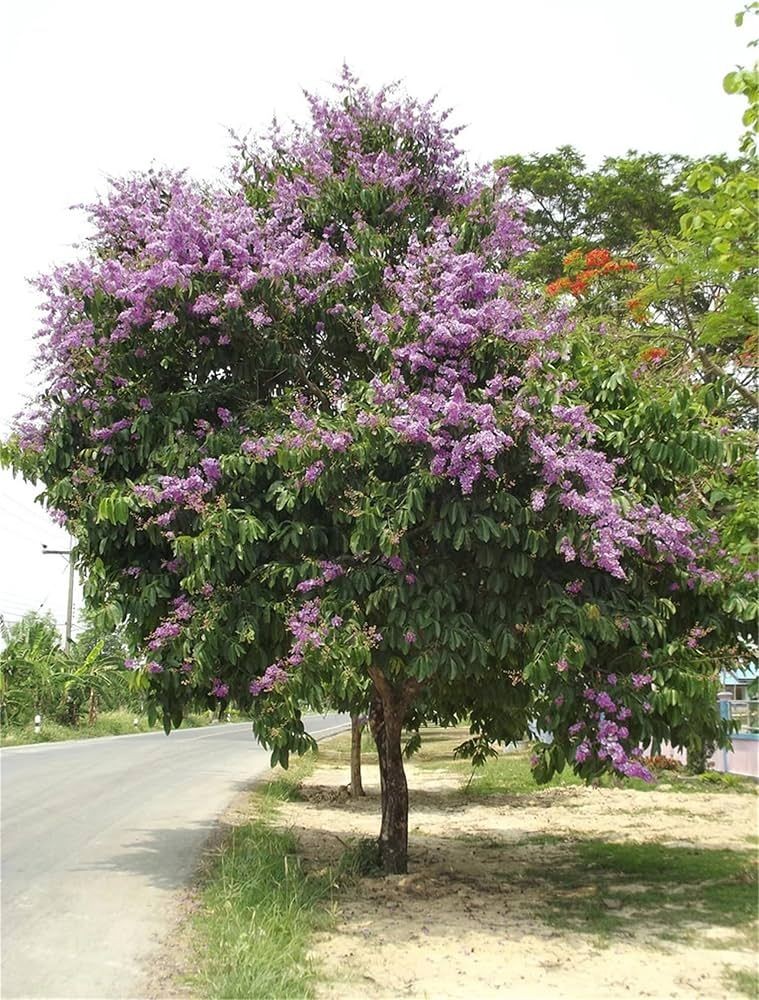
Queen Crape Myrtle / Pride of India
Scientific Name: Lagerstroemia speciosa
Light Requirement: Full sun. It needs strong sunlight for the best flowering and overall form.
Height: Typically 25–50 ft. tall in Florida landscapes, with a canopy spread of about 20–35 ft. when mature.
Plant Spacing: Space about 20–30 ft. away from structures, driveways, sidewalks, patios, and other large trees. For street-side or large landscape plantings, allow enough room for the canopy to mature without crowding nearby buildings or overhead space.
Growth Habit: Moderate to fast-growing flowering tree with a rounded to upright canopy, smooth attractive bark, and large clusters of purple, lavender, pink, or mauve flowers. It is larger and more tropical-looking than common crape myrtle varieties.
Hardiness: USDA Zones 10–11; cold sensitive compared to common crape myrtles and best suited for warmer parts of Florida; moderately drought tolerant once established; low to moderate salt tolerance and best protected from heavy coastal salt spray.
Maintenance Info: Low to moderate maintenance. Prune young trees to develop good structure and remove crossing or weak branches. Avoid heavy topping, as it ruins the natural shape and flower display. Expect seasonal cleanup from flowers, leaves, and seed capsules. Provide well-drained soil and regular irrigation during establishment.
Best Uses in the Landscape: Excellent as a flowering specimen tree, tropical shade tree, street-side accent, large front-yard focal point, commercial landscape tree, or seasonal color tree. It works best where there is enough room for its larger mature canopy.
Plant Info: Queen Crape Myrtle is native to tropical parts of southern Asia, including India and Southeast Asia. The “Queen” name fits because this species is much larger and more dramatic than the smaller crape myrtles most people are familiar with. It produces big, showy flower clusters and has attractive smooth bark, giving Florida landscapes a tropical flowering tree option with a bold seasonal display.