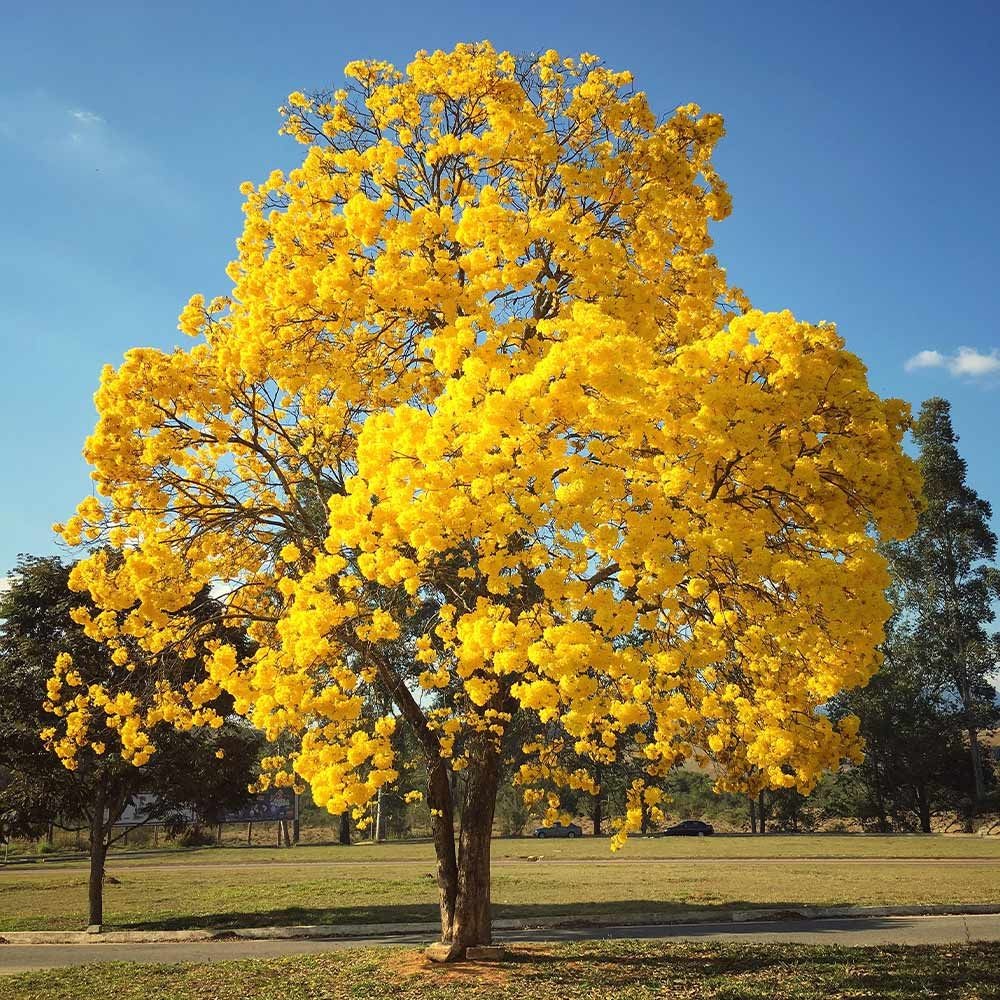
Tabebuia Tree / Trumpet Tree
Scientific Name: Tabebuia spp. / Handroanthus spp.
Light Requirement: Full sun. It flowers best in bright, open locations with plenty of direct sunlight.
Height: Typically 20–40 ft. tall in Florida landscapes, depending on the variety, with a canopy spread of about 15–30 ft.
Plant Spacing: Space about 20–30 ft. away from structures, driveways, sidewalks, patios, pools, and other trees. Smaller varieties may fit tighter spaces, but larger types need room for the canopy and seasonal flower drop.
Growth Habit: Moderate-growing flowering tree with an upright to rounded canopy. Many varieties are briefly deciduous before blooming, producing dramatic clusters of trumpet-shaped flowers in yellow, pink, lavender, or purple.
Hardiness: USDA Zones 9b–11, depending on species; moderately cold tolerant once established, but young trees may be damaged by frost or hard freezes; moderately drought tolerant once established; low to moderate salt tolerance and best protected from heavy direct coastal salt spray.
Maintenance Info: Low to moderate maintenance. Prune young trees to develop strong branch structure and remove crossing or weak limbs. Avoid heavy pruning, as it can reduce the natural shape and flower display. Expect some seasonal cleanup from fallen flowers, leaves, and seed pods. Plant in well-drained soil and provide irrigation during establishment.
Best Uses in the Landscape: Excellent as a flowering specimen tree, front-yard focal point, street-side accent, commercial landscape tree, seasonal color tree, courtyard tree, or small to medium shade tree. It works best where the seasonal flower display can be seen and appreciated.
Plant Info: Tabebuia, often called Trumpet Tree, refers to a group of tropical flowering trees known for their bright trumpet-shaped blooms. The “Trumpet Tree” name comes from the flared, trumpet-like shape of the flowers. In Florida landscapes, the most common types include yellow-flowering and pink-flowering varieties, many of which are now classified under Handroanthus. These trees are popular because they can put on a bold flower show before or while new leaves emerge, creating a striking seasonal display without becoming as massive as many larger shade trees.