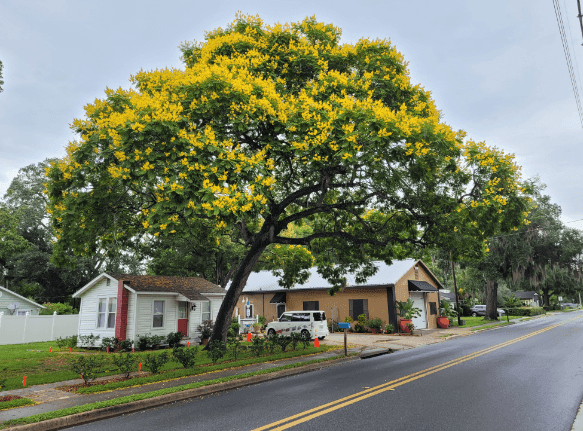
Yellow Poinciana Tree / Yellow Flamboyant / Copperpod Tree
Scientific Name: Peltophorum pterocarpum
Light Requirement: Full sun. It performs best in bright, open locations where it has room to develop a broad canopy.
Height: Typically 30–50 ft. tall in Florida landscapes, with a canopy spread of about 30–50 ft. when mature.
Plant Spacing: Space at least 30–40 ft. away from structures, driveways, sidewalks, patios, pools, septic areas, and other large trees. This tree needs open space for its wide canopy, surface roots, and seasonal flower and seed pod drop.
Growth Habit: Fast-growing broad-spreading flowering tree with a rounded canopy, fern-like foliage, and large clusters of bright yellow flowers. It has a tropical shade-tree appearance similar to Royal Poinciana but with yellow blooms.
Hardiness: USDA Zones 10–11; cold sensitive and may be damaged by frost or freezing temperatures, especially when young; moderately drought tolerant once established; moderate salt tolerance, but best protected from heavy direct coastal salt spray.
Maintenance Info: Moderate maintenance. Young trees should be pruned to develop strong branch structure and good clearance. Expect seasonal cleanup from flowers, leaves, and seed pods. Give it plenty of room away from roofs, driveways, sidewalks, pools, septic areas, and tight planting beds because of its mature canopy size and surface roots.
Best Uses in the Landscape: Excellent as a large flowering specimen tree, tropical shade tree, front-yard focal point, street-side tree, park tree, commercial landscape feature, or large open-lawn accent. It works best in spacious landscapes where its wide canopy and bright yellow flower display can be appreciated.
Plant Info: Yellow Poinciana Tree is native to tropical parts of Southeast Asia and northern Australia. The name “Yellow Poinciana” comes from its poinciana-like foliage and broad tropical canopy, but with golden-yellow flowers instead of the red-orange blooms of Royal Poinciana. It is also called Copperpod Tree because of the coppery-brown seed pods that follow the flowers. In Florida landscapes, it is a bold yellow-flowering shade tree that works best where there is plenty of space for it to mature.