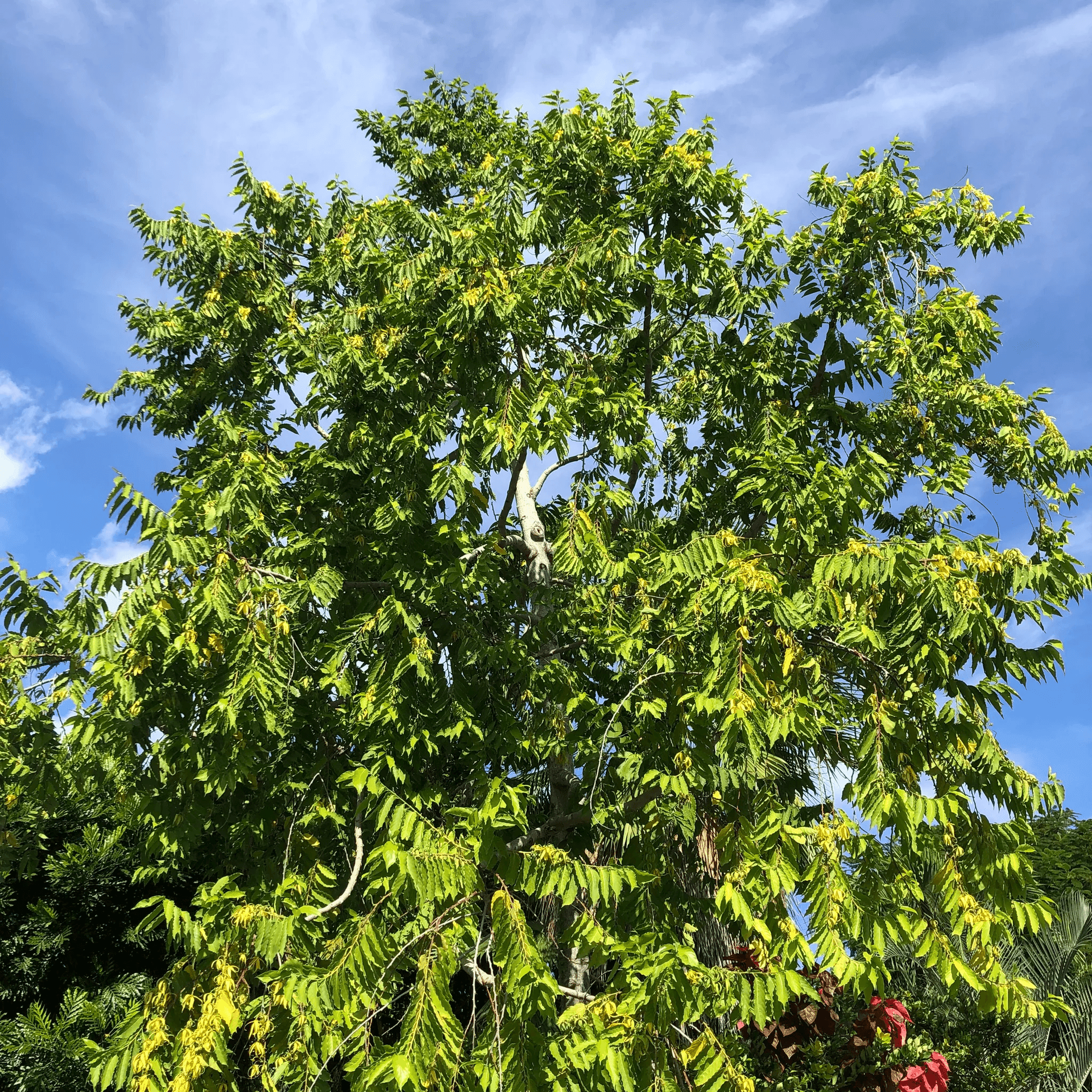
Ylang Ylang Tree
Scientific Name: Cananga odorata
Light Requirement: Full sun to partial shade. It flowers best in warm, sunny locations with some protection from strong winds.
Height: Typically 30–60 ft. tall in tropical landscapes, though it can be pruned and maintained smaller in residential settings.
Plant Spacing: Space about 20–30 ft. away from structures, roofs, driveways, sidewalks, pools, and other large trees. Allow room for its canopy to develop and place it where the fragrance can be enjoyed without crowding the landscape.
Growth Habit: Fast-growing tropical evergreen tree with a loose, open canopy, drooping branches, glossy green leaves, and highly fragrant yellow-green flowers.
Hardiness: USDA Zones 10b–11; cold sensitive and may be damaged by frost or freezing temperatures; moderately drought tolerant once established but performs best with consistent moisture; low to moderate salt tolerance and best protected from heavy direct coastal salt spray.
Maintenance Info: Moderate maintenance. Ylang Ylang can grow quickly, so pruning may be needed to control height, shape the canopy, and maintain clearance. Plant in well-drained soil and water regularly during establishment. Because the tree can become large, avoid planting too close to homes, roofs, pools, driveways, or tight landscape beds.
Best Uses in the Landscape: Excellent as a fragrant flowering specimen tree, tropical garden feature, backyard accent, privacy backdrop, courtyard tree, or sensory garden plant. It works best where its fragrance can be enjoyed, such as near patios, sitting areas, or garden paths, while still allowing enough room for growth.
Plant Info: Ylang Ylang Tree is native to tropical Southeast Asia and parts of the western Pacific. The name “Ylang Ylang” is often associated with the fragrant flowers, which are famous for producing ylang ylang essential oil used in perfumes and aromatherapy. The flowers start greenish and mature to yellow, releasing a sweet tropical scent that is strongest in warm weather. In Florida landscapes, it is best suited for warm protected areas where customers want a tropical tree with fragrance, flowers, and a more exotic feel.