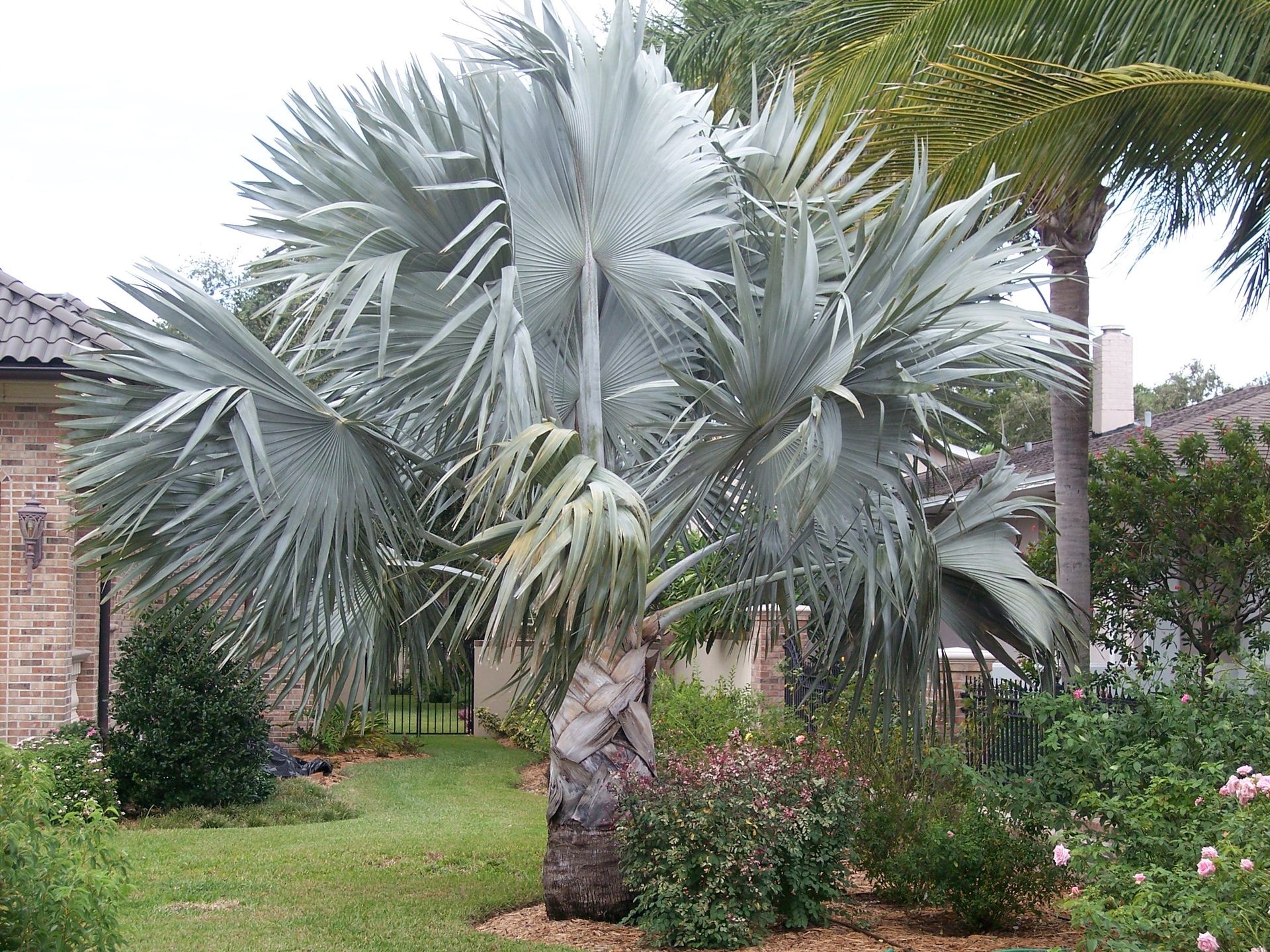
Bismarck Palm
Scientific Name: Bismarckia nobilis
Light Requirement: Full sun. It performs best in open, sunny locations where the large silver-blue canopy has room to develop.
Height: Typically 30–50 ft. tall in Florida landscapes, with a wide canopy spread of about 15–25 ft.
Plant Spacing: Space about 15–25 ft. away from structures, walkways, driveways, pools, and other large plants. For specimen use, give it plenty of open space so the massive fronds can spread naturally without crowding the landscape.
Growth Habit: Slow to moderate-growing single-trunk fan palm with massive, stiff, silver-blue fan-shaped fronds. It has a bold, architectural form and becomes a dramatic focal point as it matures.
Hardiness: USDA Zones 10a–11; somewhat cold sensitive when young but more tolerant once established; may show damage during hard freezes; drought tolerant once established; moderate salt tolerance, but best protected from heavy direct oceanfront salt spray.
Maintenance Info: Low to moderate maintenance once established. Use palm fertilizer during the growing season and plant in well-drained soil. Avoid overwatering or placing it in wet, poorly drained areas. Give it plenty of room, as the fronds are very large and can interfere with roofs, walkways, driveways, vehicles, or nearby plantings. Remove dead fronds as needed.
Best Uses in the Landscape: Excellent as a large specimen palm, front-yard focal point, commercial landscape feature, estate planting, tropical-modern accent, driveway statement palm, or large open-lawn centerpiece. It is not ideal for tight spaces because of its massive mature canopy.
Plant Info: Bismarck Palm is native to Madagascar and is prized for its striking silver-blue foliage and bold tropical form. The name “Bismarck” comes from Otto von Bismarck, the famous 19th-century German statesman, which fits the palm’s strong, commanding presence in the landscape. Its large fan-shaped fronds create one of the most dramatic looks of any ornamental palm, making it a standout choice for customers who want a powerful focal point rather than a background plant.