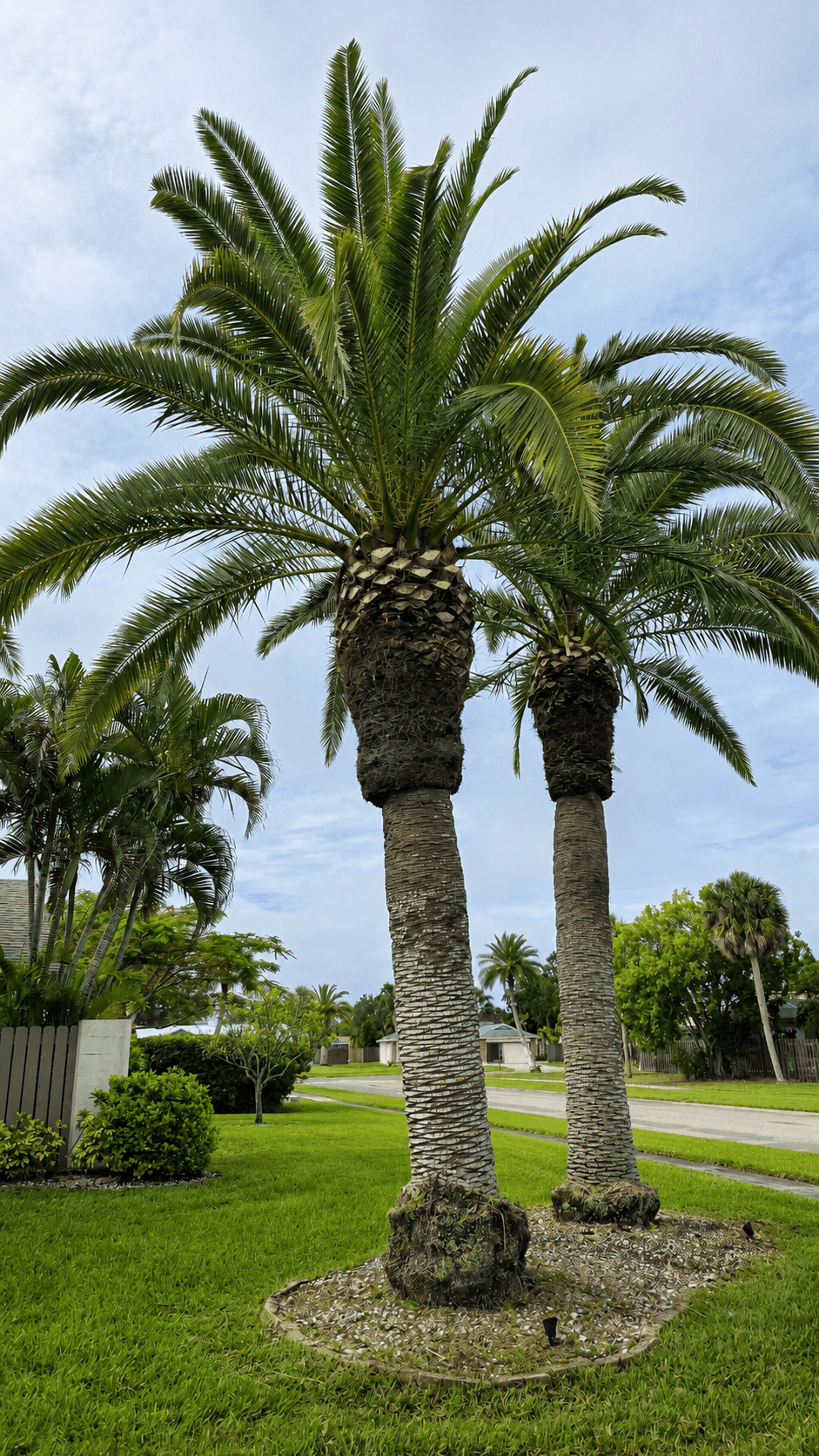
Canary Island Date Palm / Pineapple Palm
Scientific Name: Phoenix canariensis
Light Requirement: Full sun. It performs best in open, sunny locations with plenty of room for the large canopy to develop.
Height: Typically 40–60 ft. tall at maturity, with a large canopy spread of 20–40 ft.
Plant Spacing: Space at least 20–30 ft. away from structures, roofs, power lines, pools, and other large trees. For formal rows or driveway plantings, allow about 25–30 ft. between palms so the massive crowns have room to mature.
Growth Habit: Slow to moderate-growing, massive single-trunk feather palm with a thick trunk and a large, rounded crown of long arching fronds. When professionally trimmed, the upper trunk is often shaped into a pineapple-like pattern.
Hardiness: USDA Zones 9b–11; cold hardy to the upper teens or low 20s once established, though hard freezes can damage foliage; moderately drought tolerant once established; moderately salt tolerant and suitable for many coastal Florida landscapes when not exposed to constant direct salt spray.
Maintenance Info: Moderate to high maintenance due to its large size. It requires professional pruning as it matures, and old fronds, fruit stalks, and seed clusters can create cleanup. The fronds have sharp spines near the base, so it should not be planted too close to walkways, driveways, pool areas, or tight spaces. Give it plenty of room away from roofs, power lines, and structures.
Best Uses in the Landscape: Best used as a large specimen palm, estate palm, commercial landscape feature, driveway statement tree, entrance palm, resort-style accent, or large open-lawn focal point. It is not ideal for small residential beds or narrow spaces because of its massive mature size.
Plant Info: Canary Island Date Palm is native to the Canary Islands, which explains the first part of its name. It is a relative of true date palms, but in Florida landscapes it is grown mostly for its grand ornamental appearance rather than fruit production. The nickname “Pineapple Palm” comes from the pineapple-like pattern created when the old leaf bases are professionally trimmed around the upper trunk. It is one of the most dramatic large palms used in Florida landscapes, but it needs plenty of space and professional maintenance as it matures.