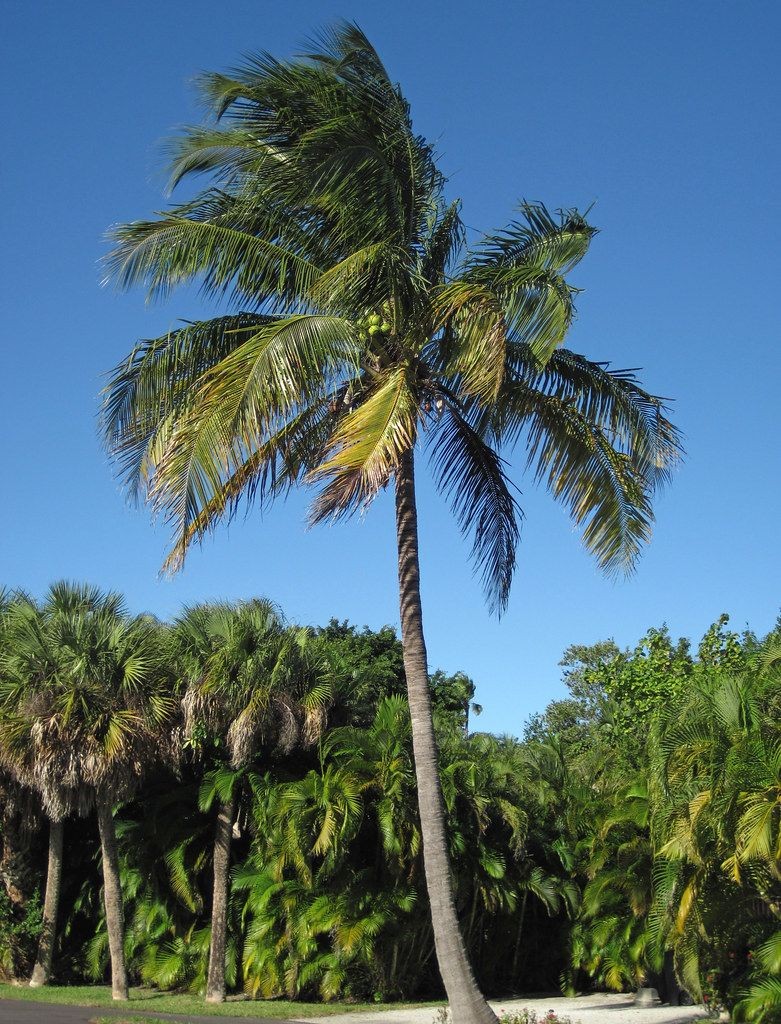
Coconut Palm
Scientific Name: Cocos nucifera
Light Requirement: Full sun. Coconut Palms need bright, open exposure and warm conditions to perform well.
Height: Typically 40–60 ft. tall in Florida landscapes, though some mature palms can grow taller in ideal tropical conditions.
Plant Spacing: Space about 20–30 ft. apart for single specimens or open tropical groupings. Allow plenty of clearance from homes, roofs, pools, patios, driveways, walkways, and parking areas because of falling coconuts and large fronds.
Growth Habit: Moderate to fast-growing single-trunk feather palm with a tall, often slightly curved trunk and a large crown of long arching fronds. It has a classic tropical, beach-style appearance.
Hardiness: USDA Zones 10b–11; very cold sensitive and best suited for warm coastal and South Florida-style areas; not tolerant of frost or freezing temperatures; moderately drought tolerant once established but performs best with regular moisture; highly salt tolerant and excellent for coastal landscapes.
Maintenance Info: Moderate maintenance. Coconut Palms need good drainage, regular palm fertilizer, and warm growing conditions. Falling coconuts and fronds can be hazardous, so fruit and dead fronds may need to be removed professionally in areas near walkways, driveways, patios, pools, or structures. Avoid planting too close to homes, roofs, or high-traffic areas.
Best Uses in the Landscape: Best used as a tropical specimen palm, beach-style planting, coastal landscape palm, pool-area accent, resort-style feature, or large open-yard focal point. It works best where there is plenty of vertical space and minimal risk from falling fruit.
Plant Info: Coconut Palm is believed to have originated in tropical coastal regions of the Indo-Pacific and has spread throughout warm coastal areas around the world. The name “Coconut” comes from the large seed/fruit the palm produces, which is one of the most recognizable fruits in the world. In Florida landscapes, Coconut Palms create an unmistakable island look, but they are best for warm locations where cold damage and falling fruit hazards can be properly managed.
Harvesting Coconuts
Coconuts can be harvested at different stages depending on how they will be used. Young green coconuts are typically harvested for their sweet coconut water and soft jelly-like meat, while mature brown coconuts are harvested for firmer coconut meat, shredded coconut, coconut milk, or seed use.
For drinking coconut water, coconuts are usually picked while still green and full of liquid. These younger coconuts often have a thinner, softer meat inside. For cooking or processing, coconuts are left on the palm longer until the outer husk begins to turn brown or dry, and the inside meat becomes thicker and richer.
Coconuts grow high in the canopy and should be harvested carefully. In residential landscapes, fallen coconuts can be a serious hazard, especially near walkways, driveways, patios, pool areas, and parking spaces. For this reason, coconut palms near high-traffic areas should be checked regularly and maintained by a qualified tree or palm professional.
Harvesting Safety
Coconut palms can become very tall, and harvesting should not be attempted without proper equipment and experience. Avoid standing beneath fruit clusters, shaking the palm, or trying to knock coconuts down from the ground. In most Florida landscapes, it is safest to have coconuts removed during regular palm maintenance.