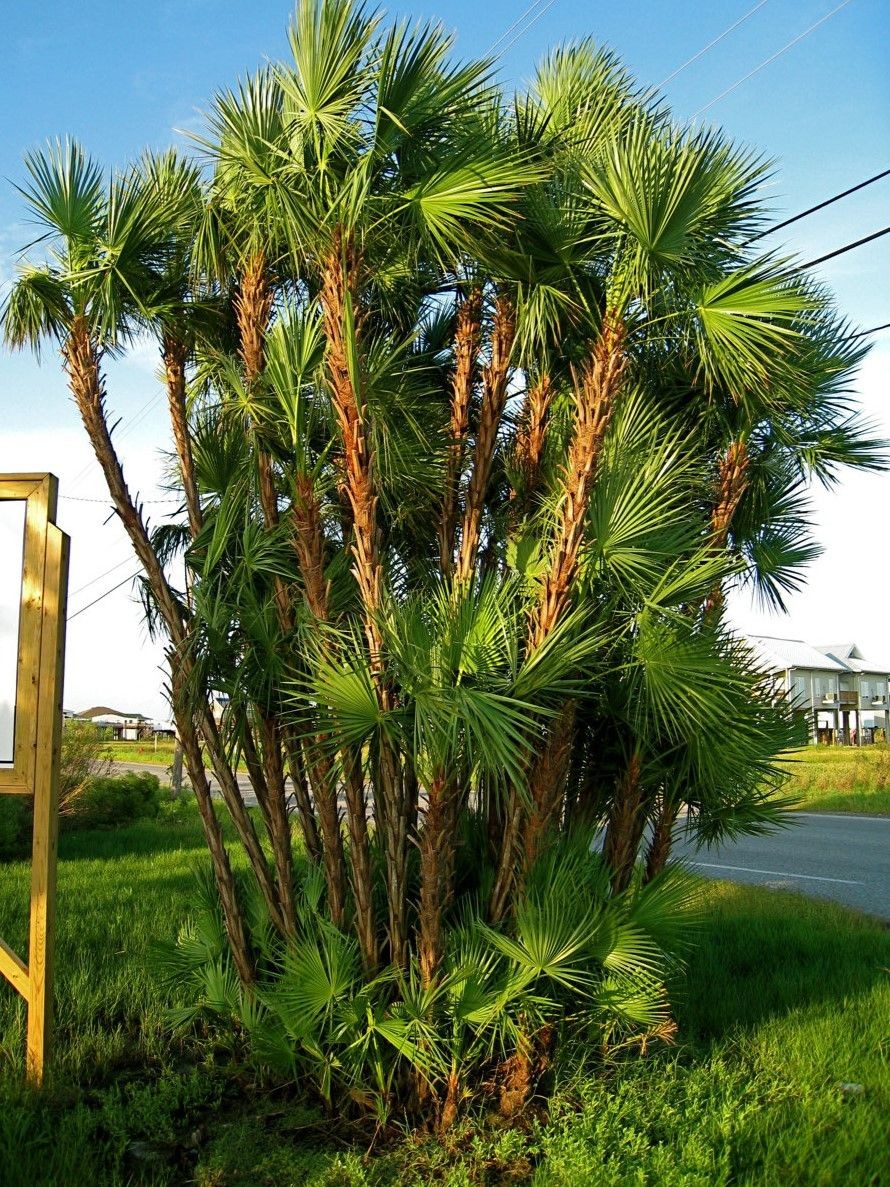
Everglades Palm / Paurotis Palm
Scientific Name: Acoelorrhaphe wrightii
Light Requirement: Full sun to partial shade. It performs best in bright, sunny locations but can tolerate some light shade.
Height: Typically 15–30 ft. tall in Florida landscapes, with a clumping spread of about 10–20 ft. over time.
Plant Spacing: Space about 8–12 ft. apart for privacy screening, natural groupings, or wetland-style plantings. For specimen clumps, allow 10–15 ft. of space so the palm can spread naturally without crowding walkways, structures, or nearby plants.
Growth Habit: Moderate-growing clumping fan palm with multiple slender trunks and bright green fan-shaped fronds. It forms a natural, tropical-looking cluster that becomes fuller with age.
Hardiness: USDA Zones 9b–11; moderately cold hardy and can tolerate brief dips into the upper 20s once established; moderately drought tolerant once established but naturally prefers moist soil; moderate to high salt tolerance, making it useful in many coastal and wetland-style Florida landscapes.
Maintenance Info: Low to moderate maintenance. Remove dead fronds and thin older trunks as needed to keep the clump clean and controlled. It can handle moist or wet soils better than many palms, but still benefits from good care during establishment. The leaf stems can have small sharp teeth, so avoid placing it too close to narrow walkways or areas where people may brush against it.
Best Uses in the Landscape: Excellent for native Florida landscapes, wet areas, pond edges, privacy screening, tropical clumps, wildlife gardens, coastal landscapes, and naturalized planting beds. It works well where a fuller, multi-trunk palm is desired instead of a single-trunk specimen.
Plant Info: Everglades Palm is native to South Florida, the Caribbean, and parts of Central America. Its name comes from its natural association with wetland areas like the Florida Everglades, where it grows in moist, low-lying habitats. It is also called Paurotis Palm, an older common name still used in the nursery trade. In Florida landscapes, it is a great choice for customers who want a native palm with a natural, tropical look, wildlife value, and better tolerance for wet soil than many other palms.