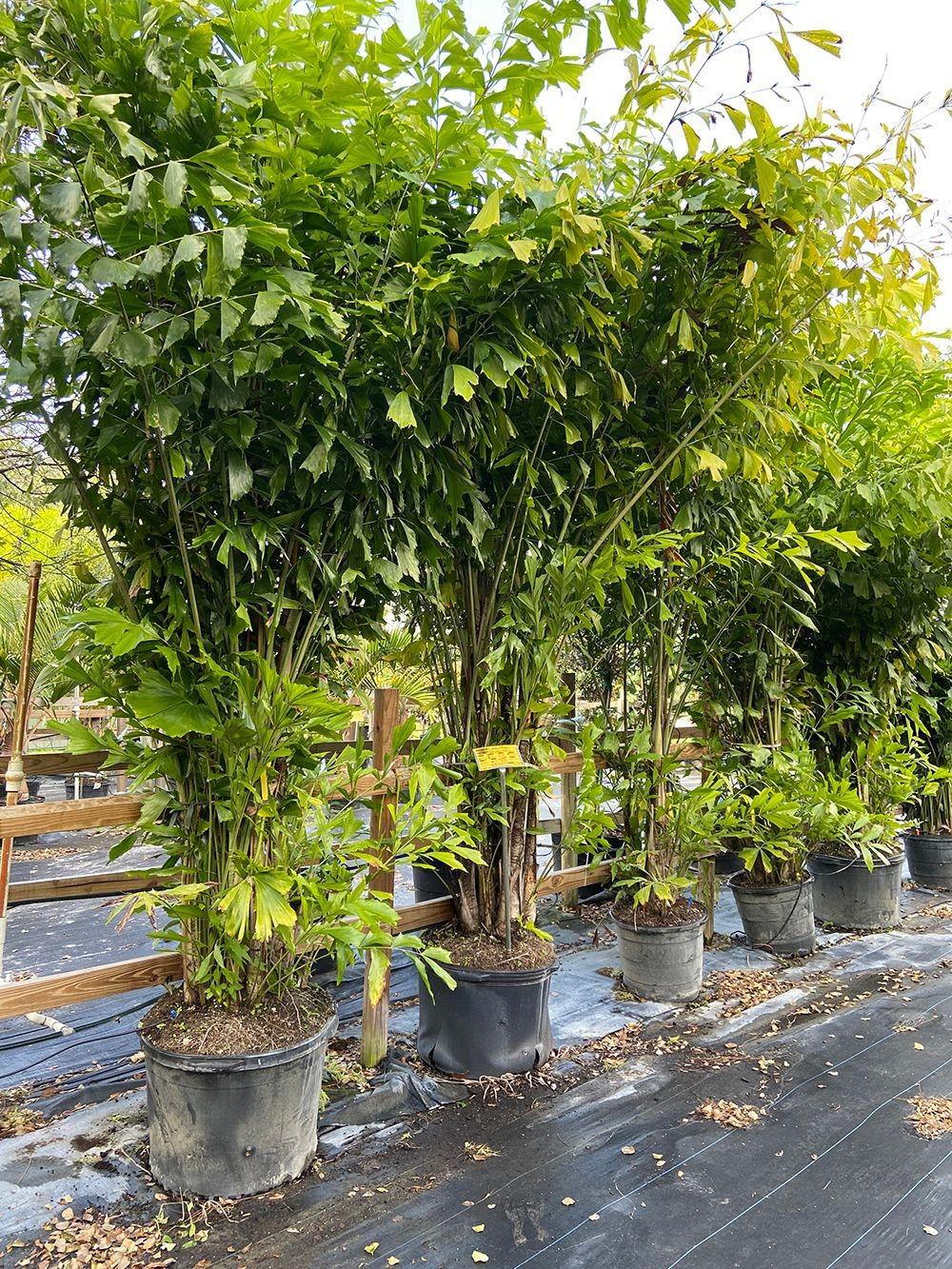
Fishtail Palm
Scientific Name: Caryota mitis
Light Requirement: Full sun to partial shade. It can tolerate sun once established, but usually looks best with filtered light or protection from harsh afternoon sun.
Height: Typically 15–25 ft. tall in Florida landscapes, with a clumping spread of about 10–15 ft.
Plant Spacing: Space about 8–10 ft. apart for screening or grouped plantings. For individual clumps, allow 10–15 ft. of space so the palm can mature without crowding walkways, fences, pool cages, or nearby plants.
Growth Habit: Moderate-growing clumping palm with multiple trunks and unique jagged leaflets that resemble fishtails. It creates a dense, tropical, layered look.
Hardiness: USDA Zones 10–11; cold sensitive and may be damaged by frost or freezing temperatures; moderately drought tolerant once established but performs best with regular moisture; low to moderate salt tolerance and best protected from direct coastal salt spray.
Maintenance Info: Moderate maintenance. Remove dead fronds and older declining trunks as needed. Individual trunks flower and fruit once, then die back, while new shoots continue growing from the clump. The fruit can irritate skin, so it should not be handled directly. Give it enough room to spread, and avoid planting where fruit or leaf litter will be a problem.
Best Uses in the Landscape: Excellent for tropical screening, privacy planting, pool cage backdrops, shaded garden beds, side-yard buffers, large courtyards, and lush tropical accent areas. It works well where a dense, bold-textured palm is needed.
Plant Info: Fishtail Palm is native to Southeast Asia and is named for its unusual leaflets, which look like the split tail of a fish. Unlike many palms with traditional feather or fan-shaped fronds, Fishtail Palm has a bold, jagged texture that stands out immediately in a tropical landscape. Its clumping habit makes it useful for privacy and screening, but it should be given enough room because mature plants can become wide and full.