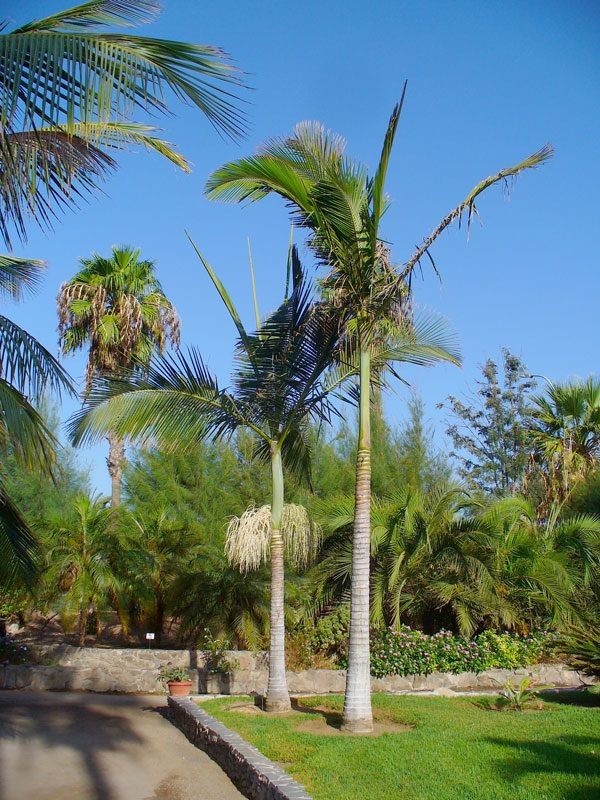
Piccabeen Palm / Bangalow Palm
Scientific Name: Archontophoenix cunninghamiana
Light Requirement: Full sun to partial shade. Young palms often appreciate filtered light, while established palms can handle more sun with regular moisture.
Height: Typically 25–40 ft. tall in Florida landscapes, with a canopy spread of about 10–15 ft.
Plant Spacing: Space about 10–15 ft. apart for single specimens, formal rows, or loose groupings. Allow at least 8–10 ft. from pools, walkways, driveways, roofs, and structures to account for the mature canopy, falling fronds, and fruit clusters.
Growth Habit: Moderate to fast-growing single-trunk feather palm with a smooth gray trunk, green crownshaft, and graceful arching fronds. It has a clean, upright, tropical look similar to the Alexander Palm.
Hardiness: USDA Zones 10a–11; moderately cold sensitive but slightly more cold tolerant than some other tropical crownshaft palms; may be damaged by frost or hard freezes; moderately drought tolerant once established but performs best with consistent moisture; low to moderate salt tolerance and best protected from heavy direct coastal salt spray.
Maintenance Info: Low to moderate maintenance. Piccabeen Palm is generally self-cleaning, meaning old fronds usually drop on their own. Provide well-drained soil, regular irrigation during establishment, and palm fertilizer during the growing season. Avoid planting too close to roofs, walkways, pools, or driveways where falling fronds or fruit clusters may create cleanup.
Best Uses in the Landscape: Excellent as a tropical specimen palm, pool-area palm, courtyard planting, driveway or entryway accent, formal row planting, or vertical accent in tighter spaces. Its clean trunk and upright habit make it useful where a refined tropical palm is desired without a wide clumping base.
Plant Info: Piccabeen Palm is native to eastern Australia, where it grows in moist forests and along stream banks. It is also commonly called Bangalow Palm, named after the Bangalow area of New South Wales, Australia, where this palm is well known. In Florida landscapes, it gives a polished, tropical look similar to Alexander Palm and works well where customers want a clean, upright palm with a soft canopy and bright red seasonal fruit clusters.