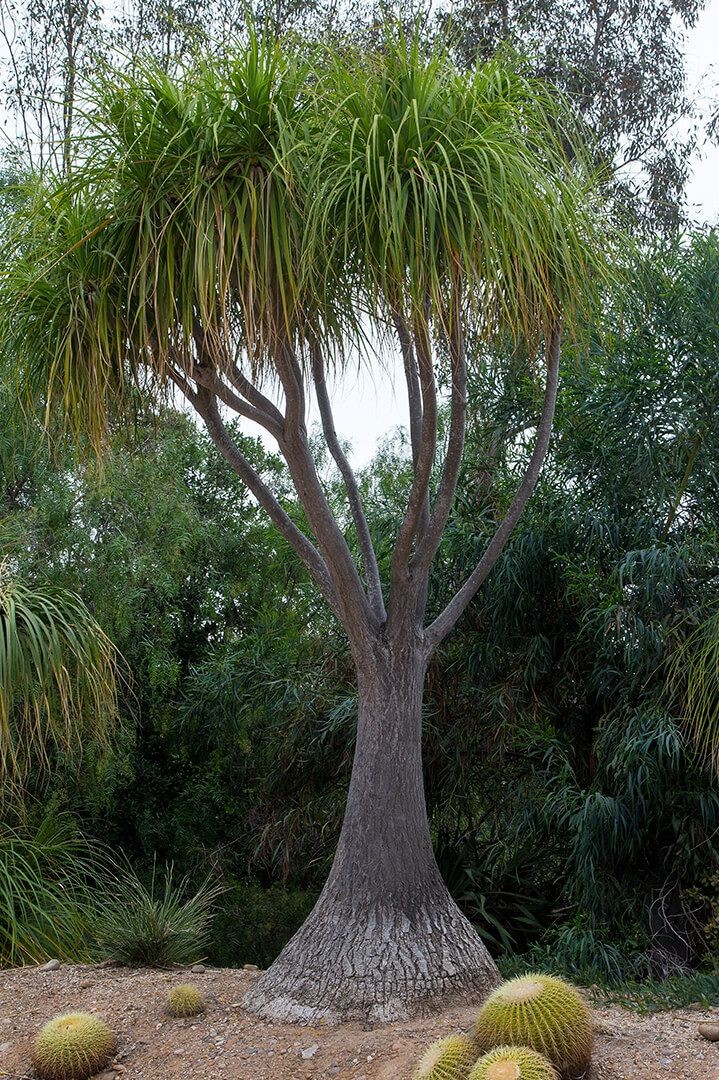
Ponytail Palm / Elephant Foot Tree
Scientific Name: Beaucarnea recurvata
Light Requirement: Full sun to partial shade. It performs best in bright, sunny locations with well-drained soil.
Height: Typically 6–20 ft. tall in Florida landscapes, though it is very slow-growing and may stay smaller for many years.
Plant Spacing: Space about 6–10 ft. apart when used as a specimen or accent plant. Allow extra room around the swollen base and arching foliage, especially near walkways, patios, entries, or walls.
Growth Habit: Very slow-growing upright succulent with a swollen trunk base that stores water and long, narrow leaves that cascade from the top like a ponytail. Despite the name, it is not a true palm.
Hardiness: USDA Zones 10a–11; cold sensitive and best protected from frost or freezing temperatures; highly drought tolerant once established; low to moderate salt tolerance and best used away from direct salt spray.
Maintenance Info: Low maintenance. Plant in very well-drained soil and avoid overwatering, as the swollen base can rot in wet conditions. Remove old lower leaves or spent flower stalks as needed. Supplemental irrigation during dry periods can improve leaf color, but the plant should be allowed to dry between watering.
Best Uses in the Landscape: Excellent as a specimen plant, front-yard focal point, rock garden feature, modern landscape accent, container plant, patio feature, or low-water landscape plant. Its sculptural trunk makes it especially useful where a bold architectural shape is desired.
Plant Info: Ponytail Palm is native to dry regions of Mexico and is actually a succulent, not a true palm. The name “Ponytail Palm” comes from the long, narrow leaves that spill from the top like a ponytail, while “Elephant Foot Tree” refers to its swollen trunk base that resembles an elephant’s foot. That enlarged base stores water, helping the plant survive dry conditions and making it a strong choice for low-water Florida landscape areas.