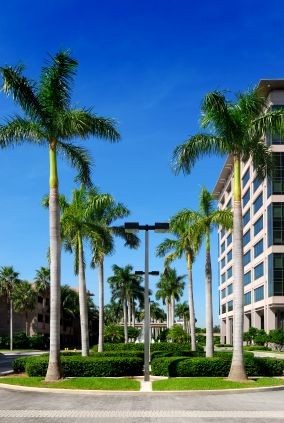
Royal Palm / Florida Royal Palm
Scientific Name: Roystonea regia
Light Requirement: Full sun. Royal Palms perform best in open, sunny locations with plenty of room to grow.
Height: Typically 50–70 ft. tall in Florida landscapes, with older specimens capable of growing taller in ideal conditions.
Plant Spacing: Space about 20–30 ft. apart for formal rows, driveway plantings, or large landscape groupings. Allow plenty of clearance from roofs, pools, patios, walkways, vehicles, and structures because mature Royal Palms drop very large fronds.
Growth Habit: Fast-growing single-trunk feather palm with a tall, smooth gray trunk, bright green crownshaft, and large graceful fronds. It has a very clean, formal, tropical appearance.
Hardiness: USDA Zones 10a–11; moderately cold sensitive and may be damaged by frost or hard freezes; moderately drought tolerant once established but looks best with regular irrigation; moderate to high salt tolerance, making it suitable for many coastal Florida landscapes.
Maintenance Info: Moderate maintenance. Royal Palms are self-cleaning, meaning old fronds usually drop on their own, but those fronds are very large and heavy. Placement is extremely important. Avoid planting too close to roofs, vehicles, walkways, pools, patios, or high-traffic areas. Use palm fertilizer during the growing season and provide regular watering during establishment.
Best Uses in the Landscape: Best used as a large specimen palm, formal driveway or entryway planting, estate palm, commercial landscape feature, street planting, resort-style accent, or large open-yard focal point. It needs plenty of vertical and overhead space.
Plant Info: Royal Palm is native to Florida, parts of the Caribbean, Mexico, and Central America. The “Royal” name fits its grand, formal appearance, with a towering smooth trunk and elegant crown that gives landscapes a high-end tropical look. It is one of the most iconic palms in South Florida and is often used in rows along driveways, streets, estates, and resort-style entrances.