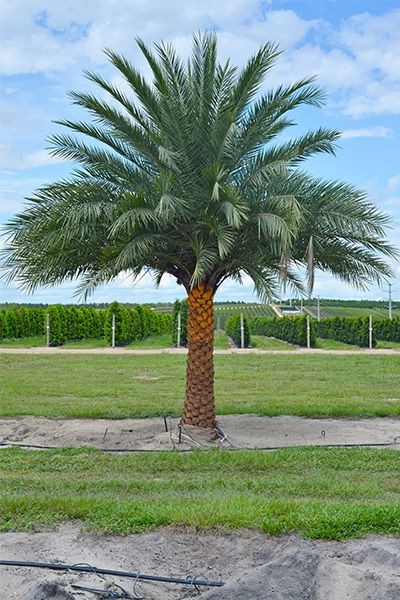
Sylvester Palm / Silver Date Palm
Scientific Name: Phoenix sylvestris
Light Requirement: Full sun. It performs best in bright, open locations with plenty of room for the canopy to spread.
Height: Typically 30–40 ft. tall in Florida landscapes, with a canopy spread of about 15–25 ft.
Plant Spacing: Space about 15–20 ft. apart for single specimens, rows, or formal groupings. Allow at least 10–15 ft. from walkways, driveways, pools, structures, and other large plants because of the wide canopy and sharp spines near the frond bases.
Growth Habit: Slow to moderate-growing single-trunk feather palm with a thick textured trunk and long, arching blue-green to silver-green fronds. When professionally trimmed, the trunk often develops a formal diamond-cut pattern.
Hardiness: USDA Zones 9b–11; moderately cold hardy and can tolerate brief cold snaps into the upper teens or low 20s once established; drought tolerant once established; moderately salt tolerant and suitable for many coastal Florida landscapes when protected from heavy direct salt spray.
Maintenance Info: Moderate maintenance. Sylvester Palms require professional pruning as they mature, especially if a clean diamond-cut trunk is desired. The fronds have sharp spines near the base, so avoid planting too close to walkways, patios, pool edges, or tight spaces. Use palm fertilizer during the growing season and provide good drainage.
Best Uses in the Landscape: Excellent as a specimen palm, driveway accent, entryway palm, commercial landscape feature, formal row planting, estate palm, or large front-yard focal point. It works best where a bold, upscale palm is desired with enough room for the canopy to mature.
Plant Info: Sylvester Palm is native to India and nearby parts of South Asia. It is called Silver Date Palm because of its silver-green fronds and its relationship to date palms. In some regions, the sap has historically been tapped to make palm sugar or fermented drinks, which gives this palm an interesting practical history beyond its ornamental use. In Florida landscapes, it is valued for its formal tropical appearance, rugged trunk, and high-end look when properly maintained.