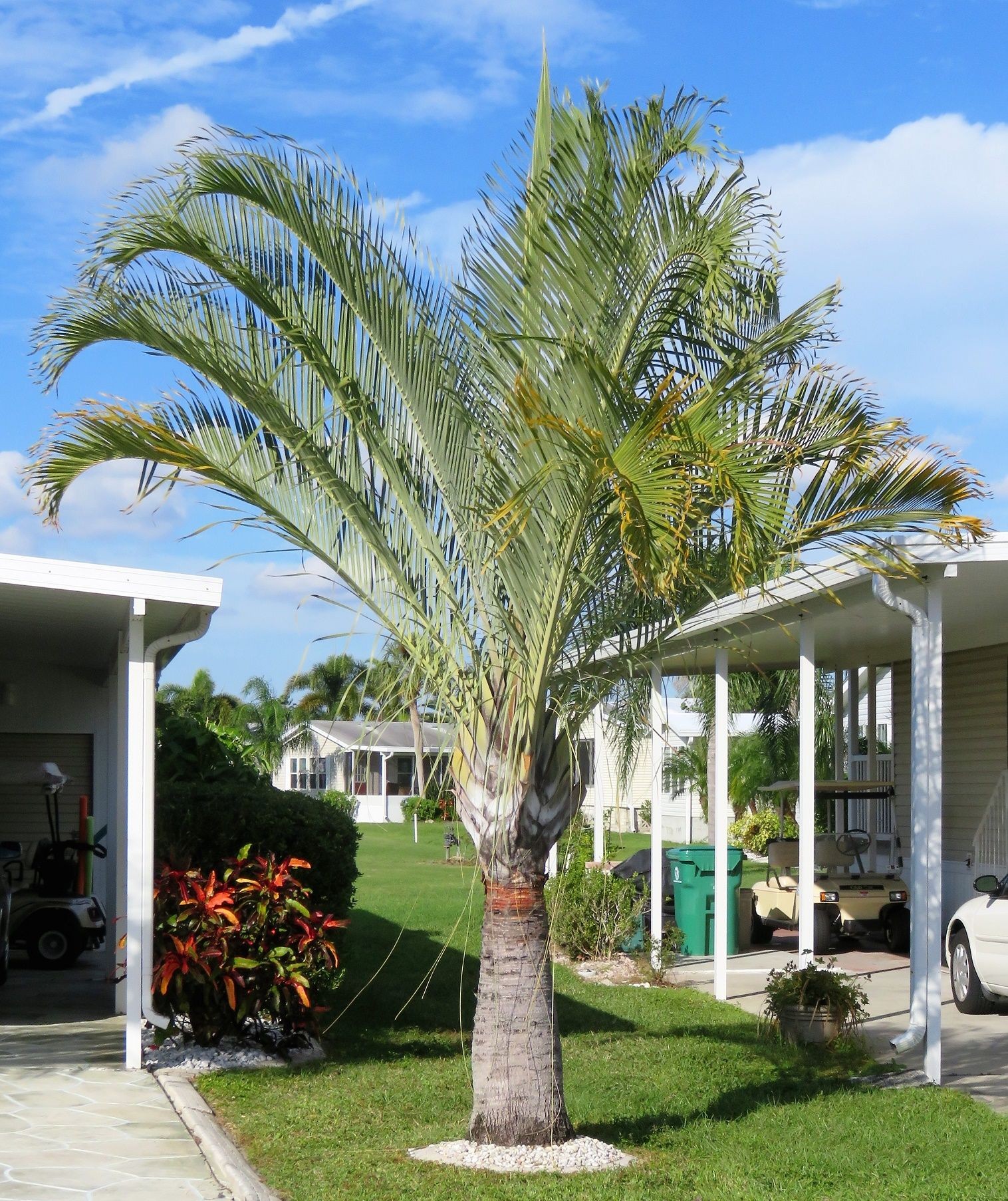
Triangle Palm
Scientific Name: Dypsis decaryi
Light Requirement: Full sun to partial shade. It performs best in bright, sunny locations with well-drained soil.
Height: Typically 15–25 ft. tall in Florida landscapes, with a canopy spread of about 10–15 ft.
Plant Spacing: Space about 10–15 ft. apart for individual specimens, rows, or small groupings. Allow at least 8–10 ft. from walkways, pools, walls, and structures so the canopy can develop its natural triangular form.
Growth Habit: Slow to moderate-growing single-trunk feather palm with fronds arranged in three distinct vertical rows, creating a unique triangular shape at the crown. The trunk is usually gray, and the leaf bases form a bold geometric pattern.
Hardiness: USDA Zones 10a–11; cold sensitive and may be damaged by frost or freezing temperatures; drought tolerant once established; moderate salt tolerance, but best protected from heavy direct oceanfront salt spray.
Maintenance Info: Low to moderate maintenance. Plant in well-drained soil and avoid overly wet conditions. Use palm fertilizer during the growing season and remove old fronds only as needed. Give it enough room for the triangular canopy to develop naturally, and avoid planting too close to tight walkways or structures.
Best Uses in the Landscape: Excellent as a specimen palm, tropical-modern focal point, entryway accent, courtyard palm, pool-area palm, commercial landscape feature, or architectural accent in a sunny landscape bed. Its unusual crown shape makes it stand out as a strong design feature.
Plant Info: Triangle Palm is native to Madagascar. The name “Triangle Palm” comes from the way its fronds grow in three distinct rows, creating a triangular shape when viewed from above or near the crown. Its silver-green fronds and geometric trunk pattern make it one of the more unusual ornamental palms used in Florida landscapes. It is a great choice for customers who want something tropical, clean, and eye-catching without using a common palm variety.