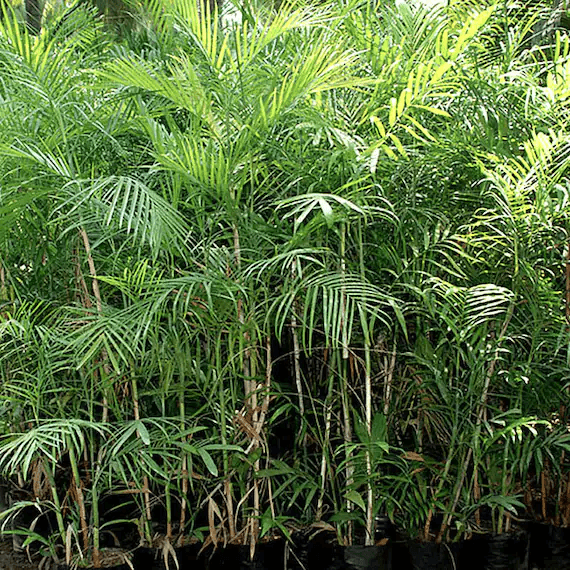
Bamboo Palm
Scientific Name: Chamaedorea seifrizii
Light Requirement: Partial shade to full shade. It does best in bright filtered light and should be protected from harsh afternoon sun.
Height: Typically 6–12 ft. tall in Florida landscapes, with a clumping spread of about 4–8 ft.
Plant Spacing: Space about 3–5 ft. apart for a dense tropical screen or hedge effect. For looser groupings or accent plantings, space about 5–6 ft. apart so the clumps have room to fill in naturally.
Growth Habit: Slow to moderate-growing clumping palm with slender, bamboo-like green stems and soft feather-shaped fronds. It forms a dense, tropical screen over time.
Hardiness: USDA Zones 10–11; cold sensitive and may be damaged by frost or freezing temperatures; moderately drought tolerant once established but looks best with consistent moisture; low salt tolerance and best protected from coastal salt spray.
Maintenance Info: Low to moderate maintenance. Remove old fronds and thin crowded canes as needed to keep the plant clean and airy. Bamboo Palm prefers well-drained soil with regular moisture, especially during dry periods. It benefits from palm fertilizer and protection from strong afternoon sun, drying winds, and overly exposed locations.
Best Uses in the Landscape: Excellent for shaded entries, pool cage areas, courtyards, patios, side yards, tropical privacy screens, container plantings, and understory landscape beds. It is especially useful where a soft tropical screen is needed in a lower-light area.
Plant Info: Bamboo Palm is native to Mexico and Central America. The name “Bamboo Palm” comes from its slender, upright cane-like stems, which resemble bamboo even though it is a true palm. In Florida landscapes, it is useful for adding a lush tropical look in shaded or protected areas without becoming overly large. Its soft foliage and clumping habit make it a good choice for creating privacy where larger palms or sun-loving hedge plants would not work well.