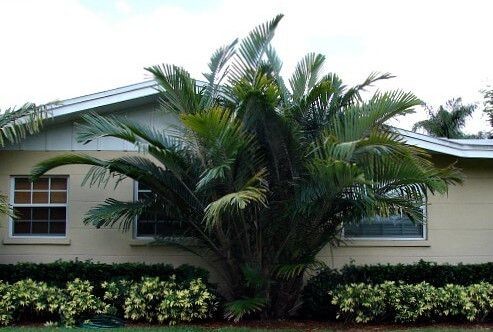
Arenga (Dwarf Sugar) Palm
Common Name: Arenga Palm / Dwarf Sugar Palm / Formosa Palm
Scientific Name: Arenga engleri
Light Requirement: Partial shade to full shade is best for deep green color, though it can tolerate full sun with enough irrigation. In hotter Florida landscapes, it usually looks best with filtered light or afternoon shade.
Height: Usually around 6–10 ft. tall, with a spread of about 8–15 ft. depending on sun exposure and how much room the clump is allowed to fill.
Plant Spacing: Space about 6–8 ft. apart for a dense tropical screen or mass planting. For individual accents or looser groupings, allow about 8–10 ft. of space so the clump can mature without crowding nearby plants, walkways, or structures.
Growth Habit: Slow-growing clumping palm with multiple short trunks and dense, dark green feather-shaped fronds. It forms a full, tropical-looking mass rather than a tall single-trunk palm.
Hardiness: USDA Zones 9b–11; fairly cold tolerant for a tropical-looking palm and can tolerate brief dips into the low 20s once established, though foliage may burn in hard freezes; moderate drought tolerance once established but performs best with consistent moisture; low salt tolerance, so it is not ideal for direct beachfront or heavy salt-spray locations.
Maintenance Info: Low to moderate maintenance. Remove old fronds and thin the clump as needed to keep it tidy and prevent it from becoming too dense. Plant in well-drained soil with regular irrigation for best appearance. Use palm fertilizer during the growing season. Avoid placing it where people will constantly brush against the plant, as the dense clump can become wide over time.
Best Uses in the Landscape: Excellent for shaded tropical beds, privacy screening, understory planting, pool cage areas, courtyard gardens, side yards, and as a lush backdrop around patios or entryways. It works well where a full tropical look is desired without using a tall palm.
Plant Info: Arenga Palm, commonly sold as Dwarf Sugar Palm or Formosa Palm, is native to Taiwan and nearby parts of East Asia. The “Dwarf Sugar Palm” name comes from its relationship to larger sugar palms, but this species stays much smaller and more landscape-friendly. Its dense, dark foliage makes it a strong choice for adding privacy, shade-garden texture, and a lush tropical feel without using a tall, open-canopy palm.