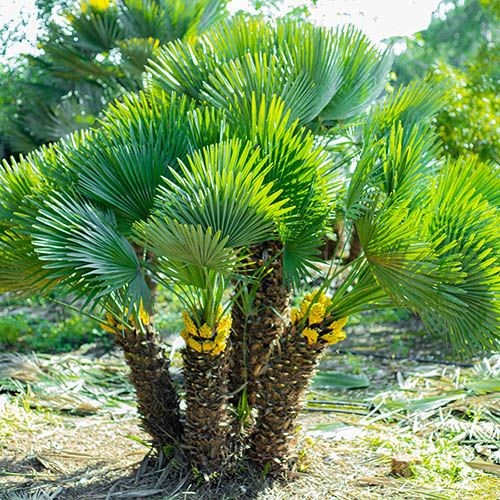
European Fan Palm / Mediterranean Fan Palm
Scientific Name: Chamaerops humilis
Light Requirement: Full sun to partial shade. It performs best in full sun but can tolerate light shade.
Height: Typically 8–15 ft. tall in Florida landscapes, with a similar spread over time. It is slow-growing and often stays smaller for many years.
Plant Spacing: Space about 6–10 ft. apart, depending on the desired look. For a dense clumping accent or informal grouping, plant closer to 6–8 ft. apart. For individual specimen palms, allow 8–12 ft. of space so the clump can mature naturally.
Growth Habit: Slow-growing, clumping fan palm with multiple trunks and stiff, rounded fan-shaped fronds. Foliage can range from green to blue-green depending on the variety and growing conditions.
Hardiness: USDA Zones 8–11; very cold hardy for a palm and can tolerate brief temperatures around 10°F once established; highly drought tolerant once established; low to moderate salt tolerance, so it is best protected from heavy direct salt spray.
Maintenance Info: Low to moderate maintenance. Remove dead fronds as needed and thin extra trunks or suckers if a cleaner, more open look is desired. Use palm fertilizer during the growing season and plant in well-drained soil. The leaf stems have sharp teeth/spines, so avoid placing it too close to narrow walkways, pool edges, or areas where people may brush against it.
Best Uses in the Landscape: Excellent as a specimen palm, entryway accent, foundation planting, courtyard palm, pool-area accent, container palm, commercial landscape feature, or Mediterranean-style garden plant. Its compact size and slow growth make it useful where larger palms would eventually outgrow the space.
Plant Info: European Fan Palm is native to the western Mediterranean region and is one of the only palms native to continental Europe, which is where the “European” part of the name comes from. The “Fan Palm” name comes from its rounded, fan-shaped leaves. In Florida landscapes, it is valued for its compact size, cold tolerance, drought tolerance, and bold architectural form. It can be left full and shrub-like or selectively pruned to show off the individual trunks.