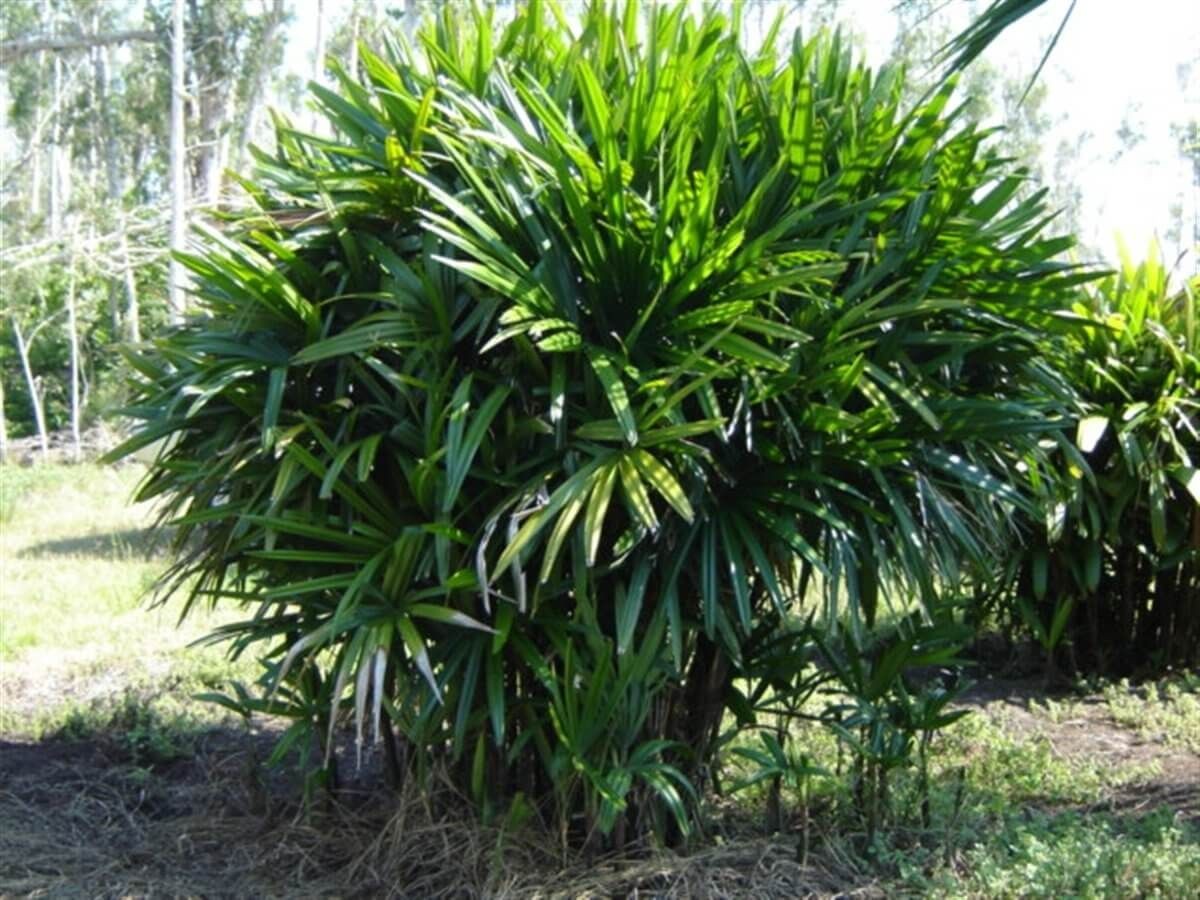
Lady Palm
Scientific Name: Rhapis excelsa
Light Requirement: Partial shade to full shade. It can tolerate some morning sun, but it usually looks best in filtered light or shaded Florida landscapes.
Height: Typically 6–12 ft. tall in landscapes, though it can stay smaller depending on growing conditions and pruning.
Plant Spacing: Space about 4–6 ft. apart for a dense hedge or privacy screen. For individual accents or looser groupings, space about 5–8 ft. apart to allow the clumps to mature naturally.
Growth Habit: Slow-growing, clumping palm with multiple slender cane-like stems and fan-shaped, dark green leaves. It forms a dense, elegant screen or accent over time.
Hardiness: USDA Zones 9b–11; moderately cold hardy and can tolerate brief cold snaps, though foliage may be damaged by hard freezes; moderately drought tolerant once established, but performs best with regular moisture; low to moderate salt tolerance and is best protected from direct coastal salt spray.
Maintenance Info: Low to moderate maintenance. Remove old fronds and thin crowded canes as needed to keep the plant clean and shaped. It prefers well-drained soil with consistent moisture but does not like standing water. Because it grows in clumps, occasional thinning may be needed if it becomes too dense.
Best Uses in the Landscape: Excellent for shaded entries, foundation planting, privacy screening, pool cage areas, courtyards, side yards, tropical garden beds, and container use. It is especially useful where a refined tropical look is needed in lower-light areas.
Plant Info: Lady Palm is native to southern China and Taiwan and has long been grown as an ornamental palm in gardens and interiors. The “Lady” name fits its refined, elegant appearance, with neat fan-shaped leaves and slender cane-like stems that give it a more graceful, formal look than many rugged palms. In Florida landscapes, it is one of the best palms for shaded areas and works well where customers want a polished tropical screen without using a large-growing palm.