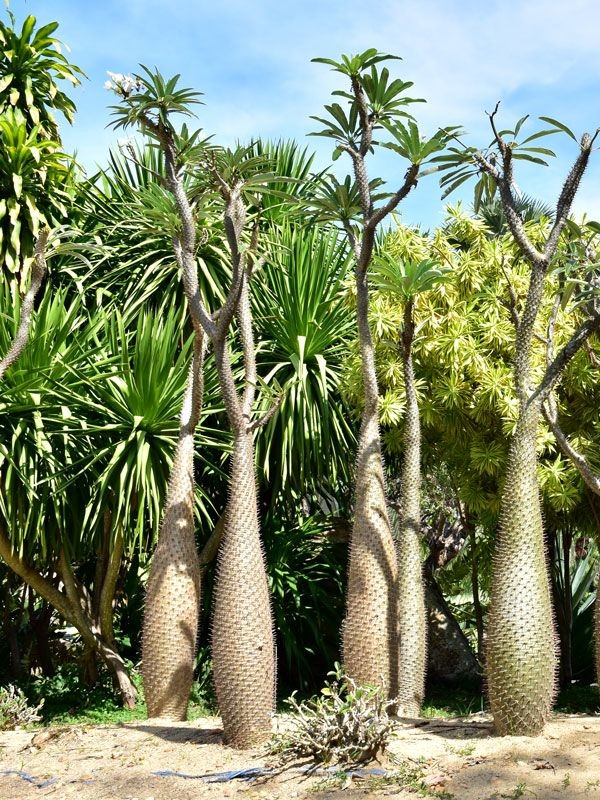
Madagascar Palm
Scientific Name: Pachypodium lamerei
Light Requirement: Full sun to bright light. It performs best in warm, sunny locations with excellent drainage.
Height: Typically 6–15 ft. tall in Florida landscapes, though it is slow-growing and may stay smaller for many years.
Plant Spacing: Space about 5–8 ft. apart from other plants or structures when used as a specimen. Allow extra room around walkways, patios, and entries because the trunk is covered in sharp spines.
Growth Habit: Slow-growing upright succulent with a thick, spiny trunk and a crown of long green leaves at the top. Despite its palm-like shape, it is not a true palm.
Hardiness: USDA Zones 10–11; cold sensitive and may be damaged by frost or freezing temperatures; highly drought tolerant once established; low to moderate salt tolerance, best used away from direct coastal salt spray.
Maintenance Info: Low maintenance when planted in the right location. It needs very well-drained soil and should not be overwatered, especially during cooler months. Protect young plants from cold snaps. Use caution when handling or pruning because of the sharp spines and milky sap.
Best Uses in the Landscape: Excellent as a specimen plant, modern landscape accent, rock garden feature, cactus/succulent garden plant, container plant, or focal point in a dry sunny bed. It works especially well where a bold architectural shape is desired.
Plant Info: Madagascar Palm is native to Madagascar, which explains the first part of its common name. The “Palm” part comes from its palm-like shape, with a tall trunk and leaves clustered at the top, even though it is actually a succulent and not a true palm. Its thick trunk stores water, helping it survive dry conditions, and mature plants may produce fragrant white flowers near the top during warm weather.