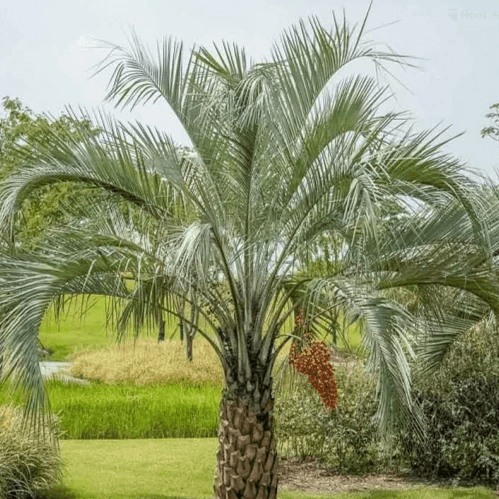
Pindo (Jelly) Palm
Scientific Name: Butia odorata
Light Requirement: Full sun to partial shade. It performs best in full sun but can tolerate some light shade.
Height: Typically 15–20 ft. tall in Florida landscapes, with a spread of about 10–15 ft. Older specimens may grow slightly taller in ideal conditions.
Plant Spacing: Space about 12–15 ft. away from other large plants, structures, walkways, or driveways to allow room for the arching canopy. For open landscape use, allow at least 10–15 ft. of clearance around the palm.
Growth Habit: Slow-growing, single-trunk feather palm with a thick trunk and long, arching blue-green to gray-green fronds. The fronds curve downward, giving the palm a soft, graceful, weeping appearance.
Hardiness: USDA Zones 8a–11; very cold hardy for a feather palm and can tolerate brief temperatures around 5–10°F once established; drought tolerant once established; moderately salt tolerant, making it useful in many Florida landscapes, though it is best protected from constant direct salt spray.
Maintenance Info: Moderate maintenance. Use palm fertilizer during the growing season and provide good drainage. Pindo Palm does not fully self-clean, so dead fronds may need to be pruned. Mature palms can produce yellow-orange fruit that may be messy near sidewalks, driveways, patios, or pool decks, so placement is important.
Best Uses in the Landscape: Excellent as a specimen palm, front-yard focal point, lawn accent, cold-hardy tropical feature, xeric-style garden palm, coastal-style landscape accent, or smaller estate-style palm. It works well where a customer wants a tropical palm look with better cold tolerance than many common feather palms.
Plant Info: Pindo Palm is native to parts of South America, especially southern Brazil, Uruguay, and nearby regions. It is often called Jelly Palm because the sweet yellow-orange fruit can be used to make jelly. The fruit can be a fun conversation feature, but it can also create cleanup if planted too close to hard surfaces. Its blue-gray arching fronds give it a softer, more unusual look than many standard green palms, making it a strong choice for customers who want something tropical but not overly common.