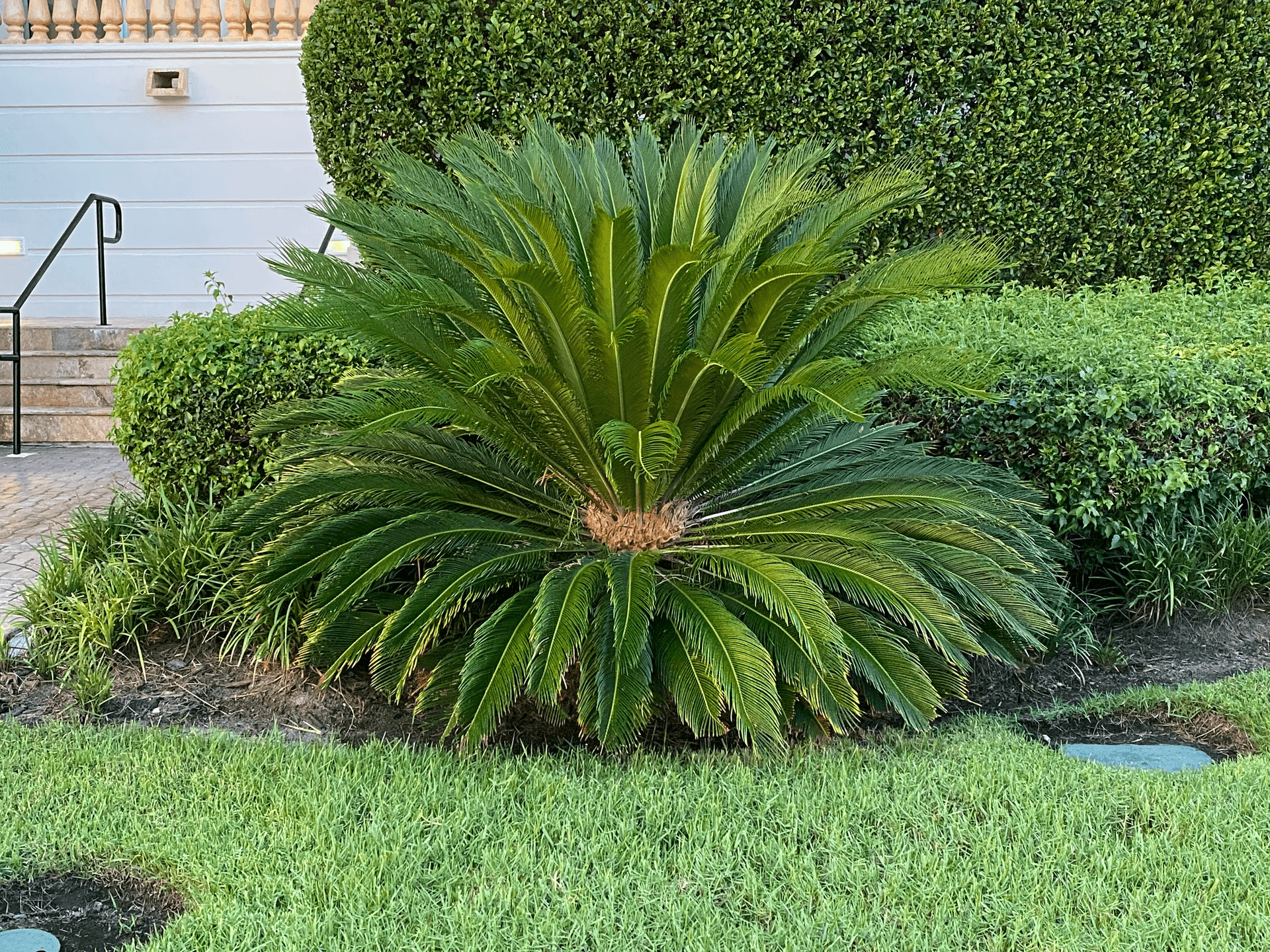
Sago Palm
Scientific Name: Cycas revoluta
Light Requirement: Full sun to partial shade. It can handle bright sun but often looks best with some protection from harsh afternoon sun in hot Florida landscapes.
Height: Commonly 3–6 ft. tall in landscapes, with very old specimens slowly reaching 10 ft. or more over time.
Plant Spacing: Space about 4–6 ft. apart for small groupings or foundation plantings. For individual specimen use, allow 6–8 ft. of space so the crown can spread without crowding walkways, walls, or nearby plants.
Growth Habit: Very slow-growing cycad with a short, thick trunk and a symmetrical crown of stiff, glossy, dark green fronds. Although commonly called a palm, it is not a true palm.
Hardiness: USDA Zones 8b–11; cold hardy to around 15–20°F once established, though hard freezes can damage the foliage; drought tolerant once established; moderate salt tolerance and can handle some coastal conditions when protected from heavy direct salt spray.
Maintenance Info: Low maintenance once established. Plant in well-drained soil and avoid overwatering. Remove old or damaged fronds as needed, but avoid excessive pruning because it can weaken the plant’s appearance. Use palm/cycad fertilizer if the plant shows yellowing or nutrient deficiency. Important caution: all parts of the plant are toxic if ingested, especially the seeds, so use care around pets and children.
Best Uses in the Landscape: Excellent as a specimen plant, entryway accent, foundation planting, courtyard feature, container plant, tropical bed accent, or formal landscape element. Its compact size and slow growth make it useful in smaller spaces where larger palms would outgrow the area.
Plant Info: Sago Palm is native to southern Japan, including the Ryukyu Islands, and parts of southern China. It is called a “palm” because its stiff fronds grow from the top in a palm-like crown, but it is actually a cycad, an ancient plant group that existed long before true palms became common. This gives it a prehistoric, almost dinosaur-era character that makes it a great conversation plant in Florida landscapes.